
Nov
21
The West Took the Ingredients and Left the Formulas
0 Comments
Ginseng, astragalus, reishi, goji and ginkgo all made it onto Western shelves as single ingredients. Not one of the formulas they came from did. The reason turns out to be the size of a capsule, and some of those formulas have better human evidence than the products sitting next to them.
- Chinese medicine arrived in the West one herb at a time. The recipes those herbs belonged to stayed behind. You can still buy them, but you will be buying them from an acupuncturist.
- Some of those recipes have been tested in large numbers of people. Herbal treatments for insomnia have been compared across 186 clinical trials. One anti-aging formula was tested against a dummy pill in 530 people. A group of cognition formulas has 57 trials behind it.
- The thing that kept them out is unglamorous: traditional formulas are dosed in grams, and the Western supplement aisle is built around one or two capsules. Every herb that crossed over fit in a capsule. Every formula that stayed behind did not.
- Isolating one compound from a formula can make it work worse. Osthole, the active in one traditional prescription, reaches about nine times less of the bloodstream on its own than it does inside the formula it came from.
- What to do with that: when you compare a multi-ingredient botanical to a single-ingredient one, ask two questions. Has it been tested in people on something a person would actually notice, like sleep or grip strength rather than a blood marker? And does the amount in the bottle match the amount in the study? Most products fail the second question, and you can only tell by checking.
New to this? The Evidence Lab explains how supplement research works in plain language, including how to read a study like this one and what is worth checking before trying anything.
What crossed over, and what stayed behind
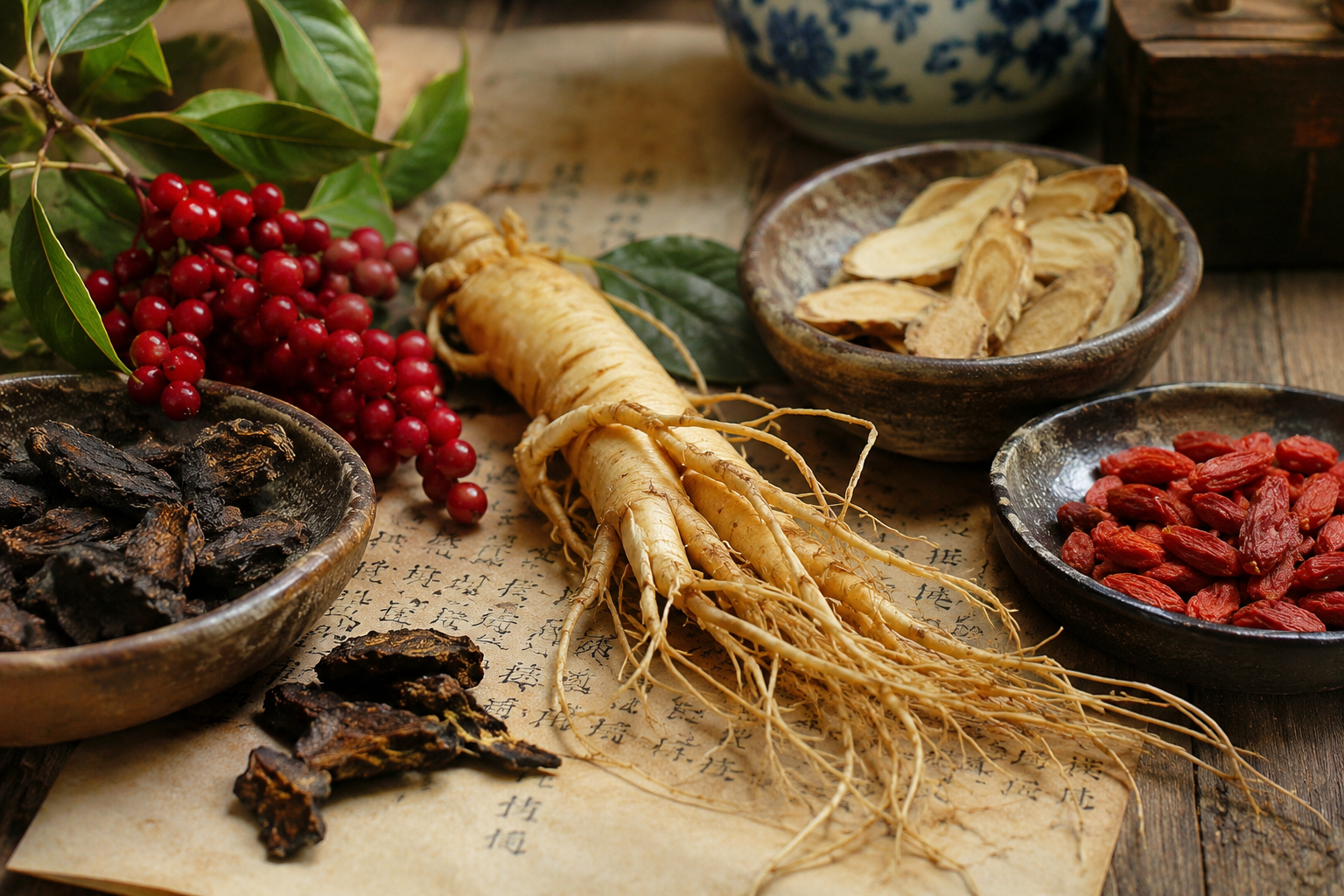
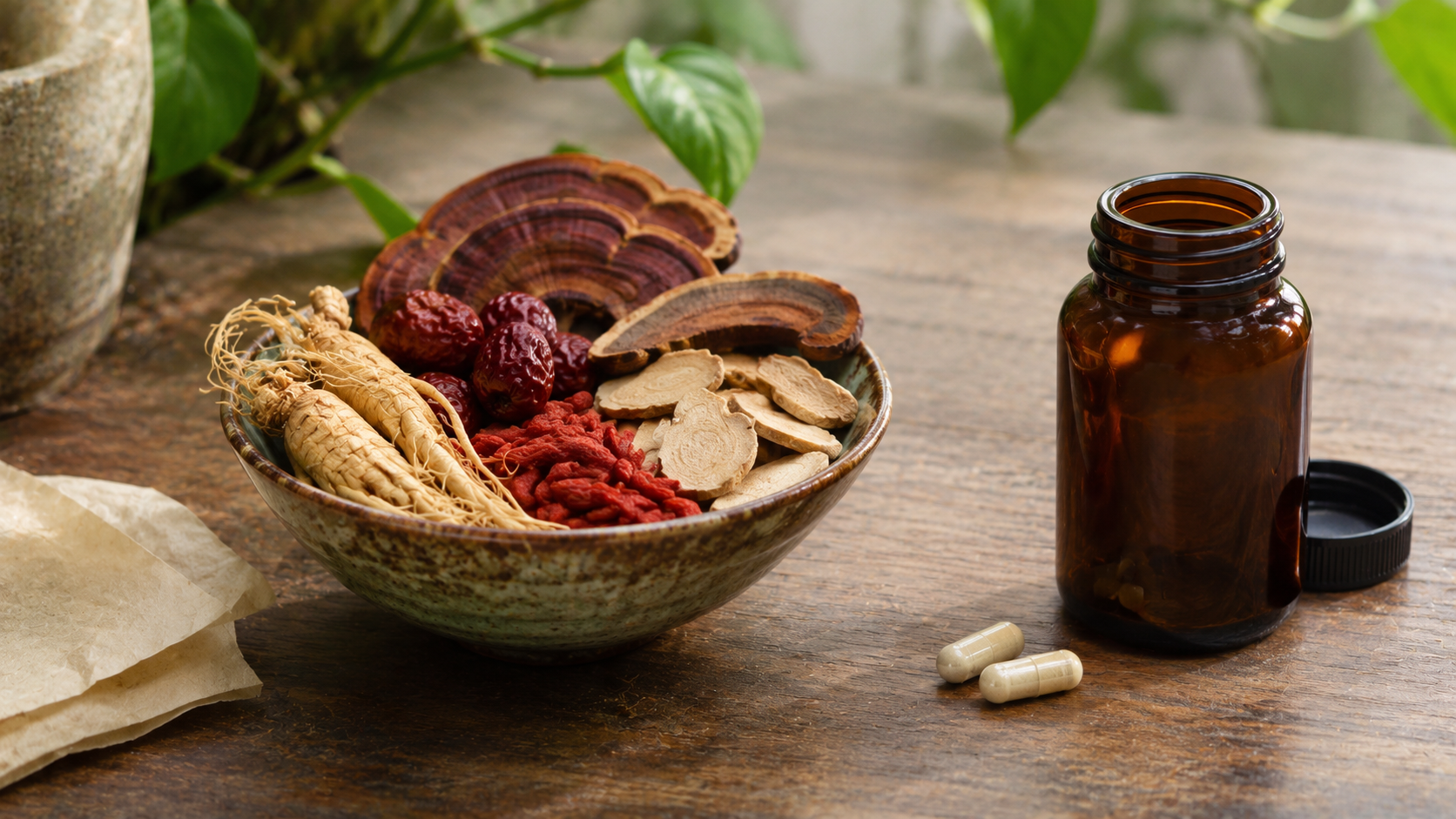
Walk a supplement aisle and the Chinese pharmacy is already there, broken into pieces. Ginseng, astragalus, reishi, goji, ginkgo and schisandra are stocked by every major brand. Each one arrived alone, in a capsule, with a mechanism printed on the label.
The formulas they came from did not arrive. You can buy them, but you will usually be buying them from an acupuncturist or a specialist supplier, as loose granules, with no assay and no marker compound on the certificate. A person who takes astragalus every morning has probably never heard of the formula astragalus is traditionally given in.
Our own archive has the same shape. We have written about osthole, astragaloside IV, tanshinone IIA, oxymatrine, corylin and amentoflavone, one compound at a time. Every one of them was pulled out of a formula first, and in at least one case we can measure what pulling it out cost.
Osthole, and the cost of purity
Osthole comes from the fruit of Cnidium monnieri. Researchers gave rats purified osthole and measured how much reached the bloodstream. Then they gave the same dose inside Bushen-Yizhi, the traditional six-herb formula osthole normally travels in: Cnidium fruit with tree peony bark, ginseng root, prepared fo-ti, goji berry and glossy privet fruit. Inside the formula, osthole reached roughly nine and a half times the blood exposure it reached alone.
The reason sits in the source plant. Cnidium fruit carries eleven related coumarins, and one of them, imperatorin, helps osthole across the gut wall by interfering with a pump that would otherwise push it straight back out. Both compounds are official quality markers for the herb. Purify toward osthole and you throw away its ride. We covered the full pharmacology in our article on IL-11 and osthole delivery, and the wider case for multi-compound design in Disease Is Multifactorial.
That is a measured result, and it suggests a rule worth testing elsewhere: when a tradition insists two things belong together, there is a hypothesis in the pairing. It also answers a practical question. Working out which compounds help each other absorb, sourcing each separately and guessing at amounts with no combination studies is a research project. A formula is that project already finished.
What these formulas are, and what the trials found
We went looking for human trials, not for mechanisms, and the map that came back surprised us.
Sleep has the strongest evidence of anything here
Suanzaoren decoction is five ingredients built around sour jujube seed, with poria mushroom, chuanxiong root, anemarrhena rhizome and honey-fried licorice. Twelve randomized trials covering 1,311 people with long-term insomnia found it improved sleep and, notably, lowered the rate at which insomnia came back after treatment stopped.
The measure used in most of these trials is the Pittsburgh Sleep Quality Index, a questionnaire about how long you take to fall asleep, how often you wake, how rested you feel and how much it affects your day. Lower scores are better. It is the standard instrument in sleep research, which means these herbal trials can be compared directly against sleeping pill trials.
A 2025 review did exactly that, pooling 186 randomized trials across 13 different herbal treatments and ranking them against each other and against conventional sleep medication. Gui Pi Tang, a formula combining ginseng, astragalus, longan fruit, jujube seed and several others, came out first on sleep quality. Most of the herbal options scored better than the conventional drugs on both effectiveness and side effects.
A frailty formula with a proper placebo trial
Bazi Bushen is a modern Chinese prescription built on the traditional idea of replenishing what the body runs low on with age. It contains both Cnidium fruit and schisandra, among others. In 2024 it was tested in 530 people aged 30 to 78, randomized, double blind, placebo controlled, across multiple hospitals, for twelve weeks.
The main measure was the Tilburg Frailty Indicator, a validated questionnaire covering physical, psychological and social decline, where a falling score means a person is becoming less frail. It dropped by 1.50 points in the treated group against 0.58 on placebo. Quality of life improved by a wide margin, and telomerase, an enzyme involved in maintaining the protective caps on chromosomes, rose.
Grip strength, balance, walking speed and muscle mass also improved, and those are worth flagging carefully: they were secondary measures reported within the older subgroup rather than the trial’s main result. Real, but softer than a summary usually makes them sound.
Cognition, measured on the same scales the drugs use
A 2022 review pooled 57 randomized trials of East Asian herbal medicine in Alzheimer’s disease. Two scales appear throughout. The MMSE is the short bedside test most people have seen a version of, asking the date, the place, a short word list to recall, where a higher score out of 30 is better. The ADAS-cog is the longer, more sensitive scale that pharmaceutical companies use to get Alzheimer’s drugs approved, and on that one a lower score is better.
Herbal treatment improved both compared with conventional care. Against donepezil, the most widely prescribed Alzheimer’s drug, the herbal formulas matched it on the MMSE and scored better on the ADAS-cog, which is the scale that matters more.
When the researchers asked which herbs the successful formulas had in common, two names came back: Acori Graminei Rhizoma, grassleaf sweetflag rhizome, and Cnidii Rhizoma. The second of those is Cnidium, the osthole plant from earlier in this article. The herb has human evidence inside formulas, even though the isolated compound has never been tested in a person.
Behaviour, sleep and agitation in dementia
Yokukansan is a seven-herb Japanese formula, built on uncaria hooks and bupleurum root, used for irritability and restlessness. Five randomized trials in 381 patients found it reduced agitation, delusions and hallucinations in dementia, with no statistical disagreement between the trials at all, which is rare.
What it did not do is improve memory. MMSE scores did not move. It treats the behaviour rather than the underlying decline, and saying so is more useful than blurring the two.
Stroke recovery and fatigue
Buyang Huanwu decoction is an unusual recipe: a very large dose of astragalus, four ounces of it, with small amounts of six blood-moving herbs around it. Three separate reviews have pooled its stroke rehabilitation trials, one covering 1,084 patients. Sijunzi decoction, a four-herb digestive tonic, has randomized trials in cancer-related and chronic fatigue.
And for comparison, the vitamin aisle
Measured on the same kind of endpoints, the conventional supplement literature has had a hard decade. DO-HEALTH gave 2,157 older adults vitamin D, omega-3 and a home exercise programme for three years and found no effect on frailty. PROVIDE gave 380 people with age-related muscle loss a vitamin D and leucine-enriched protein supplement, and both the supplement and the placebo group improved by the same amount. Creatine genuinely works, and only when combined with resistance training.
Why a capsule was the obstacle
A traditional preparation is dosed in grams of dried herb. One published Bushen-Yizhi protocol works out to about 17.5 grams a day. Even concentrated down to an extract, that is several grams of powder, which is four to six capsules before anything else goes in the bottle.
The Western supplement business runs on a one or two capsule serving. Every botanical that crossed over fits that serving. Every formula that did not fit, did not cross. That explains the pattern better than any story about Western skepticism, and it has the advantage of being testable.
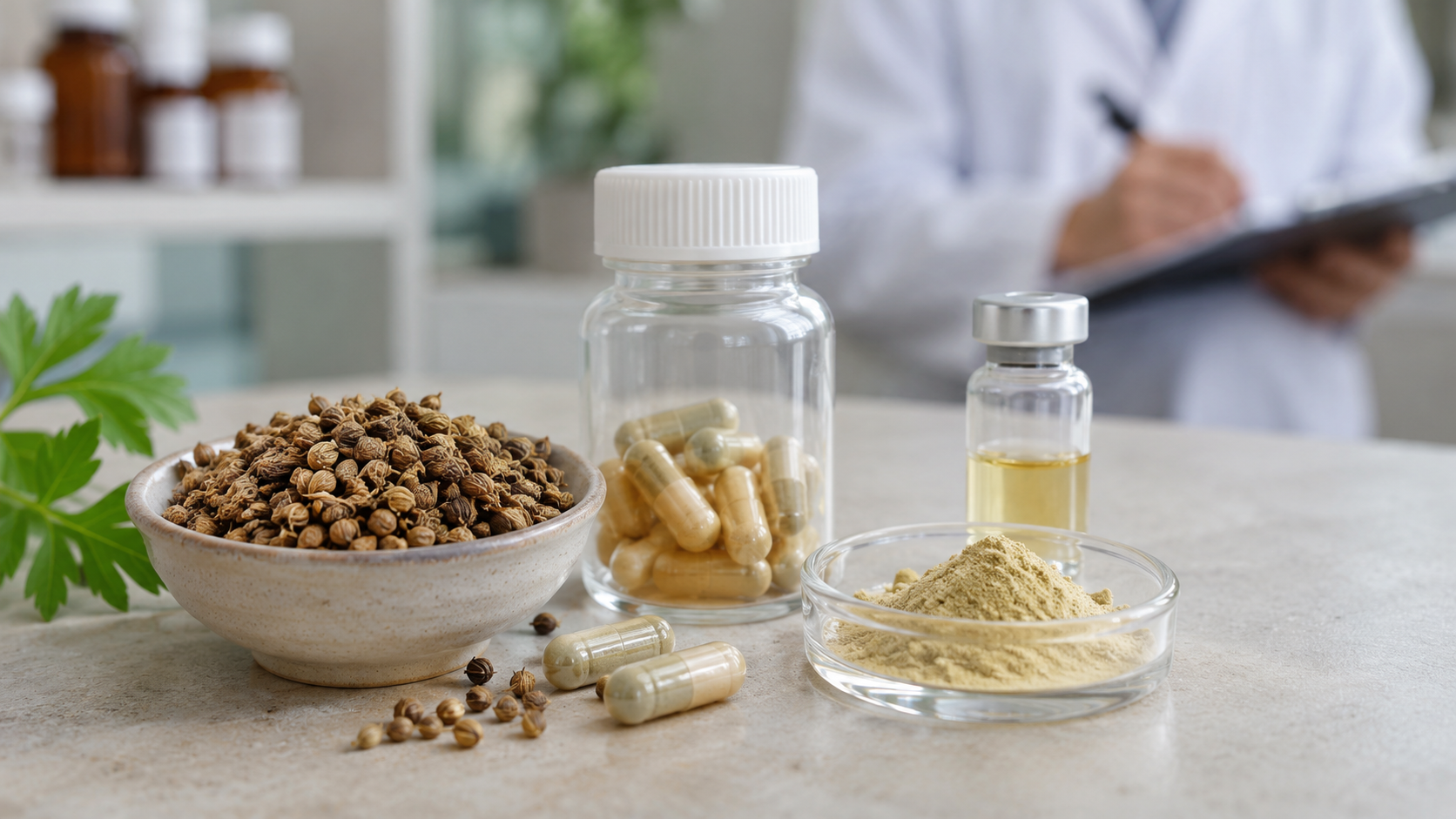
Concentrating a plant is old technology. Ten grams of dried herb becomes one gram of extract, the marker compounds get measured on the way through so you know what you kept, and the daily dose fits in a serving somebody will swallow without thinking about it. Nobody in this category has bothered, because the market it would serve has not existed in the West.
What we would make from this
Reading the evidence is half the job. The other half is deciding what actually goes in a bottle, and that means saying which parts of a traditional formula we keep, which we leave out, and what form the thing takes. Below is where each line of research lands.
Sleep: a reduced Suanzaoren, as a capsule
In: sour jujube seed as the lead, standardized to spinosin and the jujubosides, which a 2026 review identifies as the quality markers worth measuring. Anemarrhena, chuanxiong and poria at traditional proportions.
Out: the honey-fried licorice. Licorice earns its place in a decoction taken for a few weeks, and glycyrrhizin taken daily for months causes pseudoaldosteronism, raising blood pressure and lowering potassium, with case reports running up to a 2026 report of decompensated heart failure. A sleep product is taken nightly for a long time, and that changes the calculation on an ingredient whose job in the original is harmonising flavour and moderating the other herbs.
Form: a concentrated whole extract, dried, in capsules. The actives here are saponins and flavonoid glycosides, which water and alcohol recover well. A fractionated extract of the kind described below would leave most of them behind, and choosing a method because it worked on a different formula is how people end up with an elegant extract of the wrong compounds.
Final recommendation, two capsules at bedtime:
- Sour jujube seed extract 10:1, standardized to 2% jujubosides — 600 mg
- Anemarrhena rhizome extract 10:1 — 180 mg
- Chuanxiong root extract 10:1 — 120 mg
- Poria extract 10:1 — 120 mg
- Saffron extract, standardized, 28 mg — 28 mg
The four herbs follow the classical proportions of 30, 9, 6 and 6 parts, working out to roughly ten grams of raw herb equivalent. Those trials dosed whole decoctions, so the amounts are a proportional reconstruction rather than numbers lifted from a study.
The saffron is the exception and it is the best-evidenced thing in the capsule. A 28-day trial in 120 adults with poor sleep tested 14 mg and 28 mg against placebo an hour before bed, with sleep quality as the primary outcome, and the higher dose improved it along with morning mood and insomnia symptom scores. A separate 12-week trial in 202 adults found the same dose improved mood. Saffron is not in the classical formula, and the evidence says it should be in ours.
Cognition and inflammation: Si Wei Yan Nian Dan, as an elixir
In: the two herbs the 57-trial analysis identified, plus the two that carry them. Cnidium fruit as a full-spectrum coumarin extract standardized to both osthole and imperatorin. Grassleaf sweetflag rhizome alongside it. Schisandra, which raised osthole exposure 4.6-fold in rats when dosed as its isolated lignan. Moutan bark, which supplies the CYP3A4 inhibitor verified present in the formula that was actually measured.
Out: most of the β-asarone, and amentoflavone entirely. Sweetflag carries asarones, and the toxicological literature on them is unfavourable enough that Europe restricts them, so that is a material-selection and specification problem rather than a reason to drop the herb. Amentoflavone was the obvious fourth member and its IL-11 claim rests on molecular docking with no binding assay, so it lost the slot to a herb with human trial data behind it. The full reasoning is in our article on IL-11 and osthole delivery.
Form: a fractionated extract, dried and reconstituted as an elixir. The active coumarins and phenylpropenes sit outside the range hot water recovers efficiently, which is the reason to fractionate here and the reason not to on the sleep formula. Residual solvent is a matter of routine per-lot testing.
Final recommendation, per daily serving:
- Cnidium fruit extract, standardized to 10% osthole with imperatorin quantified — 150 mg
- Grassleaf sweetflag extract 10:1, β-asarone specified below 0.5% — 150 mg
- Schisandra sphenanthera extract, assayed for schisantherins — 200 mg
- Moutan cortex extract 10:1 — 100 mg
Ten percent osthole is the common commercial grade and the right one to buy. The higher grades, up to 98%, cost more and strip out the imperatorin this formula depends on.
The Schisandra line is the sourcing problem. Nearly every Schisandra extract in commerce is S. chinensis standardized to schisandrins, and the compound measured in the rat work was a schisantherin from S. sphenanthera. Those are different molecules, and buying the common grade would mean buying something the evidence does not cover.
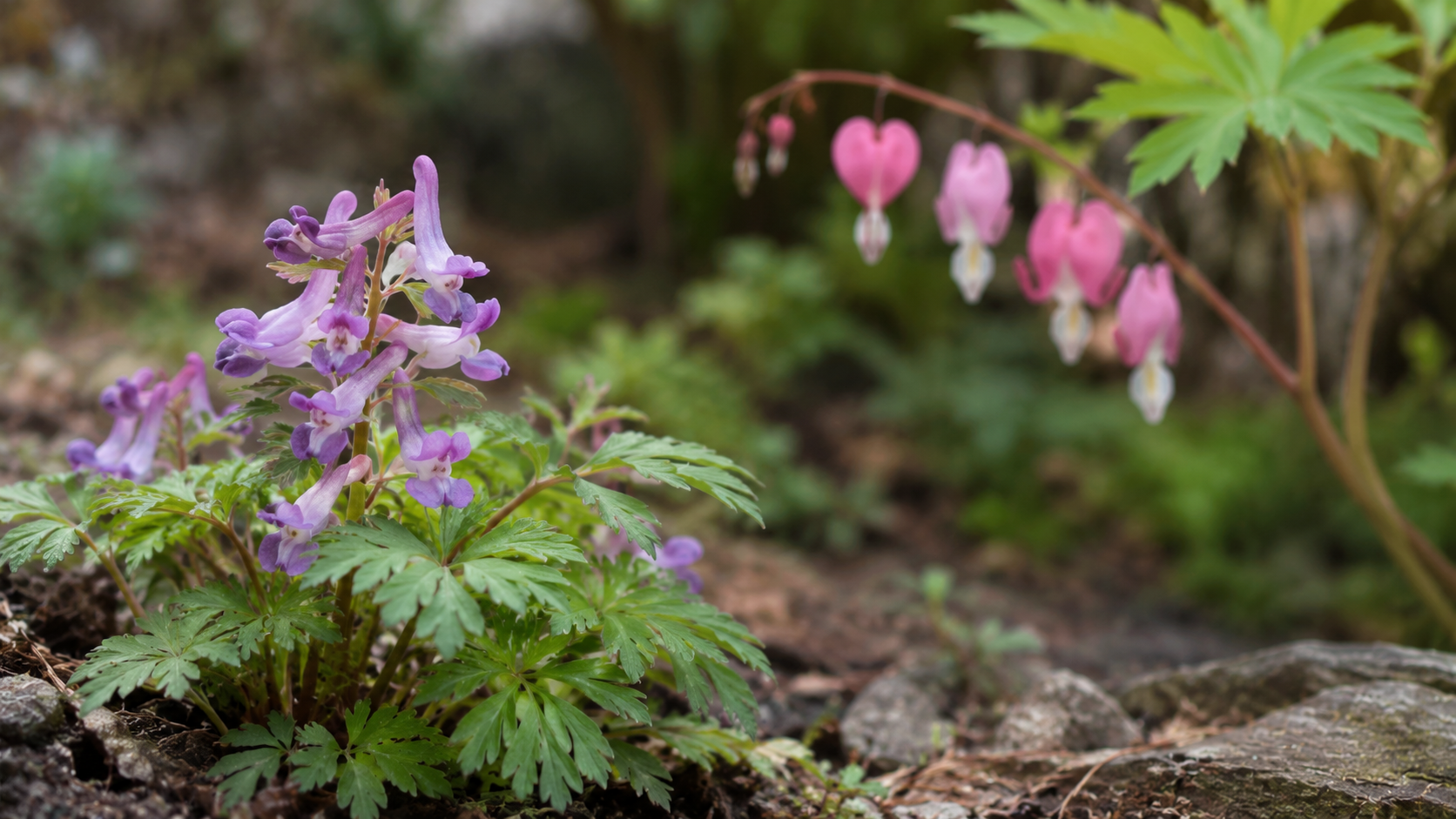
Pain: a Corydalis-led formula, as an elixir
In: Corydalis yanhusuo standardized to tetrahydropalmatine and dehydrocorydaline, which carries a human controlled trial on experimentally induced pain and animal work showing it increases morphine’s efficacy while inhibiting tolerance and dependence. Palmitoylethanolamide and β-caryophyllene alongside it.
Form: a fractionated extract concentrated for the alkaloids, delivered as an elixir. Expect sedation and label it.
Final recommendation, per daily serving:
- Corydalis yanhusuo extract, standardized to 1% tetrahydropalmatine — 400 mg
- Palmitoylethanolamide, ultramicronised — 600 mg
- β-caryophyllene, 95% minimum, lipid-solubilised — 100 mg
- Boswellia serrata extract, standardized to 30% AKBA — 250 mg
The PEA and Boswellia amounts come straight from their trials. The Corydalis and β-caryophyllene amounts do not, because no human dosing study exists for either at this indication. Where the pain is nerve-related, crocin belongs here too, at the 15 mg twice daily the neuropathy trials used. That is purified crocin rather than a saffron extract, and the distinction is worth understanding rather than memorising. Oral crocin is hydrolysed to crocetin before it reaches circulation, so what a dose delivers is crocetin either way. The neuropathy trials happened to establish their effect at a purified dose, and the sleep and mood trials established theirs at 28 mg of standardized extract. Both are real, and each belongs with the indication it was tested on.
Frailty: the same formula, made as an extract
Bazi Bushen has the best human trial in this set and its composition is published. The product keeps that composition and concentrates it, so a full daily dose fits a serving somebody will actually take.
One thing stays off the label. The trial tested their capsule, so it is the reason this formula is worth making and not a result our version gets to claim. Keeping that straight costs nothing and it is the difference between citing evidence and borrowing it.
No dose table for this one yet. The published composition needs checking against the trial’s own materials section before anybody writes amounts down, and inventing a list from a secondary summary is how a formula ends up looking rigorous and being wrong.
What holds across all of them
The dose in the bottle matches the dose in the study, converted for extract ratio. Identity is proved by assay, not by the invoice, with species confirmed and marker compounds quantified, because the ginkgo adulteration problem shows what happens when the official test is the only test. Every ingredient has a job someone can argue it out of, which is what the classical Jun, Chen, Zuo and Shi roles were describing and what our article on the dCloud framework covers in detail.
Where the real opening is
Two things have to be true at once: good human evidence, and genuinely not available here. That combination is narrower than either one alone.
The classical formulas with the best trial records can already be bought, through the clinical channel, usually unstandardized. The opportunity there is quality and plain language rather than existence.
Modern Chinese prescriptions are a different matter. Bazi Bushen, with its 530-person trial, has no Western product. Bufei Yishen, with a multicentre respiratory trial, has no Western product. Sailuotong, a standardized ginseng, ginkgo and saffron formula, has finished a phase 2 trial and published a phase 3 protocol, and has no Western product. All were developed and tested in the last twenty years and none has been made for this market.
One constraint is worth saying out loud, because it shapes everything: novelty and evidence pull against each other. The most original formulas have the least human data. The best-documented ones are the easiest to find already. The useful ground is in between, and it is not very wide.
Why pain and sleep belong in an aging file
Some of these categories look unrelated to aging until you read the outcome studies.
Chronic pain is the clearest case. In long-term studies of older adults, persistent pain predicts memory decline and dementia. Chronic pain and frailty travel together across a systematic review and a meta-analysis. Back pain predicts death from any cause in older men. There is even work showing chronic pain changes gene regulation in the frontal cortex, affecting networks tied to Alzheimer’s disease. A society that grew wary of opioid painkillers for excellent reasons has not replaced them with much, and the bill for leaving pain untreated is paid in precisely the outcomes aging research cares about. What the plant literature actually reaches at each tier of pain is a question we took up on its own, and Corydalis comes out of it as the strongest non-opioid lead in the field.
Sleep carries a comparable literature, and the insomnia formulas have the best human evidence of anything on this page. Inflammation runs underneath all of it.
Limitations
Most of this evidence comes from the Chinese and Japanese literature, where trials are often run against conventional treatment rather than a placebo, and where positive results are published more readily than negative ones. One dementia review in this set reports a confidence interval far too narrow for the number of patients involved, which is what that bias looks like when it shows up in the arithmetic. The Bazi Bushen strength and walking results are secondary measures within a subgroup. None of these formulas has yet been made to the standard described here, so nothing on the market demonstrates that the standard changes outcomes. And a formula with good evidence as a traditional preparation is not automatically the same product once it is concentrated into a capsule, which is the open question underneath this entire project.
Where this leaves us
Four products come out of this reading, and the order follows the evidence. Sleep first, because 186 randomized trials is the strongest hand anyone in this category is holding. Pain next, because the outcome literature is clear and the category is the worst served. Cognition after that, on the two herbs the trial data actually named. The frailty formula waits on a conversation with the people who tested theirs.
None of this needs a new study to begin. The trials exist, they were run in people, and the results have been sitting in the literature for years while the products stayed on the other side of the world. The work is making them properly.
References
- Li W, Wang Q, Dang C, et al. Chinese herbal medicine for insomnia: A systematic review and network meta-analysis. Medicine (Baltimore) 2025;104(33):e43789. PMID 40826721
- Liu XX, Ma YQ, Wang YG, et al. Suanzaoren Decoction for the treatment of chronic insomnia: a systematic review and meta-analysis. Eur Rev Med Pharmacol Sci 2022;26(22):8523-8533. PMID 36459033
- Mei J, Ju C, Wang B, et al. The efficacy and safety of Bazi Bushen Capsule in treating premature aging: A randomized, double blind, multicenter, placebo-controlled clinical trial. Phytomedicine 2024;130:155742. PMID 38838635
- Lee J, Kwon S, Jin C, et al. Traditional East Asian Herbal Medicine Treatment for Alzheimer's Disease: A Systematic Review and Meta-Analysis. Pharmaceuticals (Basel) 2022;15(2). PMID 35215287
- Matsunaga S, Kishi T, Iwata N. Yokukansan in the Treatment of Behavioral and Psychological Symptoms of Dementia: An Updated Meta-Analysis of Randomized Controlled Trials. J Alzheimers Dis 2016;54(2):635-43. PMID 27497482
- Gao L, Xiao Z, Jia C, et al. Effect of Buyang Huanwu decoction for the rehabilitation of ischemic stroke patients: a meta-analysis of randomized controlled trials. Health Qual Life Outcomes 2021;19(1):79. PMID 33750396
- Dai L, Liu Z, Zhou W, et al. Sijunzi decoction, a classical Chinese herbal formula, improves fatigue symptoms with changes in gut microbiota in chronic fatigue syndrome: A randomized, double-blind, placebo-controlled, multi-center clinical trial. Phytomedicine 2024;129:155636. PMID 38640860
- Gagesch M, Wieczorek M, Vellas B, et al. Effects of Vitamin D, Omega-3 Fatty Acids and a Home Exercise Program on Prevention of Pre-Frailty in Older Adults: The DO-HEALTH Randomized Clinical Trial. J Frailty Aging 2023;12(1):71-77. PMID 36629088
- Bauer JM, Verlaan S, Bautmans I, et al. Effects of a vitamin D and leucine-enriched whey protein nutritional supplement on measures of sarcopenia in older adults, the PROVIDE study: a randomized, double-blind, placebo-controlled trial. J Am Med Dir Assoc 2015;16(9):740-7. PMID 26170041
- Forbes SC, Candow DG, Ostojic SM, et al. Meta-Analysis Examining the Importance of Creatine Ingestion Strategies on Lean Tissue Mass and Strength in Older Adults. Nutrients 2021;13(6). PMID 34199420
- Liu JM, Chen JM, Lin MJ, et al. Screening and verification of CYP3A4 inhibitors from Bushen-Yizhi formula to enhance the bioavailability of osthole in rat plasma. J Ethnopharmacol 2022;282:114643. PMID 34534597
- Li J, Xie Y, Zhao P, et al. A chinese herbal formula ameliorates COPD by inhibiting the inflammatory response via downregulation of p65, JNK, and p38. Phytomedicine 2021;83:153475. PMID 33545548
- Liang J, Li F, Wei C, et al. Rationale and design of a multicenter, phase 2 clinical trial to investigate the efficacy of traditional Chinese medicine SaiLuoTong in vascular dementia. J Stroke Cerebrovasc Dis 2014;23(10):2626-2634. PMID 25294055
- Uebel T, Hermes L, Haupenthal S, et al. α-Asarone, β-asarone, and γ-asarone: Current status of toxicological evaluation. J Appl Toxicol 2021;41(8):1166-1179. PMID 33236787
- Patel DN, Ho HK, Tan LL, et al. Hepatotoxic potential of asarones: in vitro evaluation of hepatotoxicity and quantitative determination in herbal products. Front Pharmacol 2015;6:25. PMID 25750624
- Zhou Y, Wei Y, Wu N, et al. Ziziphi Spinosae Semen: A comprehensive review on quality marker prediction based on ethnopharmacology, phytochemistry, and pharmacology. J Ethnopharmacol 2026;356:120852. PMID 41187837
- Lopresti AL, Smith SJ, Drummond PD. An investigation into an evening intake of a saffron extract (affron®) on sleep quality, cortisol, and melatonin concentrations in adults with poor sleep: a randomised, double-blind, placebo-controlled, multi-dose study. Sleep Med 2021;86:7-18. PMID 34438361
- Lopresti AL, Smith SJ, Marx W, et al. An Examination into the Effects of a Saffron Extract (Affron) on Mood and General Wellbeing in Adults Experiencing Low Mood: A Randomized, Double-Blind, Placebo-Controlled Trial. J Nutr 2025;155(7):2300-2311. PMID 40414301
- Christodoulou E, Grafakou ME, Skaltsa E, et al. Preparation, chemical characterization and determination of crocetin's pharmacokinetics after oral and intravenous administration of saffron (Crocus sativus L.) aqueous extract to C57/BL6J mice. J Pharm Pharmacol 2019;71(5):753-764. PMID 30575029
Categories:
MDS Research Articles