
Nov
18
IL-11, Osthole and the Delivery Problem: What a Botanical Formula Can Honestly Claim
0 Comments
Deleting a single inflammatory cytokine extended mouse lifespan by roughly a quarter. The obvious question for a nutrition lab is whether anything in the botanical literature touches the same pathway, and the honest answer has three parts: one compound does, its absorption is the obstacle, and traditional medicine solved that absorption problem in a way that carries a cost worth stating out loud.
The short version
- In 2024, inhibiting IL-11 signalling extended median lifespan in mice by 22.5% in males and 25% in females, and genetic deletion of the gene extended life by 24.9% on average. The intervention was a neutralising antibody, given from 75 weeks of age.
- Osthole, a coumarin from Cnidium monnieri, inhibits IL-11/ERK1/2 signalling in mice at 10 and 20 mg/kg by oral gavage, and does so directly, independently of the pathway upstream of it.
- The obstacle is absorption. Osthole dissolves poorly in water and is cleared quickly.
- Taken inside the traditional Bushen-Yizhi formula, osthole reached roughly 9.6 times the blood exposure of the same dose given alone in rats. The mechanism is CYP3A4 inhibition.
- The published work attributes that to Schisantherin B, a Schisandra lignan. Bushen-Yizhi contains no Schisandra. We set out the composition below, because a claim that does not survive checking is worse than no claim.
- A better-supported carrier sits inside the source herb. Imperatorin, a coumarin that co-occurs with osthole in Cnidium monnieri and shares its quality-marker status, was shown in human intestinal cells to promote osthole uptake by reducing P-glycoprotein efflux and loosening tight junctions. Purifying osthole away from it removes the transporter.
- CYP3A4 inhibition raises blood levels of many prescription drugs. That is a disclosure obligation rather than a disqualification, and the article says where the line sits. Furanocoumarins also photosensitise, so sun exposure is a second label caution.
What this supports and what it does not. There is a published, mechanistically specific basis for a botanical that engages IL-11 signalling. There is no human trial, no lifespan data outside the antibody work, and no basis whatsoever for claiming that any supplement reproduces what a monoclonal antibody did in mice. The honest ceiling for a product here is support, not inhibition on a therapeutic scale, and the gap between those two is not a matter of degree.
The finding that started it
IL-11 is a pro-inflammatory cytokine in the IL-6 family. Work published in Nature in July 2024 showed that as mice age, IL-11 is upregulated across cell types and tissues, where it regulates an ERK–AMPK–mTORC1 axis. Those are three of the most heavily studied pathways in aging biology, and IL-11 sits upstream of all of them.
Removing it had consequences on the scale rarely seen in this field. Deletion of Il11 or Il11ra1 protected mice against metabolic decline, multi-morbidity and frailty. Administering an anti-IL-11 antibody to 75-week-old mice for 25 weeks improved metabolism and muscle function and lowered ageing biomarkers and frailty in both sexes. In the lifespan arm, genetic deletion extended life by 24.9% on average, and antibody treatment begun at 75 weeks and continued until death extended median lifespan by 22.5% in males and 25% in females.
The authors noted that anti-IL-11 therapy was already in early-stage clinical trials for fibrotic lung disease, and suggested that as the translational route into human aging.
That is the correct route. A monoclonal antibody, dosed parenterally, under clinical supervision, in trials designed to measure it. Nothing in the nutrition literature is a substitute for that, and any product implying otherwise is lying.
Where a botanical enters
The useful question is narrower: does any dietary compound engage the same signalling node at all, with evidence specific enough to be worth building on?
One does. In 2021, a group at Tongji Medical College tested osthole, a coumarin from the fruit of Cnidium monnieri, in a renal fibrosis model. Thirty-two male C57BL/6 mice were divided into sham, model, 10 mg/kg and 20 mg/kg osthole groups, six per group, dosed daily by oral gavage for two weeks after unilateral ureteral obstruction.
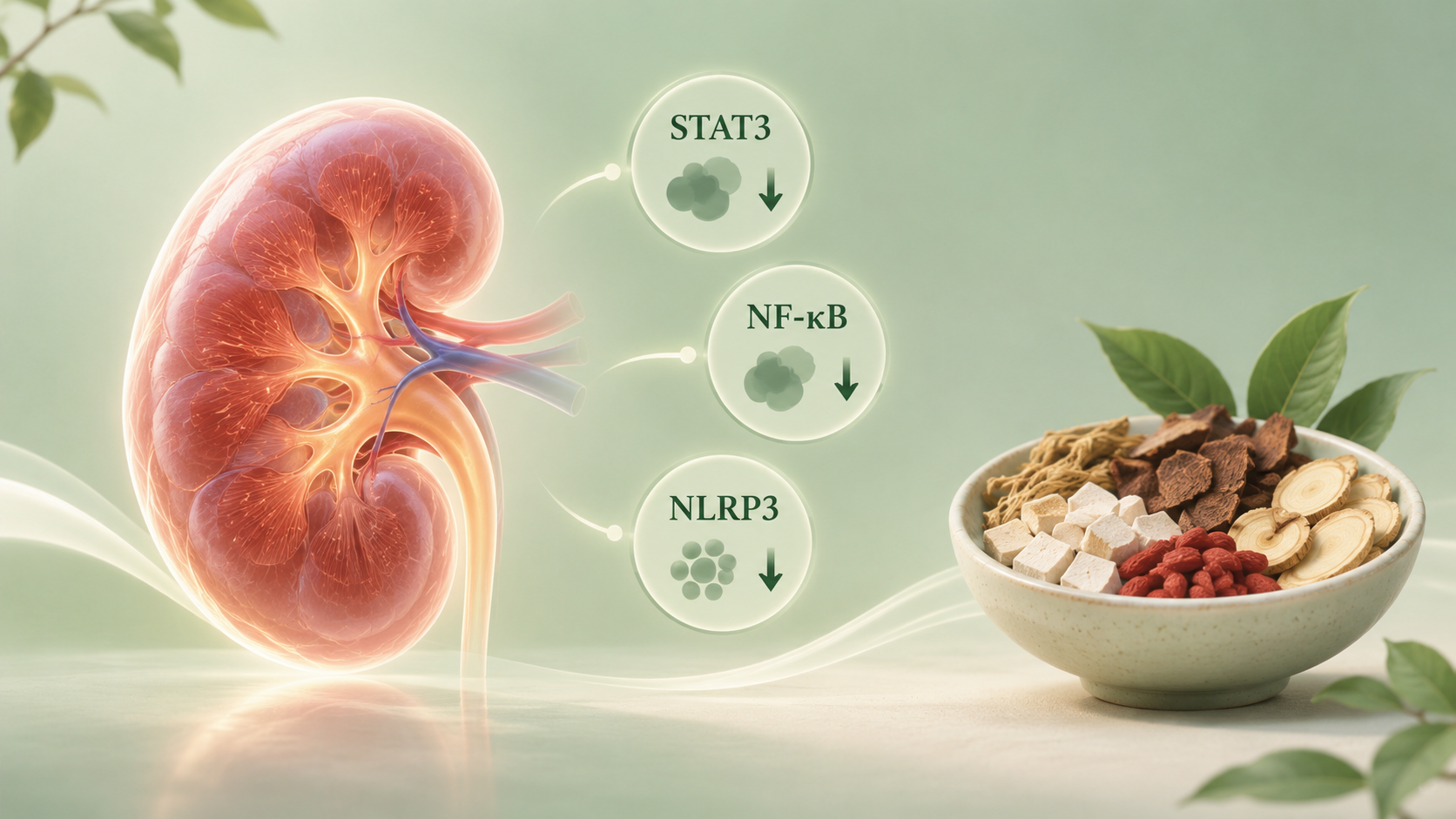
Osthole reduced α-smooth muscle actin, collagen I and fibronectin, and ameliorated the fibrosis. More to the point here, IL-11/ERK1/2 signalling was markedly upregulated in the obstructed kidneys, and osthole treatment significantly inhibited that activation.
The authors then did the step that makes this study worth citing. Because IL-11 sits downstream of TGF-β, an effect on IL-11 could simply be an echo of an effect further up. So they moved to human kidney tubular cells driven by IL-11 directly, with TGF-β out of the picture, and osthole still suppressed the fibrotic proteins. The ERK inhibitor U0126 partly blocked osthole’s effect, placing it on that arm of the pathway.
One detail is worth pausing on. In the IL-11-driven cells, osthole lowered the fibrotic proteins without changing their messenger RNA levels. IL-11 is known to act translationally rather than transcriptionally, so a compound that suppresses the protein while leaving the transcript alone is behaving the way an IL-11-axis intervention should. That is a coherence check, not proof, and it is the kind of internal consistency that separates a real mechanistic finding from a correlation.
The absorption problem
Osthole has a problem that has defeated more promising compounds than this one. It dissolves poorly in aqueous media, absorbs moderately and is metabolised quickly. A 2024 review in the American Journal of Chinese Medicine describes exactly that profile and catalogues the engineered delivery systems built to get around it.
A compound that works at 10 mg/kg by gavage in a mouse is not automatically a compound that does anything useful in a capsule.
What the traditional formula actually did
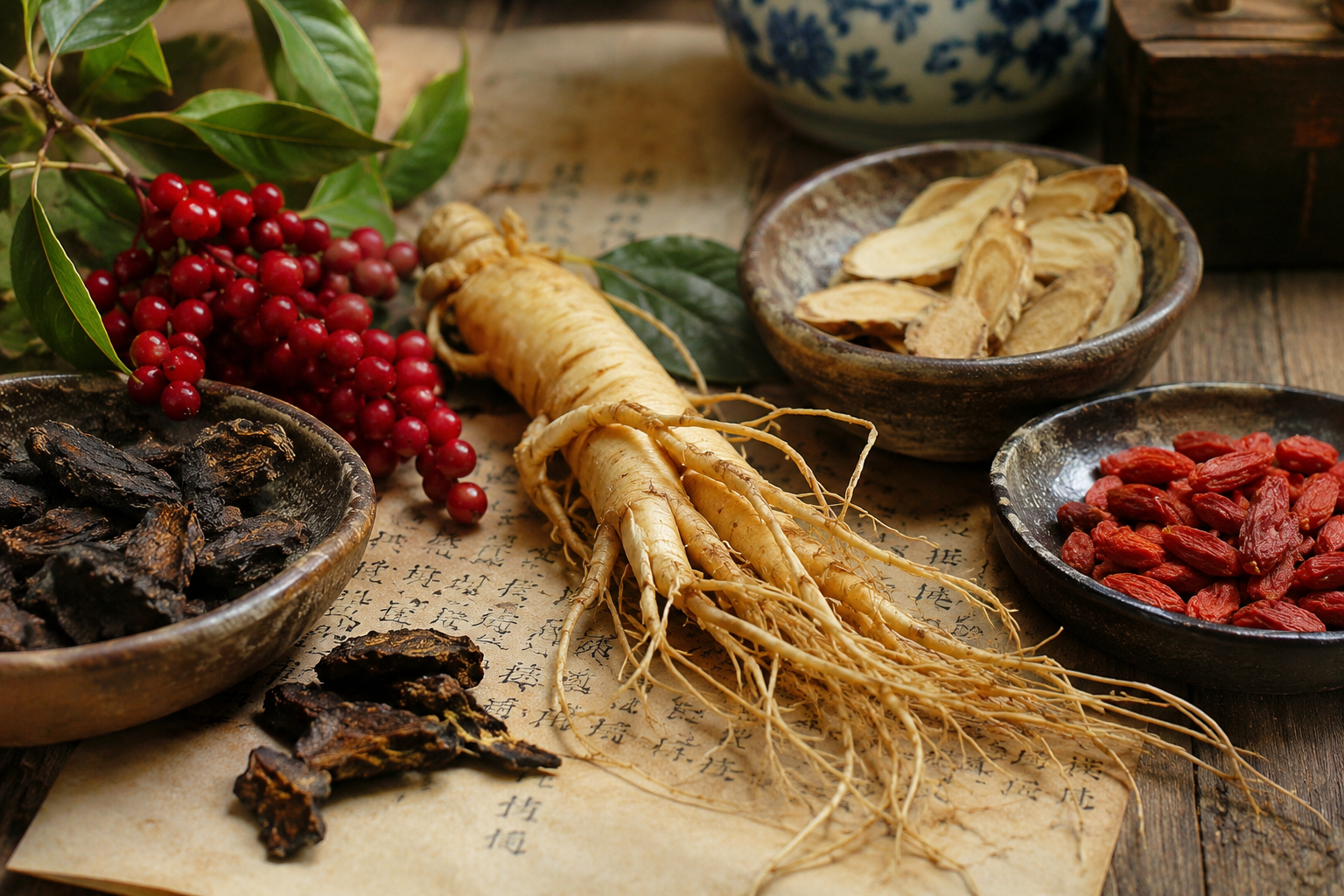
Bushen-Yizhi is a patented traditional prescription (ZL200610112916.1) used for kidney deficiency and cognitive decline. Its composition is six herbs in a 3:3:2:2:2:2 ratio:
- She Chuang Zi
- Cnidium monnieri (L.) Cuss., fruit — the osthole source
- Ren Shen
- Panax ginseng C.A. Mey., rhizome
- Zhi He Shou Wu
- Prepared Polygonum multiflorum Thunb., radix
- Mu Dan Pi
- Paeonia suffruticosa Andr., cortex (Moutan Cortex)
- Nv Zhen Zi
- Ligustrum lucidum Ait., fruit
- Gou Qi
- Lycium barbarum L., fruit
In 2021 a group asked why the formula appeared to outperform its isolated active. They screened its constituents computationally for CYP3A4 inhibition, verified the hits in vitro, then measured osthole exposure in rats:
- Pure osthole: AUC 228 ng/L·h
- Osthole with ketoconazole, a pharmaceutical CYP3A4 inhibitor: 463
- Osthole with isolated Schisantherin B: 1,053
- Osthole inside the whole Bushen-Yizhi formula: 2,196
Four compounds verified as CYP3A4 inhibitors: oleic acid, 1,2,3,4,6-pentagalloylglucose, rutin and Schisantherin B. Schisantherin B was the most potent, with an IC50 of 0.339 µM, outperforming ketoconazole at 5 µM.
An inconsistency worth stating before someone else finds it
Schisantherin B is a dibenzocyclooctadiene lignan characteristic of Schisandra, and specifically of Schisandra sphenanthera rather than the commoner S. chinensis. There is no Schisandra in the six herbs above.
Two checks were worth making before concluding anything. The first is whether the compound travels under another name from another plant: it does have synonyms, Wuweizi ester B and Schisantherin C among them, but wuweizi is Schisandra, and the dibenzocyclooctadiene skeleton is confined to the Schisandraceae. The compound is not hiding under another family’s label. The second is whether more than one formula carries the Bushen-Yizhi name. Four separate publications describe it as the same six herbs, two of them citing the same patent, and none of them lists Schisandra.
The screen was built from a systems-pharmacology database rather than from an assay of the batch, so the attribution of that lignan to this formula is open to question. What is not in question is what was measured directly: the whole formula raised osthole exposure roughly 9.6-fold, and isolated Schisantherin B, dosed as a compound, raised it roughly 4.6-fold. Both of those are direct measurements in rats. It is the link between the two, the claim that Schisantherin B is why the formula works, that the composition does not support.
Of the other three verified inhibitors, pentagalloylglucose is documented in Moutan Cortex, one of the six herbs, while rutin is widespread in plants and oleic acid is ubiquitous. Any of them could contribute. None was carried into the rat arm, so none has been shown to raise osthole exposure in an animal.
Building a product around the Schisandra lignan would also mean sourcing S. sphenanthera assayed for schisantherins, when essentially every Schisandra extract in commerce is S. chinensis standardized to schisandrins, which are different compounds.
What actually carries osthole
There is a better answer, and it has been sitting inside the source herb the whole time.
Cnidium monnieri fruit is not a source of osthole. It is a source of coumarins, of which osthole is one. An isolation study recovered eleven from the fruit: osthole, bergapten, xanthotoxol, xanthotoxin, imperatorin, isopimpinellin, osthenol, psoralen and three others. Osthole and imperatorin are together regarded as the quality markers of medicinal Fructus Cnidii, which is to say the pharmacopoeial identity of the herb rests on both.
In 2024, a group ran imperatorin through a Caco-2 human intestinal cell model to ask what it does to the absorption of the compounds it travels with. Imperatorin promoted the uptake of osthole. The mechanism they identified was a reduction in cell membrane potential, a decrease in P-glycoprotein-mediated efflux, suppression of P-gp expression, and loosening of tight junctions.
That is a direct measurement on osthole specifically, in human intestinal cells, naming a compound that is already in the herb at marker-level abundance. It is a stronger result than an inference from a database attribution, and it carries a formulation consequence that runs opposite to the industry instinct.
The instinct is to purify. Isolate the active, raise the percentage, call it standardized. If imperatorin is what carries osthole across the gut wall, purifying osthole away from the rest of the coumarin fraction removes the thing that was making it work. A total-coumarin extract of the fruit is not a cruder product than purified osthole. It is the one that has its transporter attached.
There is a caution attached that belongs in the same paragraph. Imperatorin, bergapten, xanthotoxin and psoralen are furanocoumarins, and furanocoumarins are photosensitizers; psoralen with ultraviolet A is an established clinical phototherapy rather than an incidental property. Furanocoumarins are also the class behind grapefruit’s CYP3A4 interaction. A full-spectrum Cnidium extract therefore carries both a sun-sensitivity caution and a CYP interaction caution on its own, before anything is added to it.
The interaction question, answered rather than avoided
The mechanism here is CYP3A4 inhibition, the enzyme that metabolises a large share of prescription drugs including many statins, calcium channel blockers, benzodiazepines, immunosuppressants and anticoagulants. It is the same mechanism behind grapefruit’s interaction warnings.
This is a real consideration and it is not a disqualifying one. Piperine, sold in thousands of products specifically to raise the absorption of other compounds, works the same way. Berberine, resveratrol, pterostilbene and quercetin all carry CYP interaction potential. A supplement industry that excluded every CYP-active botanical would exclude much of its own shelf.
The scale of it is not theoretical, though, and the clearest human demonstration comes from the same genus. Wuzhi tablet is an ethanolic Schisandra sphenanthera extract used clinically as a tacrolimus-sparing agent in renal transplant patients. In a prospective study in CYP3A5 expressers, co-administration raised dose-adjusted tacrolimus trough concentration by an average of 199% and AUC by 126%, allowing a 41% reduction in the tacrolimus dose. A Schisandra extract is potent enough at this that hospitals use it deliberately to cut the cost of an immunosuppressant.
That is the correct frame for the interaction question. Not a warning label about a hypothetical risk, but a measured effect on a narrow-therapeutic-index drug in people, achieved by a botanical extract taken orally.
What the finding does oblige is proportionate disclosure. The inhibitor identified in this work was more potent in its assay than a pharmaceutical antifungal, which puts it above piperine rather than beside it, and a label that buries that is not doing its job. Anyone taking prescription medication metabolised by CYP3A4 should not use a formula of this kind without clearing it with their doctor or pharmacist, and that belongs on the front of the product rather than in small print on the back.
What a defensible formula looks like
The most defensible position is also the simplest: build what was actually tested, rather than a reconstruction of it from a database attribution.
- Core: Cnidium monnieri fruit extract, standardized to osthole
- The IL-11 evidence belongs to osthole, and a standardized botanical extract is the form in which that compound has a history of traditional use. Standardization is non-negotiable: without a declared osthole percentage the dose is unknown and the research does not attach to the product.
- Dose anchored to the animal work, with the conversion shown
- The in vivo doses were 10 and 20 mg/kg in mice. Standard body-surface-area conversion gives roughly 0.8 to 1.6 mg/kg, or about 55 to 115 mg of osthole per day for a 70 kg adult. That is a scaling convention rather than a finding. No human dose-ranging study exists, and anyone claiming otherwise is inventing it.
- Full-spectrum extract, standardized to osthole and imperatorin
- Both are the recognised quality markers of the herb, and imperatorin is the compound shown to promote osthole uptake. Declaring only osthole, or purifying toward it, discards the measured transport effect. This is the single most important formulation decision here and it points away from isolation.
- Companion herbs from the formula as composed
- Moutan Cortex carries pentagalloylglucose, one of the four verified CYP3A4 inhibitors, and the whole six-herb preparation outperformed every isolate in the rat experiment by roughly two to one. Following the tested composition is better supported than reconstructing it around a compound the formula does not contain.
- Taken with food containing fat
- Osthole’s other limitation is aqueous solubility, which a fat-containing meal addresses with no interaction cost at all.
- Front-of-label interaction disclosure
- CYP3A4 inhibition stated plainly, with the instruction to consult a doctor or pharmacist before use if taking any prescription medication.
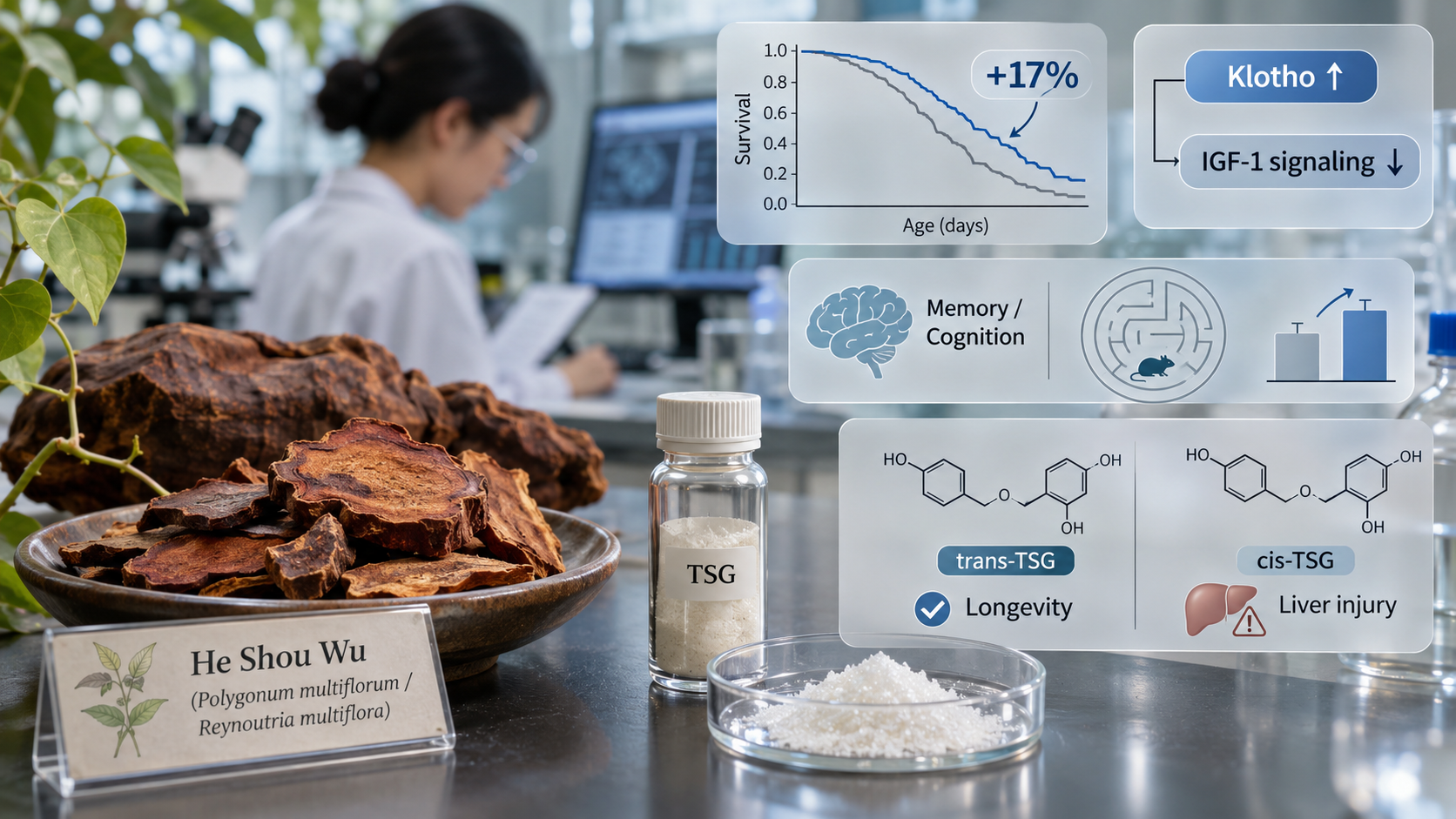
Two cautions belong with that, in the same breath rather than a separate page. Prepared Polygonum multiflorum has its own documented association with liver injury and is restricted in several jurisdictions, so its inclusion is a decision to make deliberately and with sourcing and dose attention, not by default because it appears in the formula. And no human has taken this preparation for IL-11 inhibition at a measured dose with an IL-11 readout. The formula is defensible as a faithful reconstruction of what was tested in rats. It is not a tested human intervention.
Limitations, stated plainly
No human trial has tested osthole for IL-11 inhibition, for aging, or for anything else relevant here; the clinical literature on osthole in people is essentially absent. The animal evidence is a two-week renal fibrosis model with six mice per group, not a lifespan or healthspan study. Body-surface-area conversion estimates a starting dose, it does not establish one. The pharmacokinetic work is in rats, and rat CYP3A behaviour does not map cleanly onto human CYP3A4. Osthole’s safety profile is unsettled: the 2024 review flags potential hepatotoxicity and explicitly cautions about drug combinations, while separate studies report osthole protecting mouse liver against acetaminophen and tamoxifen injury, so the liver picture is genuinely unresolved rather than reassuring. And the headline result that motivates the entire field used a neutralising monoclonal antibody, which is a different kind of intervention from a dietary coumarin in every respect that matters: potency, selectivity, exposure and duration.
Anyone on prescription medication, with liver disease, pregnant or nursing should not take an osthole-containing product without speaking to their doctor first.
Where this leaves us
The IL-11 result is the most interesting thing to happen in aging biology in some years, and the translational path that matters runs through antibody trials, not supplements. What the botanical literature offers is narrower and still real: a dietary compound with a published, mechanistically specific effect on the same signalling node, confirmed in a model where that node was driven directly, with an internal consistency between its mechanism and its readout.
That is enough to formulate against and nowhere near enough to make a therapeutic claim. We are publishing the reasoning in full, including the formulation decision we made against our own commercial interest, so that anyone can check the chain themselves. If the chain breaks somewhere we have not noticed, we would rather hear it.
References
- Widjaja AA, Lim WW, Viswanathan S, et al. Inhibition of IL-11 signalling extends mammalian healthspan and lifespan. Nature 2024;632(8023):157-165. PMID 39020175
- Wu F, Zhao Y, Shao Q, et al. Ameliorative effects of osthole on experimental renal fibrosis in vivo and in vitro by inhibiting IL-11/ERK1/2 signaling. Frontiers in Pharmacology 2021;12:646331. PMID 34054526
- Liu JM, Chen JM, Lin MJ, et al. Screening and verification of CYP3A4 inhibitors from Bushen-Yizhi formula to enhance the bioavailability of osthole in rat plasma. Journal of Ethnopharmacology 2022;282:114643. PMID 34534597
- Lin H, You Q, Wei X, et al. Osthole, a coumarin from Cnidium monnieri: a review on its pharmacology, pharmacokinetics, safety, and innovative drug delivery platforms. American Journal of Chinese Medicine 2024;52(5):1397-1425. PMID 39327653
- Cai Y, Sun W, Zhang XX, et al. Osthole prevents acetaminophen-induced liver injury in mice. Acta Pharmacologica Sinica 2018;39(1):74-84. PMID 29022574
- Zhou WB, Zhang XX, Cai Y, et al. Osthole prevents tamoxifen-induced liver injury in mice. Acta Pharmacologica Sinica 2019;40(5):608-619. PMID 30315252
- Zhang SJ, Xu TT, Li L, et al. Bushen-Yizhi formula ameliorates cognitive dysfunction through SIRT1/ER stress pathway in SAMP8 mice. Oncotarget 2017;8(30):49338-49350 (formula composition and patent ZL200610112916.1). PMID 28521305
- Ta W, Wang J, Song J, et al. Elucidation the mechanism of the active ingredient imperatorin promoting drug absorption in cell model. Journal of Pharmacy and Pharmacology 2024;76:559-566. PMID 38215001
- Duan XH, Zhang YZ, He P, et al. Studies on coumarins from fruit of Cnidium monnieri and their cytotoxic activities. Zhongguo Zhong Yao Za Zhi 2015;40:3594-3597. PMID 26983206
- Hu X, Huang W, Yang Y. Cytochrome P450 isoenzymes in rat and human liver microsomes associate with the metabolism of total coumarins in Fructus Cnidii. European Journal of Drug Metabolism and Pharmacokinetics 2015;40(4):373-379 (osthole and imperatorin as quality indicators of Fructus Cnidii). PMID 24993184
- Li J, Chen S, Qin X, et al. Wuzhi tablet (Schisandra sphenanthera extract) is a promising tacrolimus-sparing agent for renal transplant recipients who are CYP3A5 expressers: a two-phase prospective study. Drug Metabolism and Disposition 2017;45(11):1114-1119. PMID 28864749
- Gou J, Zhang Y, Yang X, et al. Dermatological evidence for coumarins occurring in Apiaceae: separating traditional use, botanical occurrence, and compound pharmacology. Molecules 2026;31 (photosensitivity and photosafety of Apiaceae furanocoumarins). PMID 43029309
- Zhang S, Zhao J, Zhou D, et al. Discovery of pentagalloylglucose in Moutan Cortex as a highly potent inhibitor of human peptidyl arginine deiminase 4 by UHPLC-MS/MS. Journal of Pharmaceutical and Biomedical Analysis 2025;265:117020 (cited here as source confirmation for pentagalloylglucose in Paeonia suffruticosa cortex). PMID 40532399
Categories:
MDS Research Articles