


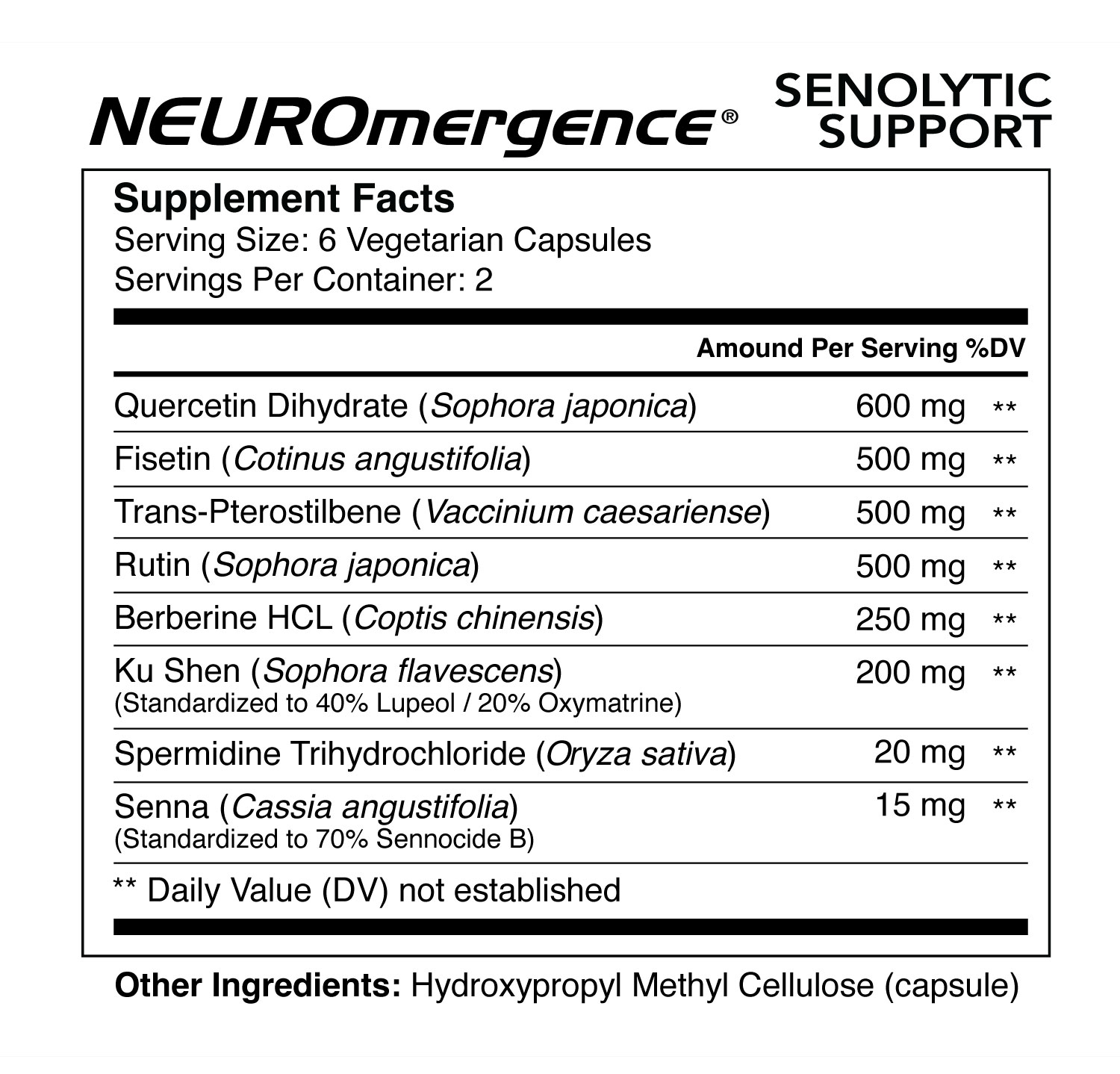



TWO-DAY CELLULAR RENEWAL CYCLE*
SENOTHERAPEUTICS: UNLOCKING THE SECRETS OF AGING
Senotherapeutics are a fast-growing area of anti-aging research. As we age, our cells gradually accumulate what are known as senescent cells, often referred to as zombie cells. Senotherapeutics, which include both senolytics and senomorphics, are being studied for their potential to help the body clear these "zombie" cells and renew healthy tissue. The most studied combination in this field is D+Q, a pairing of Dasatinib and Quercetin. That research is the starting point from which NEUROmergence® was developed.
THE RESEARCH BEHIND D+Q
The D+Q combination pairs Dasatinib, a tyrosine kinase inhibitor, with Quercetin, a flavonoid known for its antioxidant properties. A 2019 human clinical trial reported encouraging early findings on senescent-cell clearance in people [1], and the combination has since become one of the most actively studied treatments in senolytic science. The work centers on a family of signalling pathways tied to aging, built around tyrosine kinase enzymes and receptors. Quercetin is one of the two original compounds in that research, making it a natural foundation for the formula.

BUILT BY MAPPING D+Q PATHWAYS
A 2020 research paper reported that certain plant-derived compounds have been studied on many of the same pathways explored in Dasatinib research [2]. Several studies have looked at what are sometimes called "nutritional" senolytics and found they may carry senotherapeutic properties of their own. That is the research behind NEUROmergence®. The formula was developed methodically, beginning with a thorough review of the D+Q pathway literature, then selecting well-researched natural compounds that had already been examined for their ability to inhibit those same pathways.
Several of these compounds have also been studied for their role in regulating AMPK*, a cellular energy pathway. A 2015 study looked at how AMPK activation relates to aging [3].

NEUROmergence® is a simple two-day regimen made to back your body's own cellular cleanup process*. It is built from eight well researched compounds in longevity science, each with a proven safety profile. With no prescription, and no daily pill, NEUROmergence® is a well tolerated solution that brings some of the most advanced anti-aging research home, and accessible for anyone. Many users report feeling clearer, more focused, and more energized.
WHAT IS IN NEUROMERGENCE®?
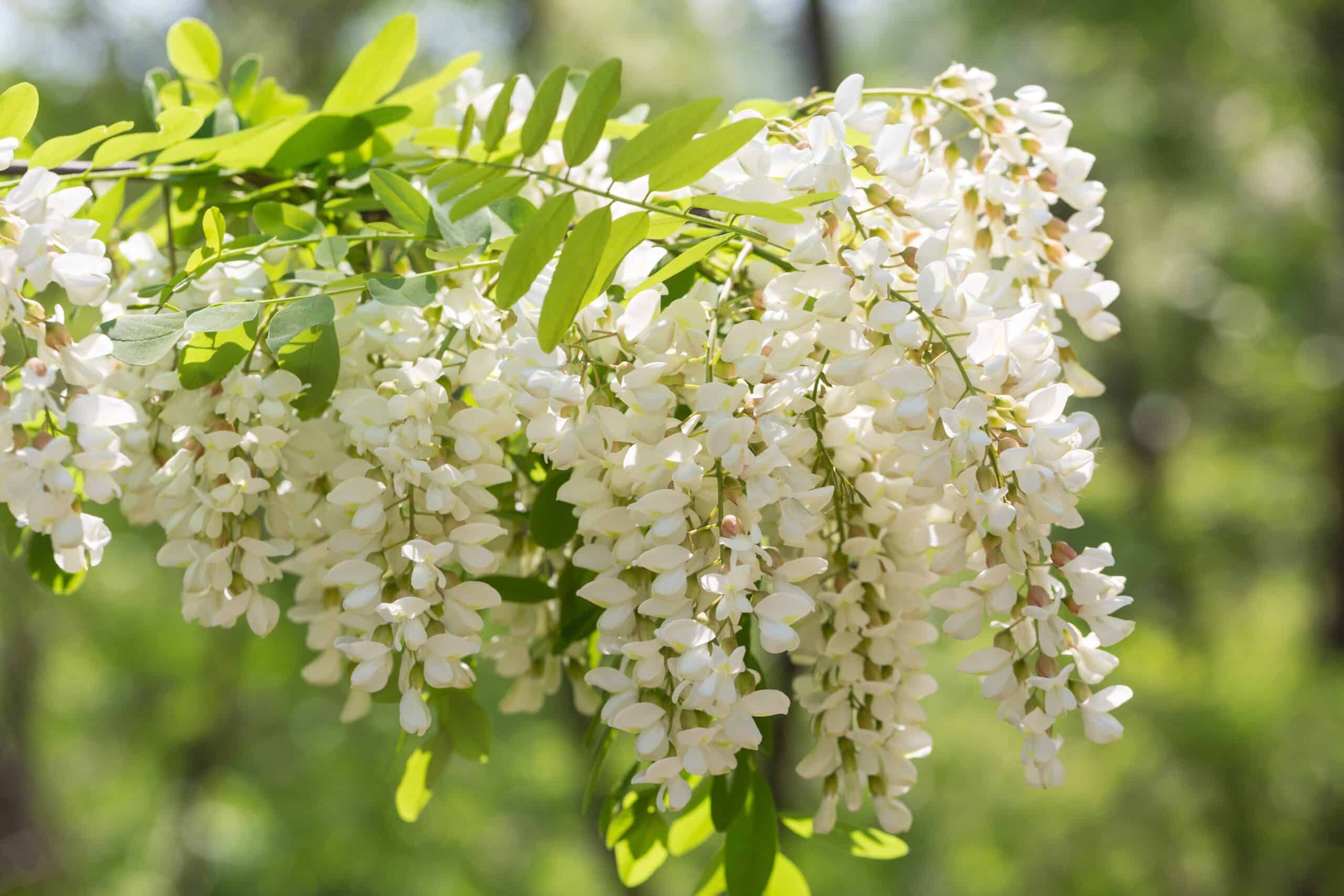 |
Quercetin
Sophora japonica
A flavonoid found in apples, onions, and berries, known for antioxidant and anti-inflammatory properties and studied for its role in immune and cardiovascular health. It is also one of the two original compounds in senolytic research, examined on survival pathways used by senescent cells, including the SRC family and BCL-2. |
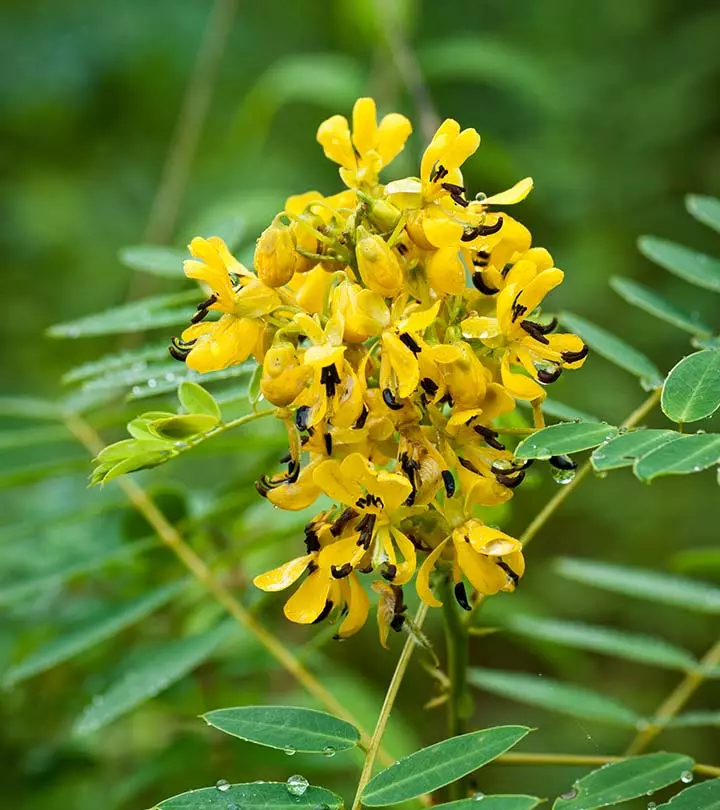 |
Senna
Cassia angustifolia (standardized to 70% Sennoside B)
Senna contains sennoside B, which has been studied on the PDGFR-β pathway, a target of Dasatinib, which is the reason for its inclusion. |
 |
Fisetin
Cotinus coggygria
Found in strawberries and apples, fisetin is one of the most promising natural senotherapeutics in current research. Studies have explored its role in clearing senescent cells and its activity on the AMPK, mTOR, and CDK pathways. |
 |
Spermidine
Oryza sativa
A natural compound in wheat germ and soy, studied in humans for heart, brain, and immune health. It is best known for its role in autophagy, the body's cellular cleanup process, and has also been examined on the SRC family kinases (SRC, FYN, LYN) and BCL-2. |
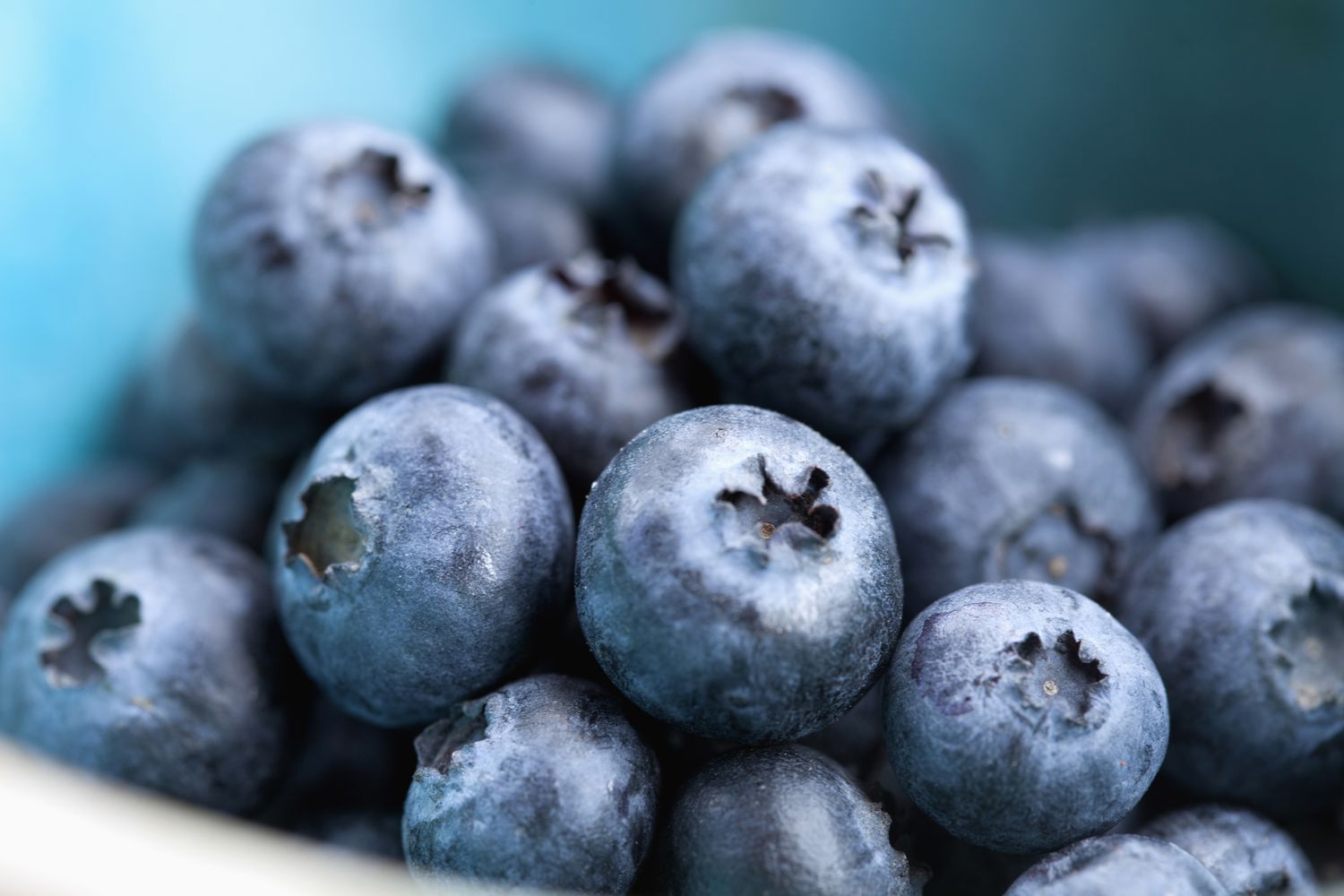 |
Pterostilbene
Vaccinium caesariense
A potent antioxidant found in blueberries and grapes that the body absorbs far more readily than resveratrol. Studied for healthy metabolism, brain, and heart aging, and examined for its activity on the BCR-ABL pathway and AKT and NF-κB signaling. Sourcing genuine pterostilbene at this purity is difficult, and it is one of the most carefully sourced ingredients in the formula. |
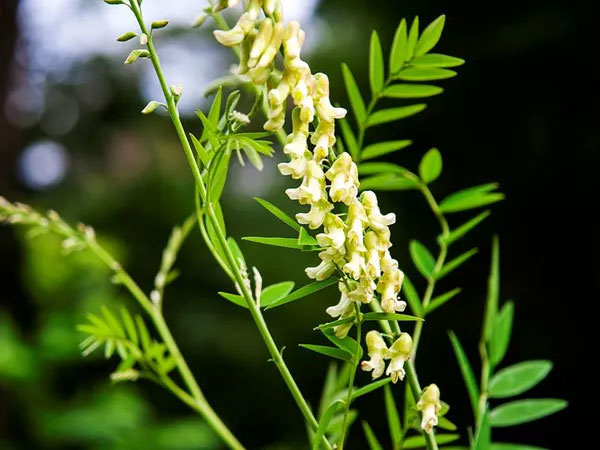 |
Ku Shen
Sophora flavescens (standardized to 40% Oxymatrine / 20% Lupeol)
Our Ku Shen extract is standardized to be rich in Oxymatrine and Lupeol. Oxymatrine has been studied on BCL-2, PDGFR, TGF-β/Smad, and NF-κB. Lupeol has been examined on the BCL-2/Bax pathway and NF-κB signaling. Both turn up repeatedly across senolytic research. |
 |
Berberine
Coptis chinensis
A plant compound studied for metabolic and cardiovascular health, including healthy blood sugar balance and cellular energy use. It is well studied for activating AMPK, and has also been examined on kinases like CSF1R, KIT, PIK3CD, and ROCK2. |
 |
Rutin
Sophora japonica
A flavonoid from buckwheat, citrus, and green tea, valued for antioxidant and vascular support. It is included as a companion to quercetin, since the body converts rutin to quercetin over time, giving a slower, steadier supply. It has also been studied on the c-Met pathway. |
Signaling Pathway Research:
Dasatinib (TKI) vs. Nutritional Senolytics
| Pathway / Target | Details | TKI | Nutritional Senolytics |
|---|---|---|---|
| BCR-Abl | Abl tyrosine kinase | ✓ | ✓ |
| SRC Family Kinases |
D+Q:
NEUROmergence:
|
✓ | Partial |
| c-KIT |
Downstream Pathways:
|
✓ | ✓ |
| c-Met | MET/HGF receptor | ✓ | ✓ |
| CSF1R | Colony-stimulating factor 1 receptor | ✓ | ✓ |
| BCL-2 | Anti-apoptotic regulator | ✓ | ✓ |
| CDK2 | Cell-cycle kinase | ✓ | ✓ |
| EphA2 | Ephrin receptor A2 | ✓ | ✓*** |
| PDGFR |
Isoforms:
|
✓ | (β only) |
*** The compound researched to inhibit EphA2 is not included in NEUROmergence®, but is available separately in Ginksentrol, which is intended to be combined with NEUROmergence®.
EVERY INGREDIENT IN ITS OWN LANE
A common approach in trendy supplement formulations is to stack as many popular compounds as possible — the longer the label, the more impressive it appears. The drawback is that many of those compounds end up acting on the same handful of pathways, and combination research suggests that loading multiple agents onto the same pathway tends to bring diminishing returns rather than added benefit. Meaningful coverage comes instead from compounds that each contribute something distinct — the same principle behind D+Q itself, where dasatinib and quercetin engage different arms of the senescent-cell survival network.
NEUROmergence® was built around that principle. Rather than assembling a long list of similar compounds, the formula was designed by first mapping the pathways studied in D+Q research, then selecting ingredients to cover that map with as little overlap as possible. Where ingredients do relate — such as rutin, which the body gradually converts to quercetin for a slower, steadier supply — the relationship is intentional and functional, not redundant. The goal was deliberate, mapped coverage: each ingredient chosen for the role it plays.*
Read the Full Research Behind NEUROmergence®
SUGGESTED PRODUCT USAGE
MDS Labs® follows an intermittent dosing approach.* Take 2–6 capsules daily for just two days, then pause for 10–15 days. Repeat the cycle once or twice a month. Simple, convenient, and easy to fit into any routine.*
ATTENTION:
If pregnant, nursing, or trying to conceive, do not use this product. If you take medications, have preexisting conditions, or suffer from allergies of any kind, please consult your physician before taking this, or any other dietary supplements. This formula contains senna, a stimulant-laxative herb; it is included at a low amount for its researched pathway activity rather than as a laxative, though some people may still notice a mild digestive or laxative effect. The information contained on this site has not been evaluated by the Food and Drug Administration.
* These statements have not been evaluated by the Food and Drug Administration.
These products are not intended to diagnose, treat, cure, or prevent any disease.
For any additional information, please reach out to:
support@mdslabs.shop
ABOUT MDS LABS

REFERENCES
[1] Hickson LJ, Langhi Prata LGP, Bobart SA, et al. Senolytics decrease senescent cells in humans: preliminary report from a clinical trial of dasatinib plus quercetin in individuals with diabetic kidney disease. EBioMedicine. 2019;47:446–456. [PubMed]
[2] Baier A, Szyszka R. Compounds from natural sources as protein kinase inhibitors. Biomolecules. 2020;10(11):1546. [PMC]
[3] Stancu AL. AMPK activation can delay aging. Discoveries (Craiova). 2015;3(4):e53. [PMC]
[4] Montero JC, Seoane S, Ocaña A, Pandiella A. Inhibition of Src family kinases and receptor tyrosine kinases by dasatinib: possible combinations in solid tumors. Clin Cancer Res. 2011;17(17):5546–5552. [Journal]
TWO-DAY CELLULAR RENEWAL CYCLE*
- A senolytic and senomorphic support formula*
- Formulated for cognitive function and healthy brain aging*
- Made to support clear thinking and everyday mental sharpness*
- Supports healthy skin and a vibrant appearance*
SENOTHERAPEUTICS: UNLOCKING THE SECRETS OF AGING
Senotherapeutics are a fast-growing area of anti-aging research. As we age, our cells gradually accumulate what are known as senescent cells, often referred to as zombie cells. Senotherapeutics, which include both senolytics and senomorphics, are being studied for their potential to help the body clear these “zombie” cells and renew healthy tissue. The most studied combination in this field is D+Q, a pairing of Dasatinib and Quercetin. That research is the starting point from which NEUROmergence® was developed.
THE RESEARCH BEHIND D+Q
The D+Q combination pairs Dasatinib, a tyrosine kinase inhibitor, with Quercetin, a flavonoid known for its antioxidant properties. A 2019 human clinical trial reported encouraging early findings on senescent-cell clearance in people [1], and the combination has since become one of the most actively studied treatments in senolytic science. The work centers on a family of signalling pathways tied to aging, built around tyrosine kinase enzymes and receptors. Quercetin is one of the two original compounds in that research, making it a natural foundation for the formula.
BUILT BY MAPPING D+Q PATHWAYS
A 2020 research paper reported that certain plant-derived compounds have been studied on many of the same pathways explored in Dasatinib research [2]. Several studies have looked at what are sometimes called “nutritional” senolytics and found they may carry senotherapeutic properties of their own. That is the research behind NEUROmergence®. The formula was developed methodically, beginning with a thorough review of the D+Q pathway literature, then selecting well-researched natural compounds that had already been examined for their ability to inhibit those same pathways.
Several of these compounds have also been studied for their role in regulating AMPK*, a cellular energy pathway. A 2015 study looked at how AMPK activation relates to aging [3].
NEUROmergence® is a simple two-day regimen made to back your body’s own cellular cleanup process*. It is built from eight well researched compounds in longevity science, each with a proven safety profile. With no prescription, and no daily pill, NEUROmergence® is a well tolerated solution that brings some of the most advanced anti-aging research home, and accessible for anyone. Many users report feeling clearer, more focused, and more energized.
WHAT IS IN NEUROMERGENCE®?
|
Quercetin
|
|
Senna
|
|
Fisetin
|
|
Spermidine
|
|
Pterostilbene
|
|
Ku Shen
|
|
Berberine
|
|
Rutin
|
Signaling Pathway Research:
Dasatinib (TKI) vs. Nutritional Senolytics
| Pathway / Target | Details | TKI | Nutritional Senolytics |
|---|---|---|---|
| BCR-Abl | Abl tyrosine kinase | ✓ | ✓ |
| SRC Family Kinases |
D+Q:
NEUROmergence:
|
✓ | Partial |
| c-KIT |
Downstream Pathways:
|
✓ | ✓ |
| c-Met | MET/HGF receptor | ✓ | ✓ |
| CSF1R | Colony-stimulating factor 1 receptor | ✓ | ✓ |
| BCL-2 | Anti-apoptotic regulator | ✓ | ✓ |
| CDK2 | Cell-cycle kinase | ✓ | ✓ |
| EphA2 | Ephrin receptor A2 | ✓ | ✓*** |
| PDGFR |
Isoforms:
|
✓ | (β only) |
*** The compound researched to inhibit EphA2 is not included in NEUROmergence®, but is available separately in Ginksentrol, which is intended to be combined with NEUROmergence®.
EVERY INGREDIENT IN ITS OWN LANE
A common approach in trendy supplement formulations is to stack as many popular compounds as possible — the longer the label, the more impressive it appears. The drawback is that many of those compounds end up acting on the same handful of pathways, and combination research suggests that loading multiple agents onto the same pathway tends to bring diminishing returns rather than added benefit. Meaningful coverage comes instead from compounds that each contribute something distinct — the same principle behind D+Q itself, where dasatinib and quercetin engage different arms of the senescent-cell survival network.
NEUROmergence® was built around that principle. Rather than assembling a long list of similar compounds, the formula was designed by first mapping the pathways studied in D+Q research, then selecting ingredients to cover that map with as little overlap as possible. Where ingredients do relate — such as rutin, which the body gradually converts to quercetin for a slower, steadier supply — the relationship is intentional and functional, not redundant. The goal was deliberate, mapped coverage: each ingredient chosen for the role it plays.*
Read the Full Research Behind NEUROmergence®
SUGGESTED PRODUCT USAGE
MDS Labs® follows an intermittent dosing approach.* Take 2–6 capsules daily for just two days, then pause for 10–15 days. Repeat the cycle once or twice a month. Simple, convenient, and easy to fit into any routine.*
ATTENTION:
If pregnant, nursing, or trying to conceive, do not use this product. If you take medications, have preexisting conditions, or suffer from allergies of any kind, please consult your physician before taking this, or any other dietary supplements. This formula contains senna, a stimulant-laxative herb; it is included at a low amount for its researched pathway activity rather than as a laxative, though some people may still notice a mild digestive or laxative effect. The information contained on this site has not been evaluated by the Food and Drug Administration.
* These statements have not been evaluated by the Food and Drug Administration.
These products are not intended to diagnose, treat, cure, or prevent any disease.
For any additional information, please reach out to:
support@mdslabs.shop
ABOUT MDS LABS
REFERENCES
[1] Hickson LJ, Langhi Prata LGP, Bobart SA, et al. Senolytics decrease senescent cells in humans: preliminary report from a clinical trial of dasatinib plus quercetin in individuals with diabetic kidney disease. EBioMedicine. 2019;47:446–456. [PubMed]
[2] Baier A, Szyszka R. Compounds from natural sources as protein kinase inhibitors. Biomolecules. 2020;10(11):1546. [PMC]
[3] Stancu AL. AMPK activation can delay aging. Discoveries (Craiova). 2015;3(4):e53. [PMC]
[4] Montero JC, Seoane S, Ocaña A, Pandiella A. Inhibition of Src family kinases and receptor tyrosine kinases by dasatinib: possible combinations in solid tumors. Clin Cancer Res. 2011;17(17):5546–5552. [Journal]
Reviews
There are no reviews yet.