
Nov
08
Three Routes to Autophagy: Dendrobine, Sinomenine and a Six-Herb Formula
0 Comments
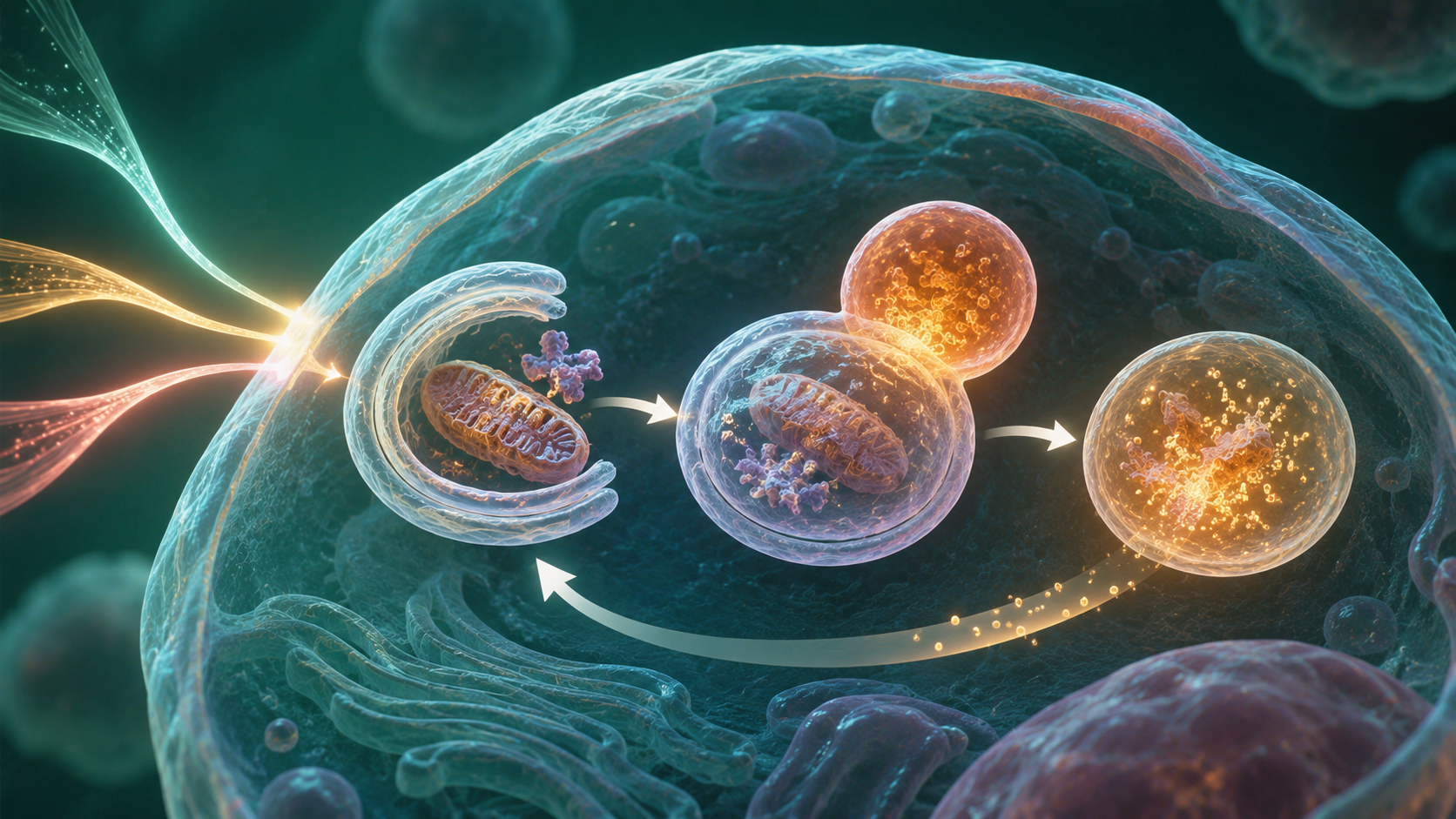
Autophagy is the cell’s recycling service, and it slows down with age. Three botanical preparations reach it by three different routes, in three different organisms, and all three routes turn out to be the same axis seen from different angles.
The short version
Cells wear out their own parts. Proteins misfold, mitochondria stop working properly, debris accumulates. Rather than replacing the whole cell, the cell breaks the broken parts down and reuses the pieces. The process is called autophagy, which literally means self-eating.
Autophagy slows with age, and the slowdown is one of the recognised hallmarks of aging. When recycling falls behind, damaged material builds up inside tissues, which is a decent plain description of what aging looks like at the cellular level.
What governs the rate is a nutrient-sensing system. When a cell detects plenty of food around, it grows and postpones housekeeping. When food is scarce, housekeeping runs. The central switch is mTOR, and it keeps appearing in this field because turning it down is the most reliable way anyone has found to extend life in animals.
Three botanical preparations reach that system from different directions. Dendrobine from Dendrobium nobile extends yeast lifespan through a nutrient-sensing pathway. Sinomenine inhibits PI3K/AKT/mTOR in mice and restores autophagy in brain tissue, with motor function improving alongside. Yixin-Fumai, a six-herb formula, enhances autophagy in aging mice through PI3K/AKT/FOXO.
What to do with that: autophagy is the mechanism to look for in a longevity ingredient, and the practical test is whether a compound was shown to move autophagy markers rather than just antioxidant markers. The named markers are LC3, Beclin1 and p62. If a product cites research on a compound, those three words in the abstract tell you it belongs in this category; their absence means it probably does not.
Why autophagy is the mechanism that matters
Deregulated nutrient sensing and disabled autophagy both appear among the hallmarks of aging, and they are the same story told twice. The nutrient sensor decides whether housekeeping runs; housekeeping is what clears the damage.
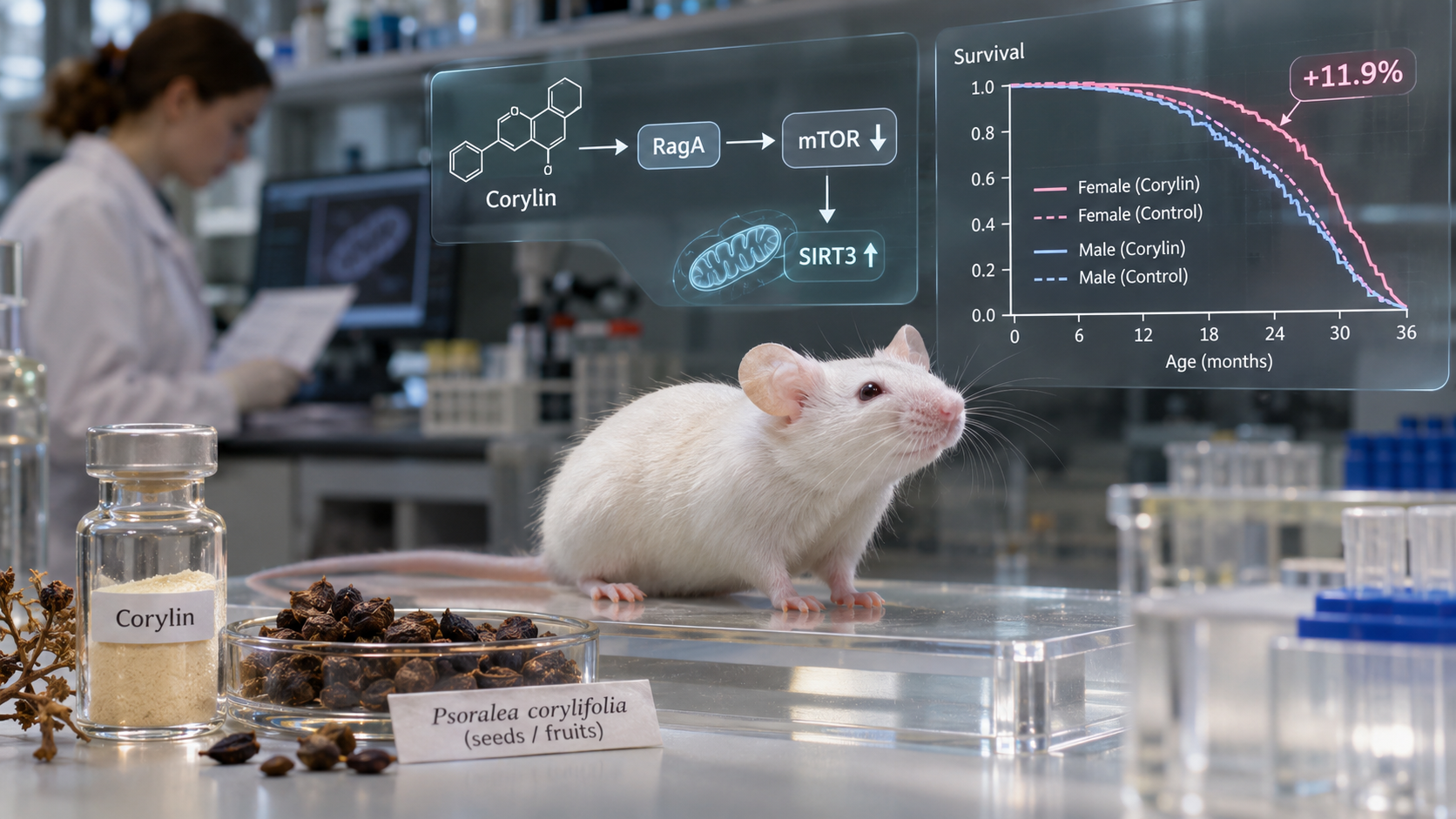
This is also the reason rapamycin occupies the position it does. Rapamycin inhibits mTOR, autophagy resumes, and it remains the most consistently reproduced life-extending drug in mammals. Any natural compound shown to move the same system earns a closer look, which is why corylin attracted attention when it was found to bind RagA, the sensor upstream of mTOR.
Route one: a yeast lifespan screen
Dendrobium nobile is recorded in Chinese materia medica as promoting longevity. Researchers took that claim seriously enough to test it directly, using a yeast replicative lifespan assay to guide which fraction of the plant to isolate. The compound that fell out was dendrobine.
Dendrobine extended both replicative and chronological lifespan in yeast through the Sch9/Rim15/Msn2 pathway, with effects on oxidative stress and autophagy confirmed using knockout strains missing individual antioxidant enzymes and autophagy genes (Wu et al., 2023).
Yeast is a long way from a person, and that is the honest caveat. The method is the interesting part: the isolation was driven by lifespan rather than by whichever assay was convenient, so the compound was selected for the outcome rather than for a proxy. Sch9 is also the yeast counterpart of the kinases that sit immediately downstream of mTOR in mammals, so the pathway is not as alien as the organism.
Route two: a mammal, with function measured
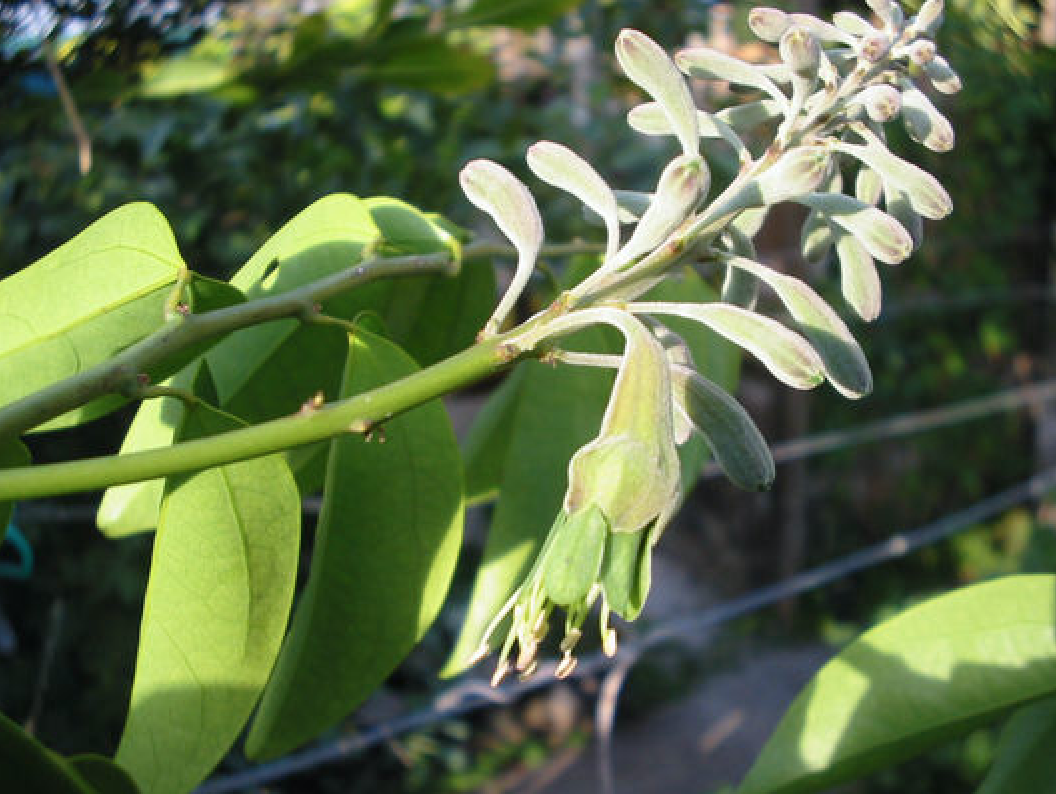
Sinomenine is an alkaloid from Sinomenium acutum. In mice given MPTP to model Parkinson’s disease, sinomenine inhibited PI3K/AKT/mTOR signalling and enhanced autophagy in dopaminergic neurons.
The study measured both sides. Autophagy markers moved in the expected directions, with Beclin1 and LC3-II rising and p62 falling, and the tissue showed more surviving tyrosine hydroxylase positive neurons. Motor function was assessed by rotarod, grip strength and footprint analysis (Bao et al., 2024).
Measuring function alongside markers is what separates a mechanistic observation from a result. The animals moved better, and the tissue explained why.
Route three: a formula, in aging animals
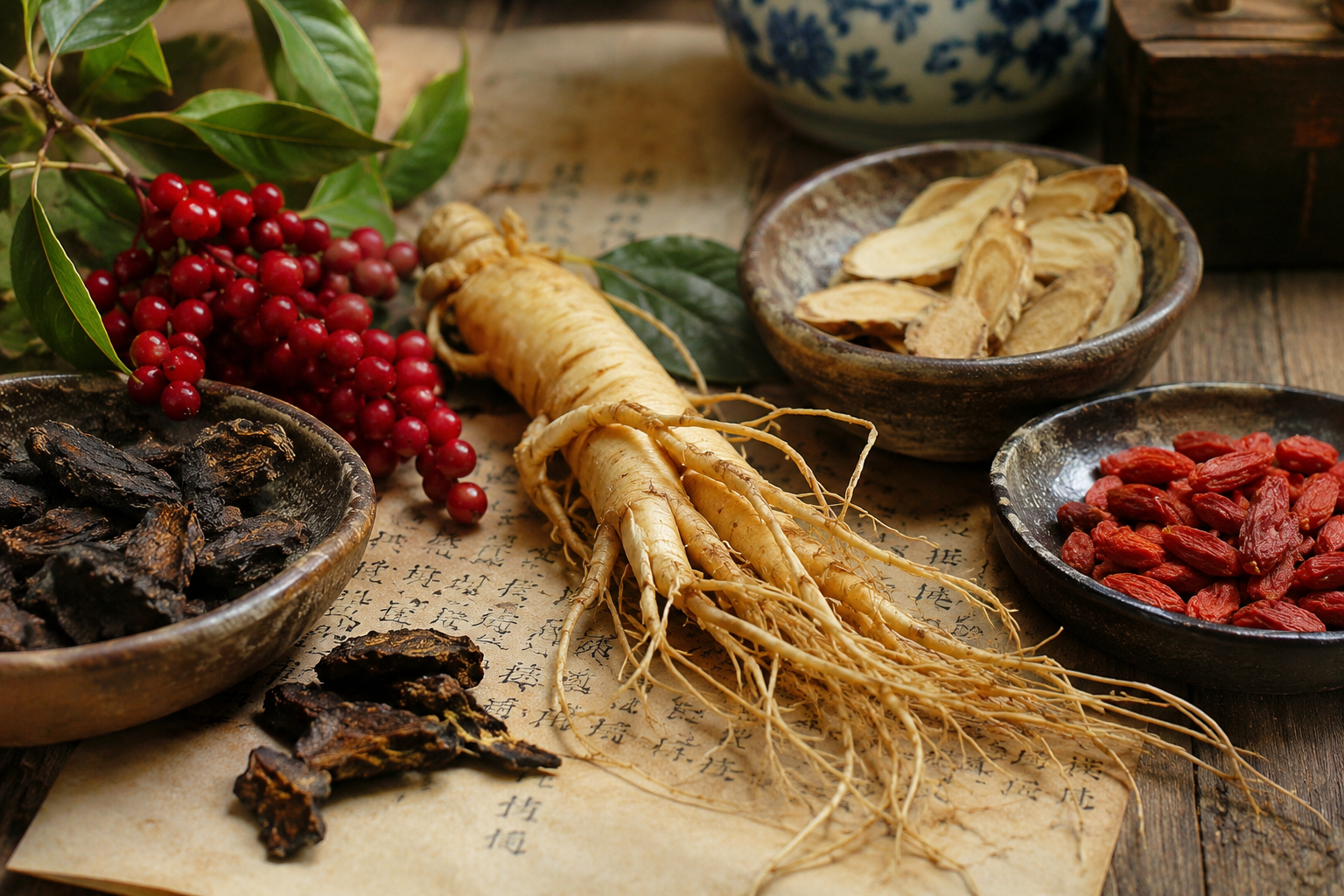
Yixin-Fumai granules combine ginseng, Ligusticum wallichii, ophiopogon, schisandra, salvia and astragalus. In aging mice, the formula enhanced autophagy through the PI3K/AKT/FOXO pathway, with network pharmacology and molecular docking used to map which constituents reach which targets (Jin et al., 2024).
FOXO is worth knowing about. It is a transcription factor that switches on the genes for stress resistance and recycling, and AKT keeps it switched off. Reduce AKT signalling and FOXO goes to work. FOXO variants are also among the few gene associations that turn up repeatedly in human longevity studies.
Two of this formula’s six herbs appear in our vascular aging article, since salvia is the source of tanshinone IIA and astragalus the source of astragaloside IV. The same plants keep arriving in different problems.
What the three have in common
PI3K/AKT/mTOR, PI3K/AKT/FOXO and Sch9/Rim15/Msn2 look like three unrelated pathways written three ways. They are closer than that. All three describe a nutrient-sensing cascade that decides between growth and maintenance, with Sch9 the yeast counterpart of the mammalian kinases in the same position and FOXO the output that AKT suppresses.
So three preparations, found independently in three organisms, converged on one axis. That convergence is the reason this cluster is worth reading together instead of separately, and it is a specific instance of the argument in our piece on multi-target formulations.
Limitations
One of these results is in yeast and the other two are in mice, with no human data for any aging outcome, and autophagy markers in tissue show that a pathway moved rather than that a person will age more slowly.
Citations
[1] Wu et al. Involvement of the Sch9/Rim15/Msn2 signaling pathway in the anti-aging activity of dendrobine from Dendrobium nobile Lindl. Chin Med. 2023;18(1):111. PMID 37670345
[2] Bao et al. Sinomenine exerts a neuroprotective effect on PD mouse model through inhibiting PI3K/AKT/mTOR pathway to enhance autophagy. Int J Neurosci. 2024. PMID 35815397
[3] Jin et al. Yixin-Fumai granules modulate autophagy through the PI3K/AKT/FOXO pathway and lead to amelioration of aging mice. Immun Ageing. 2024. PMID 38971780
[4] López-Otín C, Blasco MA, Partridge L, Serrano M, Kroemer G. Hallmarks of aging: an expanding universe. Cell. 2023;186(2):243-278. PMID 36599349
These statements have not been evaluated by the Food and Drug Administration. Nothing here is intended to diagnose, treat, cure or prevent any disease.
Categories:
MDS Research Articles