
Nov
18
Inhibiting IL-11 With Botanicals: Si Wei Yan Nian Dan, a Formula on Paper
0 Comments
Inhibiting one inflammatory cytokine extended mouse lifespan by roughly a quarter. Two botanical compounds act on that same cytokine directly, a third raises the exposure of the first by more than fourfold, and a fourth is the inhibitor the tested traditional formula actually contains. This is the evidence behind each of them, and the four-substance formula that evidence points to, which we are putting forward as a proposal on paper: Si Wei Yan Nian Dan.
- In 2024, inhibiting interleukin-11, an inflammatory signalling protein usually shortened to IL-11, extended median lifespan in mice by 22.5% in males and 25% in females, and genetic deletion of the gene extended life by 24.9% on average. The intervention was a neutralising antibody, given from 75 weeks of age.
- Osthole, a coumarin from Cnidium monnieri, inhibits IL-11/ERK1/2 signalling in mice at 10 and 20 mg/kg by oral gavage, and does so directly, independently of the pathway upstream of it.
- The obstacle is absorption. Osthole dissolves poorly in water and is cleared quickly.
- Taken inside the traditional Bushen-Yizhi formula, osthole reached roughly 9.6 times the blood exposure of the same dose given alone in rats. The mechanism is CYP3A4 inhibition.
- The published work attributes that to Schisantherin B, a Schisandra lignan. Bushen-Yizhi contains no Schisandra. We set out the composition below so the discrepancy is on the record.
- A better-supported carrier sits inside the source herb. Imperatorin, a coumarin that co-occurs with osthole in Cnidium monnieri and shares its quality-marker status, was shown in human intestinal cells to promote osthole uptake by reducing P-glycoprotein efflux and loosening tight junctions. Purifying osthole away from it removes the transporter.
- CYP3A4 inhibition raises blood levels of many prescription drugs. That has to be disclosed, and the article says where the line sits. Furanocoumarins also photosensitise, so sun exposure is a second label caution.
- What to do with that: a high-percentage osthole extract is the worse product, which is the reverse of how this category usually works. Purifying toward osthole strips out the imperatorin that carries it across the gut wall, so a label naming both compounds is telling you something that a label boasting 98% is not. The second thing worth knowing does not appear on most labels at all: this class inhibits CYP3A4, the enzyme that clears a long list of prescription drugs. Anyone on a statin, a calcium channel blocker or a benzodiazepine should settle that with a doctor or pharmacist first, and anyone taking it should expect to burn more easily in the sun.
What this supports. There is a published, mechanistically specific basis for a botanical that engages IL-11 signalling. There is no human trial, no lifespan data outside the antibody work, and no basis whatsoever for claiming that any supplement reproduces what a monoclonal antibody did in mice. The most a product here can honestly claim is support. Inhibition on a therapeutic scale is a different order of effect, and it belongs to the antibody work.
New to this? The Evidence Lab explains how supplement research works in plain language, including how to read a study like this one and what is worth checking before trying anything.
The finding that started it
IL-11 is a pro-inflammatory cytokine in the IL-6 family. Work published in Nature in July 2024 showed that as mice age, IL-11 is upregulated across cell types and tissues, where it regulates a chain of three signalling systems, ERK, AMPK and mTORC1, which between them govern how cells grow, how they sense available energy, and when they switch between building and recycling. Those are three of the most heavily studied pathways in aging biology, and IL-11 sits upstream of all of them.
Removing it had consequences on the scale rarely seen in this field. Deletion of Il11 or Il11ra1 protected mice against metabolic decline, multi-morbidity and frailty. Administering an anti-IL-11 antibody to 75-week-old mice for 25 weeks improved metabolism and muscle function and lowered ageing biomarkers and frailty in both sexes. In the lifespan arm, genetic deletion extended life by 24.9% on average, and antibody treatment begun at 75 weeks and continued until death extended median lifespan by 22.5% in males and 25% in females.
The authors noted that anti-IL-11 therapy was already in early-stage clinical trials for fibrotic lung disease, and suggested that as the translational route into human aging.
That is the correct route. A monoclonal antibody, dosed parenterally, under clinical supervision, in trials designed to measure it. Nothing in the nutrition literature is a substitute for that, and any product implying otherwise is lying.
Where a botanical enters
The useful question is narrower: does any dietary compound engage the same signalling node at all, with evidence specific enough to be worth building on?
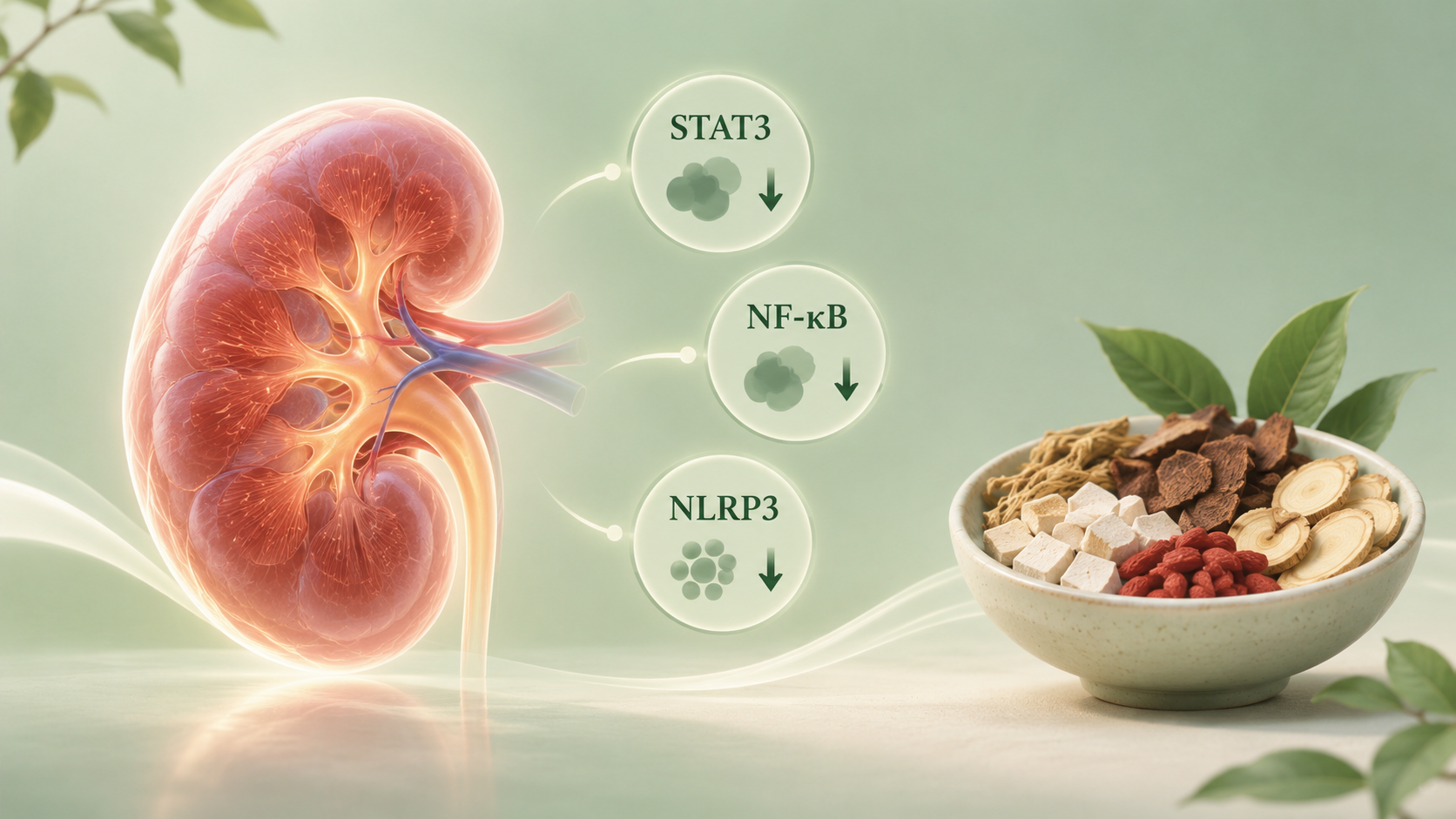
One does. In 2021, a group at Tongji Medical College tested osthole, a coumarin from the fruit of Cnidium monnieri, in a renal fibrosis model. Thirty-two male C57BL/6 mice were divided into sham, model, 10 mg/kg and 20 mg/kg osthole groups, six per group, dosed daily by oral gavage for two weeks after unilateral ureteral obstruction.
Osthole reduced α-smooth muscle actin, collagen I and fibronectin, and ameliorated the fibrosis. More to the point here, IL-11/ERK1/2 signalling was markedly upregulated in the obstructed kidneys, and osthole treatment significantly inhibited that activation.
The authors then did the step that makes this study worth citing. Because IL-11 sits downstream of TGF-β, an effect on IL-11 could simply be an echo of an effect further up. So they moved to human kidney tubular cells driven by IL-11 directly, with TGF-β out of the picture, and osthole still suppressed the fibrotic proteins. The ERK inhibitor U0126 partly blocked osthole’s effect, placing it on that arm of the pathway.
One detail is worth pausing on. In the IL-11-driven cells, osthole lowered the fibrotic proteins without changing their messenger RNA levels. IL-11 is known to act translationally rather than transcriptionally, so a compound that suppresses the protein while leaving the transcript alone is behaving the way an IL-11-axis intervention should. That is a coherence check. The result behaves internally the way the mechanism predicts, which falls short of proof and still counts for more than a correlation.
A second compound, and the limits of its evidence
Osthole is no longer alone. In 2025 a group working on intervertebral disc degeneration identified IL11 as upregulated in degenerated human nucleus pulposus tissue, then screened natural compounds against the two receptor subunits the cytokine signals through, IL11RA and IL6ST. Amentoflavone, a biflavonoid, came out as the lead. It reduced IL11 expression and downstream fibrotic markers in cells, and attenuated disc degeneration, inflammatory cytokines and fibrosis in mice.
The in vivo result is solid. The mechanism in the title has not been demonstrated. Identification of amentoflavone as a dual-target IL11RA and IL6ST inhibitor came from molecular docking, and no binding assay accompanies it, so the receptor claim is a prediction that the efficacy experiments were never designed to test. That is the same structure as the database attribution discussed below, and it deserves the same discount.
Source matters for this one. Amentoflavone occurs in Selaginella tamariscina and Ginkgo biloba, and also in Hypericum perforatum, which is the one to avoid: St John’s wort is a potent CYP3A4 inducer, the opposite of what the rest of this formulation is trying to achieve, and the best-documented interaction herb in the pharmacopoeia. Biflavonoid absorption is also poor, and nothing in this formulation solves that.
The absorption problem
Osthole has a problem that has defeated more promising compounds than this one. It dissolves poorly in aqueous media, absorbs moderately and is metabolised quickly. A 2024 review in the American Journal of Chinese Medicine describes exactly that profile and catalogues the engineered delivery systems built to get around it.
A compound that works at 10 mg/kg by gavage in a mouse is not automatically a compound that does anything useful in a capsule.
What the traditional formula actually did
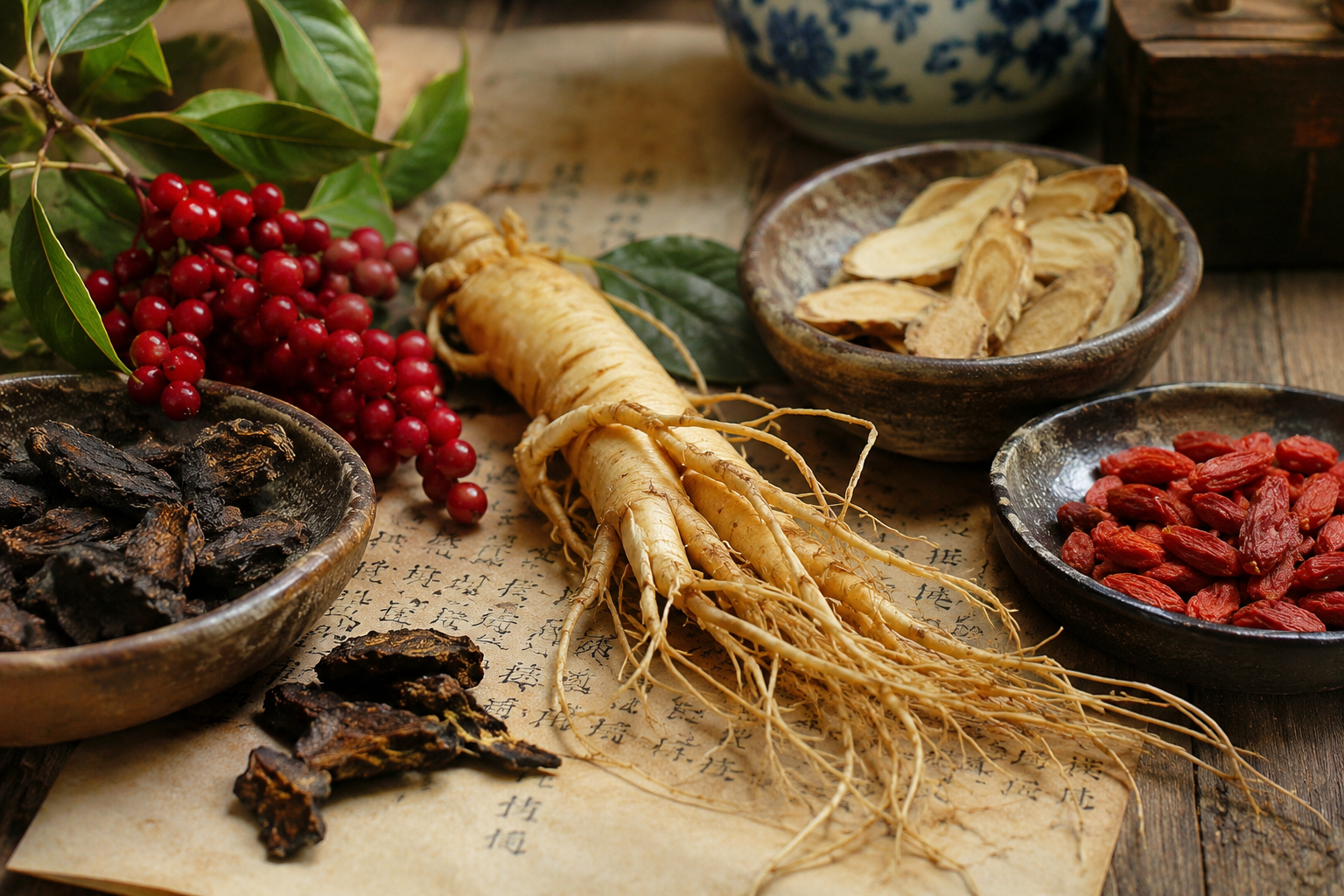
Bushen-Yizhi is a patented traditional prescription (ZL200610112916.1) used for kidney deficiency and cognitive decline. Its composition is six herbs in a 3:3:2:2:2:2 ratio:
- She Chuang Zi
- Cnidium monnieri (L.) Cuss., fruit — the osthole source
- Ren Shen
- Panax ginseng C.A. Mey., rhizome
- Zhi He Shou Wu
- Prepared Polygonum multiflorum Thunb., radix
- Mu Dan Pi
- Paeonia suffruticosa Andr., cortex (Moutan Cortex)
- Nv Zhen Zi
- Ligustrum lucidum Ait., fruit
- Gou Qi
- Lycium barbarum L., fruit
In 2021 a group asked why the formula appeared to outperform its isolated active. They screened its constituents computationally for CYP3A4 inhibition, verified the hits in vitro, then measured osthole exposure in rats:
- Pure osthole: AUC 228 ng/L·h
- Osthole with ketoconazole, a pharmaceutical CYP3A4 inhibitor: 463
- Osthole with isolated Schisantherin B: 1,053
- Osthole inside the whole Bushen-Yizhi formula: 2,196
Four compounds verified as CYP3A4 inhibitors: oleic acid, 1,2,3,4,6-pentagalloylglucose, rutin and Schisantherin B. Schisantherin B was the most potent, with an IC50 of 0.339 µM, outperforming ketoconazole at 5 µM.
An inconsistency worth stating before someone else finds it
Schisantherin B is a dibenzocyclooctadiene lignan characteristic of Schisandra, and specifically of Schisandra sphenanthera rather than the commoner S. chinensis. There is no Schisandra in the six herbs above.
Two checks were worth making before concluding anything. The first is whether the compound travels under another name from another plant. It does, and the alias matters: Schisantherin B and Gomisin B are the same molecule, CAS 58546-55-7, along with Wuweizi ester B and Schisandrer B. The gomisin series was named by Japanese groups working on gomishi, the Schisandra fruit, so the alias points back to the same genus. The compound does occur outside S. chinensis, in Kadsura angustifolia and Schizandra arisanensis, but both sit inside the Schisandraceae. The dibenzocyclooctadiene skeleton does not leave that family, and none of the six Bushen-Yizhi herbs belongs to it.
The alias matters here. A second group reported the same compound under the Gomisin B name in 2023, giving it to APP/PS1 mice, a strain engineered to develop the amyloid plaques seen in Alzheimer’s disease alongside osthole and finding that the pair outperformed either alone on learning, memory, amyloid plaque burden and endoplasmic-reticulum stress markers. So two independent papers describe this molecule acting with osthole, under two different names, in a formula that contains neither it nor its plant. The second is whether more than one formula carries the Bushen-Yizhi name. Four separate publications describe it as the same six herbs, two of them citing the same patent, and none of them lists Schisandra.
The screen was built from a systems-pharmacology database rather than from an assay of the batch, so the attribution of that lignan to this formula is open to question. What is not in question is what was measured directly: the whole formula raised osthole exposure roughly 9.6-fold, and isolated Schisantherin B, dosed as a compound, raised it roughly 4.6-fold. Both of those are direct measurements in rats. It is the link between the two, the claim that Schisantherin B is why the formula works, that the composition does not support.
Of the other three verified inhibitors, pentagalloylglucose is documented in Moutan Cortex, one of the six herbs, while rutin is widespread in plants and oleic acid is ubiquitous. Any of them could contribute. None was carried into the rat arm, so none has been shown to raise osthole exposure in an animal.
The likely route is an ordinary one. A formula’s compound library is usually assembled by pooling each constituent herb’s entry from the database, and the pooling is done by name. Bushen is a category prefix shared by a great many formulas, several of which do contain Schisandra. A library built for the wrong one, or merged with one, brings Schisandra’s compounds into the pool. Schisantherin B is a well-documented CYP3A4 inhibitor, so it ranks near the top of any screen it enters, and the in vitro assay then confirms a potency that was never in doubt. The rat arm dosed the isolated compound and the whole formula in separate groups, so no step in the design was capable of surfacing the discrepancy. That account is plausible and unproven. Settling it takes a laboratory analysis of an actual batch, separating the compounds present and identifying them by mass, and nobody has published one.
We use the compound anyway, and an article that questions an attribution and then builds on it owes the reader the reason. Schisandra is in our four on two direct measurements: isolated Schisantherin B raised osthole exposure 4.6-fold in rats, and the same molecule under the Gomisin B name outperformed either compound alone in APP/PS1 mice. Both dosed the isolated compound, so neither depends on what Bushen-Yizhi contains. What we do not carry over is the claim that this lignan explains the 9.6-fold rise the whole formula produced. That effect was measured and is still unassigned to any constituent, which is the open question this episode leaves behind.
Building a product around the Schisandra lignan would also mean sourcing S. sphenanthera assayed for schisantherins, when essentially every Schisandra extract in commerce is S. chinensis standardized to schisandrins, which are different compounds.
What actually carries osthole
There is a better answer, and it has been sitting inside the source herb the whole time.
Cnidium monnieri fruit yields a family of coumarins, and osthole is one of them. An isolation study recovered eleven from the fruit: osthole, bergapten, xanthotoxol, xanthotoxin, imperatorin, isopimpinellin, osthenol, psoralen and three others. Osthole and imperatorin are together regarded as the quality markers of medicinal Fructus Cnidii, which is to say the pharmacopoeial identity of the herb rests on both.
In 2024, a group ran imperatorin through a Caco-2 human intestinal cell model to ask what it does to the absorption of the compounds it travels with. Imperatorin promoted the uptake of osthole. The mechanism they identified was a reduction in cell membrane potential, a decrease in P-glycoprotein-mediated efflux, suppression of P-gp expression, and loosening of tight junctions.
That is a direct measurement on osthole specifically, in human intestinal cells, naming a compound that is already in the herb at marker-level abundance. It is a stronger result than an inference from a database attribution, and it carries a formulation consequence that runs opposite to the industry instinct.
The instinct is to purify. Isolate the active, raise the percentage, call it standardized. If imperatorin is what carries osthole across the gut wall, purifying osthole away from the rest of the coumarin fraction removes the thing that was making it work. A total-coumarin extract of the fruit keeps the transporter attached to the compound it has to transport.
There is a caution attached that belongs in the same paragraph. Imperatorin, bergapten, xanthotoxin and psoralen are furanocoumarins, and furanocoumarins are photosensitizers; psoralen with ultraviolet A is an established clinical phototherapy, which is a measure of how strong the effect can be. Furanocoumarins are also the class behind grapefruit’s CYP3A4 interaction. A full-spectrum Cnidium extract therefore carries both a sun-sensitivity caution and a CYP interaction caution on its own, before anything is added to it.
What the CYP3A4 interaction actually involves
The mechanism here is CYP3A4 inhibition, the enzyme that metabolises a large share of prescription drugs including many statins, calcium channel blockers, benzodiazepines, immunosuppressants and anticoagulants. It is the same mechanism behind grapefruit’s interaction warnings.
This is a real consideration, and it applies to a large part of the category. Piperine, sold in thousands of products specifically to raise the absorption of other compounds, works the same way. Berberine, resveratrol, pterostilbene and quercetin all carry CYP interaction potential. A supplement industry that excluded every CYP-active botanical would exclude much of its own shelf.
The scale of it is not theoretical, though, and the clearest human demonstration comes from the same genus. Wuzhi tablet is an ethanolic Schisandra sphenanthera extract used clinically as a tacrolimus-sparing agent in renal transplant patients. In a prospective study in CYP3A5 expressers, co-administration raised dose-adjusted tacrolimus trough concentration by an average of 199% and AUC by 126%, allowing a 41% reduction in the tacrolimus dose. A Schisandra extract is potent enough at this that hospitals use it deliberately to cut the cost of an immunosuppressant.
That is the correct frame for the interaction question. A measured effect on a narrow-therapeutic-index drug in people, achieved by a botanical extract taken orally.
What the finding does oblige is proportionate disclosure. The inhibitor identified in this work was more potent in its assay than a pharmaceutical antifungal, which puts it above piperine on potency, and the label should say so plainly. Anyone taking prescription medication metabolised by CYP3A4 should not use a formula of this kind without clearing it with their doctor or pharmacist, and that belongs on the front of the product.
What a defensible formula looks like
The most defensible position is also the simplest: build what was actually tested, rather than a reconstruction of it from a database attribution.
- Core: Cnidium monnieri fruit extract, standardized to osthole
- The IL-11 evidence belongs to osthole, and a standardized botanical extract is the form in which that compound has a history of traditional use. Standardization is non-negotiable: without a declared osthole percentage the dose is unknown and the research does not attach to the product.
- Dose anchored to the animal work, with the conversion shown
- The in vivo doses were 10 and 20 mg/kg in mice. Standard body-surface-area conversion gives roughly 0.8 to 1.6 mg/kg, or about 55 to 115 mg of osthole per day for a 70 kg adult. That is a scaling convention. No human dose-ranging study exists, and anyone claiming otherwise is inventing it.
- Full-spectrum extract, standardized to osthole and imperatorin
- Both are the recognised quality markers of the herb, and imperatorin is the compound shown to promote osthole uptake. Declaring only osthole, or purifying toward it, discards the measured transport effect. This is the single most important formulation decision here and it points away from isolation.
- Companion herbs from the formula as composed
- Moutan Cortex carries pentagalloylglucose, one of the four verified CYP3A4 inhibitors, and the whole six-herb preparation outperformed every isolate in the rat experiment by roughly two to one. Following the tested composition is better supported than reconstructing it around a compound the formula does not contain.
- Taken with food containing fat
- Osthole’s other limitation is aqueous solubility, which a fat-containing meal addresses with no interaction cost at all.
- Front-of-label interaction disclosure
- CYP3A4 inhibition stated plainly, with the instruction to consult a doctor or pharmacist before use if taking any prescription medication.
Amentoflavone raises a genuine second option, and also a constraint. It is the only other compound with direct IL-11 evidence, which argues for including it. But amentoflavone inhibits CYP3A4 and CYP2C9 itself, so adding it to a formula already built around CYP3A4 inhibition stacks three inhibitors into one capsule. That is a real liability for anyone taking a statin, a calcium channel blocker, an anticoagulant or an immunosuppressant.
Which leaves two coherent builds rather than one. The conservative build is Cnidium alone, full-spectrum, standardized to osthole and imperatorin: one mechanism, the best evidence, a manageable interaction profile. The second build adds amentoflavone from Selaginella for the second IL-11 target and drops the Schisandra, since amentoflavone’s own CYP inhibition covers part of the exposure problem without a third inhibitor on top. What does not make sense is all three at once, which is the version that markets best and reads worst on a pharmacist’s screen.
We went with the first, and then added the herb that the human trial literature pointed at. The composition below is the result.
Two cautions belong with that, in the same breath rather than a separate page. Prepared Polygonum multiflorum has its own documented association with liver injury and is restricted in several jurisdictions, so its inclusion is a decision to make deliberately and with sourcing and dose attention, not by default because it appears in the formula. And no human has taken this preparation for IL-11 inhibition at a measured dose with an IL-11 readout. The formula is defensible as a faithful reconstruction of what was tested in rats. It is not a tested human intervention.
Si Wei Yan Nian Dan: the formula the evidence points to
Everything above is a reading of other people’s work. What follows is what we think it adds up to. It is a formulation on paper: nothing here has been extracted, made, dosed or tested, and the sections below are a proposal put forward for checking.
Si Wei Yan Nian Dan — 四味延年丹, the Four-Substance Extend-Years Elixir — is a modern formulation named in the traditional convention rather than a classical prescription, and we would rather say so than let the name imply a lineage it does not have. Si Wei counts the substances, the way Si Wu Tang and Si Jun Zi Tang do. Yan Nian, to extend years, is the classical vocabulary for what the Nature result describes in modern terms. Dan is the elixir form, which is both the preparation it would require and the older word for a longevity preparation.
- Cnidium monnieri fruit — She Chuang Zi
- The IL-11 active and its own transporter in a single herb. Full-spectrum extract standardized to osthole and imperatorin, not purified toward osthole, because imperatorin is the compound shown to carry osthole across the intestinal wall. This is the ingredient the whole formula exists to deliver.
- Schisandra chinensis fruit — Wu Wei Zi
- Standardized to schisantherin B, which is the same molecule as gomisin B. It does two jobs rather than one: it raises osthole exposure roughly 4.6-fold by inhibiting CYP3A4, and it is the compound reported to act synergistically with osthole on endoplasmic-reticulum stress, amyloid burden and memory in APP/PS1 mice. The exposure mechanism and the second active are the same ingredient.
- Paeonia suffruticosa bark — Mu Dan Pi
- Carries 1,2,3,4,6-pentagalloylglucose, one of the four CYP3A4 inhibitors verified in vitro in the rat study, and the one that is genuinely present in the traditional formula rather than attributed to it by a database. It is in this formula on the evidence of what was actually measured.
- Acorus tatarinowii — Shi Chang Pu
- Grassleaf sweetflag rhizome, and the only ingredient here carrying human evidence at formula level. A meta-analysis of 57 randomized trials in Alzheimer’s disease found that formulas containing Acori Graminei Rhizoma and Cnidii Rhizoma improved both the MMSE and the ADAS-cog against conventional care. Those two herbs are the first and second ingredients of this formula, and they were identified by somebody else’s trial data rather than by us.
Amentoflavone, from Selaginella tamariscina, was the obvious fourth member and it is not here. Its claim to act on IL-11 receptors rests on molecular docking with no binding assay behind it, biflavonoid absorption is poor and nothing in this formula solves that, and it inhibits CYP3A4 and CYP2C9 itself, which would stack a third inhibitor into a formula already built around CYP3A4 inhibition. Sweetflag replaces a prediction with a herb named in a 57-trial human analysis, and it costs nothing on the interaction side.
Why we propose it
The argument that convinced us is a matter of timing, and it runs in the direction that makes it worth something.
Bazi Bushen is a modern Chinese patent medicine for kidney-essence depletion, with a 530-subject randomized, double-blind, placebo-controlled trial behind it. Its literature begins in 2020. The osthole IL-11 paper is 2021, the CYP3A4 work 2022, the gomisin B synergy 2023, and the Nature lifespan result 2024. That formula was in production and under study before any of the IL-11 evidence existed, so it cannot have been designed around it.
In 2026 a group reported that the mitochondrial benefit in Bazi Bushen runs through the AMPK, SIRT and PGC-1α signalling chain, the route cells use to build and maintain mitochondria, and attributed it specifically to compounds from two of its constituents: Schisandra chinensis and Cnidium monnieri. Those are the same two herbs the IL-11 literature points at, arrived at independently, from a different question, years apart.
That convergence is the reason this formula is four substances rather than fourteen. We are not reproducing a tonic. We are building the part that two separate lines of evidence agree on, adding the verified CYP3A4 inhibitor that the tested formula actually contains, and including the one other compound with IL-11 data of its own.
The name is a naming convention and nothing more. No classical text describes this combination, and no human has taken it with an IL-11 readout. It is a modern formulation, built from compounds measured in animals and cells, and it takes its name from a tradition it has joined rather than inherited.
Why the preparation is not a decoction
Composition is only half a formula. The other half is what you do to the plants, and here the traditional preparation and the chemistry pull in different directions.
A decoction is water. The compounds this formula is built on are not water-friendly: osthole is a coumarin, schisantherin B is a dibenzocyclooctadiene lignan, amentoflavone is a biflavonoid, and all three sit well outside the range a hot-water extraction recovers efficiently. Osthole’s poor aqueous solubility is already the central obstacle this article has been circling. Boiling the herbs is the one preparation guaranteed to leave most of the intended actives in the dregs.
There is a published signal about where the useful material in this plant set actually sits. When a group went looking for the neuroprotective fraction of Bushen-Yizhi, the part that carried the activity was the ethyl acetate extract, and they named it in the title of the paper. That finding is about neuroprotection rather than IL-11, so it points at that fraction without establishing that it is optimal here. It is still the most specific guidance available for these herbs.
The chemistry agrees with it. Coumarins, dibenzocyclooctadiene lignans, biflavonoids and gallotannins all partition into ethyl acetate, and fractionation on that solvent has published precedent for Cnidium and Moutan Cortex individually. A single partition step that captures the actives of all four substances is an unusually convenient result for a four-herb formula, and it is the sort of convenience worth confirming on the actual co-extraction rather than assuming from the single-herb literature.
So the preparation would be a fractionated extract rather than a decoction or a simple tincture: partition, recover the ethyl acetate fraction, dry it, and reconstitute the powder as an elixir. Ethyl acetate is a Class 3 solvent under ICH Q3C, so residual solvent is handled by routine per-lot testing.
The cost of doing it this way belongs in the same paragraph as the benefit. Fractionation concentrates everything in that polarity range, and in Cnidium monnieri that includes the furanocoumarins. Imperatorin coming across is the point, since it is the compound that carries osthole. Bergapten, xanthotoxin and psoralen come across with it. Per milligram of osthole, a fraction therefore carries a heavier photosensitiser load than a crude extract does, and the sun-exposure caution that attaches to this herb carries more weight in this form.
Inventing formulas is ordinary. Whether ours is worth more is a fair question
Three of the formulas discussed in this article are modern inventions, which is worth saying because the word "traditional" tends to imply otherwise.
Bushen-Yizhi is covered by a Chinese patent, ZL200610112916.1, which is only possible because the composition is new. Bazi Bushen is a contemporary patent medicine whose published record begins in 2020. Lianhua Qingwen, the best-known of them internationally, came out of the SARS period of 2002 and 2003 and was later deployed against COVID-19. None of the three is a classical prescription. All three are laboratory products wearing traditional vocabulary.
Why laboratories do it
Four reasons, and only one of them is scientific. Classical formulas are public domain, so a company that wants exclusivity has to compose something new. Modern disease categories such as Alzheimer’s or metabolic syndrome have no classical equivalent to prescribe for. Industrial manufacture needs a fixed composition where a practitioner would have adjusted the decoction patient by patient. And national regulatory pathways have formal categories for new compound preparations, which creates an approval route that rewards novelty.
How they do it
Historically by modification: take a classical base, add and subtract herbs, which is an established clinical practice in its own right. Or by combining two classical formulas into one preparation. Both of those work within the theory and stay inside its logic.
The newer approach abandons that and starts from data. In one published example, researchers took the twenty-eight herbs most often used for type 2 diabetes, built protein interaction networks for the disease and for healthy tissue, then scored combinations computationally and proposed the ones that scored best as new formulae. This is now a developed field with its own theory, network target theory, and its own literature on applying it to drug development.
It is also, as this article has already shown at length, the method that put a Schisandra lignan inside a formula containing no Schisandra. A compound library assembled from a database and ranked by docking score will produce combinations that look rigorous and have never been near an assay.
What we did instead
We started from the target rather than the herb list. The sequence was: a named molecular target with a mammalian lifespan result behind it, then a search for any botanical with a direct experimental effect on that target, then the absorption obstacle for the one compound that qualified, then its solution from inside the same plant, then the verified inhibitor that the tested formula actually contains, and finally the only other compound with IL-11 data of its own.
Every ingredient is there on a measurement. Network pharmacology is a useful discipline and we are not claiming to have improved on it; this is a reaction to the specific failure this article documents.
Is it more meaningful than Bazi Bushen?
On evidence, no, and it is not close. Bazi Bushen has a 530-subject randomized, double-blind, placebo-controlled trial reporting improvements in frailty, physical function and telomerase activity. Si Wei Yan Nian Dan has no human data whatsoever. Anyone weighing the two on what has been demonstrated in people should pick the one with the trial.
What differs is legibility. Bazi Bushen works, by its trial, and six years of subsequent mechanistic papers are still establishing which of its fourteen-odd constituents are responsible. Ours is four substances, each with a stated job and a named compound, which means it can be wrong in a specific and checkable way. If osthole does not inhibit IL-11 in humans, this formula fails for a reason anybody can identify in advance.
That cuts both ways, and the cut against us is the sharper one. A broad tonic assembled on syndrome theory has many chances to be useful even if any particular mechanism is wrong. A narrow formula built on a single pathway has one. We think the trade is worth making, because a formula you can explain is a formula you can test and correct. An explainable formula still has to be shown to work, and we are not going to pretend otherwise while the human column is empty.
The earlier finding that started this line of work is covered in Removing One Inflammatory Signal Added 25 Percent to Mouse Lifespan. The wider question of why formulas like this one have never been made for the Western market, and which others have better human evidence behind them, is the subject of our companion article on the formulas the West left behind.
Limitations, stated plainly
No human trial has tested osthole for IL-11 inhibition, for aging, or for anything else relevant here; the clinical literature on osthole in people is essentially absent. The animal evidence is a two-week renal fibrosis model with six mice per group, not a lifespan or healthspan study. Body-surface-area conversion estimates a starting dose, it does not establish one. The pharmacokinetic work is in rats, and rat CYP3A behaviour does not map cleanly onto human CYP3A4. Osthole’s safety profile is unsettled: the 2024 review flags potential hepatotoxicity and explicitly cautions about drug combinations, while separate studies report osthole protecting mouse liver against acetaminophen and tamoxifen injury, so the liver picture is genuinely unresolved rather than reassuring. And the headline result that motivates the entire field used a neutralising monoclonal antibody, which is a different kind of intervention from a dietary coumarin in every respect that matters: potency, selectivity, exposure and duration.
Anyone on prescription medication, with liver disease, pregnant or nursing should not take an osthole-containing product without speaking to their doctor first.
Where this leaves us
The IL-11 result is the most interesting thing to happen in aging biology in some years, and the translational path that matters runs through antibody trials, not supplements. What the botanical literature offers is narrower and still real: a dietary compound with a published, mechanistically specific effect on the same signalling node, confirmed in a model where that node was driven directly, with an internal consistency between its mechanism and its readout.
That is enough to formulate against and nowhere near enough to make a therapeutic claim. We are publishing the reasoning in full, including the formulation decision we made against our own commercial interest, so that anyone can check the chain themselves. If the chain breaks somewhere we have not noticed, we would rather hear it.
References
- Widjaja AA, Lim WW, Viswanathan S, et al. Inhibition of IL-11 signalling extends mammalian healthspan and lifespan. Nature 2024;632(8023):157-165. PMID 39020175
- Wu F, Zhao Y, Shao Q, et al. Ameliorative effects of osthole on experimental renal fibrosis in vivo and in vitro by inhibiting IL-11/ERK1/2 signaling. Frontiers in Pharmacology 2021;12:646331. PMID 34054526
- Liu JM, Chen JM, Lin MJ, et al. Screening and verification of CYP3A4 inhibitors from Bushen-Yizhi formula to enhance the bioavailability of osthole in rat plasma. Journal of Ethnopharmacology 2022;282:114643. PMID 34534597
- Lin H, You Q, Wei X, et al. Osthole, a coumarin from Cnidium monnieri: a review on its pharmacology, pharmacokinetics, safety, and innovative drug delivery platforms. American Journal of Chinese Medicine 2024;52(5):1397-1425. PMID 39327653
- Cai Y, Sun W, Zhang XX, et al. Osthole prevents acetaminophen-induced liver injury in mice. Acta Pharmacologica Sinica 2018;39(1):74-84. PMID 29022574
- Zhou WB, Zhang XX, Cai Y, et al. Osthole prevents tamoxifen-induced liver injury in mice. Acta Pharmacologica Sinica 2019;40(5):608-619. PMID 30315252
- Zhang SJ, Xu TT, Li L, et al. Bushen-Yizhi formula ameliorates cognitive dysfunction through SIRT1/ER stress pathway in SAMP8 mice. Oncotarget 2017;8(30):49338-49350 (formula composition and patent ZL200610112916.1). PMID 28521305
- Ta W, Wang J, Song J, et al. Elucidation the mechanism of the active ingredient imperatorin promoting drug absorption in cell model. Journal of Pharmacy and Pharmacology 2024;76:559-566. PMID 38215001
- Duan XH, Zhang YZ, He P, et al. Studies on coumarins from fruit of Cnidium monnieri and their cytotoxic activities. Zhongguo Zhong Yao Za Zhi 2015;40:3594-3597. PMID 26983206
- Hu X, Huang W, Yang Y. Cytochrome P450 isoenzymes in rat and human liver microsomes associate with the metabolism of total coumarins in Fructus Cnidii. European Journal of Drug Metabolism and Pharmacokinetics 2015;40(4):373-379 (osthole and imperatorin as quality indicators of Fructus Cnidii). PMID 24993184
- Li J, Chen S, Qin X, et al. Wuzhi tablet (Schisandra sphenanthera extract) is a promising tacrolimus-sparing agent for renal transplant recipients who are CYP3A5 expressers: a two-phase prospective study. Drug Metabolism and Disposition 2017;45(11):1114-1119. PMID 28864749
- Gou J, Zhang Y, Yang X, et al. Dermatological evidence for coumarins occurring in Apiaceae: separating traditional use, botanical occurrence, and compound pharmacology. Molecules 2026;31 (photosensitivity and photosafety of Apiaceae furanocoumarins). PMID 43029309
- Zhang S, Zhao J, Zhou D, et al. Discovery of pentagalloylglucose in Moutan Cortex as a highly potent inhibitor of human peptidyl arginine deiminase 4 by UHPLC-MS/MS. Journal of Pharmaceutical and Biomedical Analysis 2025;265:117020 (cited here as source confirmation for pentagalloylglucose in Paeonia suffruticosa cortex). PMID 40532399
- Chen R, Chen Z, Chen Y, et al. Amentoflavone as a dual-target inhibitor of IL11 signaling alleviates intervertebral disc fibrosis. Int Immunopharmacol 2025;165:115450. PMID 40897114
- Liu J, Wu Q, Wu Q, et al. Modulating endoplasmic reticulum stress in APP/PS1 mice by Gomisin B and Osthole in Bushen-Yizhi formula: synergistic effects and therapeutic implications for Alzheimer’s disease. Phytomedicine 2023;119:155023. PMID 37586159
- Hu RF, Sun XB. Design of new traditional Chinese medicine herbal formulae for treatment of type 2 diabetes mellitus based on network pharmacology. Chin J Nat Med 2017;15(6):436-441. PMID 28629533
- Li S, Wang BY, Cao L, et al. [Research and development practice of traditional Chinese medicine based on network target theory and technology]. Zhongguo Zhong Yao Za Zhi 2023. PMID 38114202
- Lianhua Qingwen prescription for Coronavirus disease 2019 (COVID-19) treatment: advances and prospects. Biomed Pharmacother 2020;130:110641. PMID 34321172
- Hou Y, Wang Y, Zhao J, et al. Ethyl acetate extract components of Bushen-Yizhi formula provides neuroprotection against scopolamine-induced cognitive impairment. Sci Rep 2017;7(1):9824. PMID 28852153
Categories:
MDS Research Articles