
Nov
22
The Club Moss With Twenty Trials, and What Else Is in the Energy Aisle
0 Comments
A moss used in Chinese medicine for centuries turned out to work by the same mechanism as a prescription Alzheimer’s drug, and twenty randomized trials followed. The same aisle that sells it also sells an amphetamine isomer nobody has ever tested in a human
- Huperzine A, an alkaloid from the club moss Huperzia serrata, inhibits acetylcholinesterase, which is the same mechanism as donepezil and galantamine. Twenty randomized trials in 1,823 people found cognitive and daily-functioning gains against placebo.
- The cholinergic system declines measurably with age, which is why this compound sits in the aging conversation rather than the stimulant one. It is doing something structural, slowly, rather than borrowing alertness from later in the day.
- The honest boundary: this evidence is in cognitive impairment. Anti-dementia compounds have repeatedly failed to improve cognition in healthy people, so buying it for focus is buying outside the data.
- Elsewhere in the same category, analyses found octodrine at 72 mg per serving when its old pharmaceutical dose was 8 to 33 mg, and an amphetamine isomer, BMPEA, in 11 of 21 brands labeled as a botanical.
- What to do with that: the compounds worth your attention in this aisle are the ones with a named mechanism, a measured dose and a trial population you actually resemble. Everything else is a stimulant with a plant on the label.
New to this? The Evidence Lab explains how supplement research works in plain language, including how to read a study like this one and what is worth checking before trying anything.
A moss, an enzyme, and a drug class
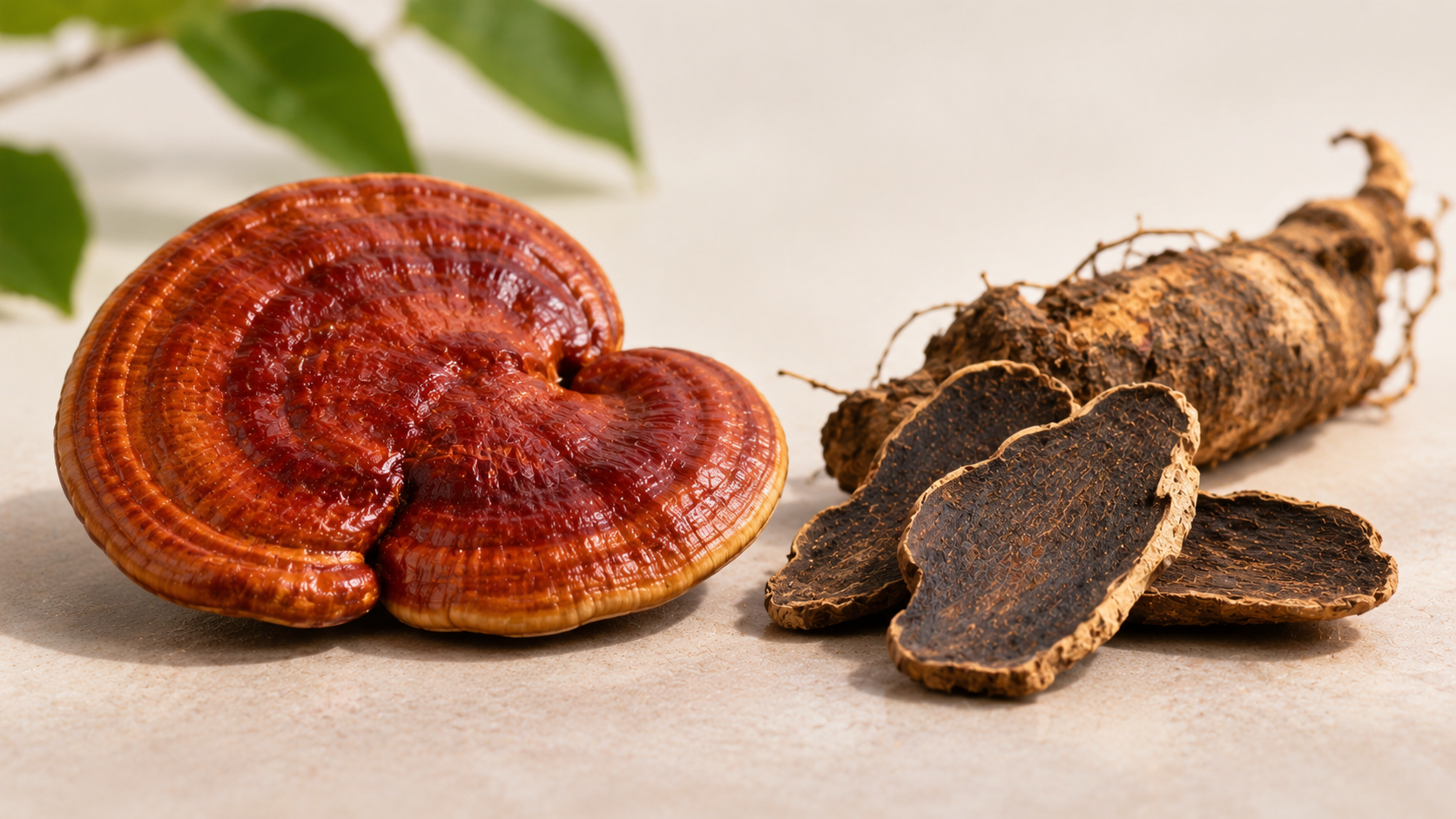
Huperzia serrata is a small club moss that grows across southern China. In traditional Chinese medicine it is known as Qian Ceng Ta, and it has a long record of use for memory complaints, swelling and fever. That history is a hypothesis about where to look, not a result, and in this case the hypothesis held.
The active compound is huperzine A, an alkaloid isolated from the plant and now well characterized. It is a selective inhibitor of acetylcholinesterase, the enzyme that breaks down acetylcholine in the synapse.
That matters because acetylcholine is the signalling molecule most tied to attention, learning and memory formation, and because inhibiting the enzyme that clears it is exactly how the main pharmaceutical treatments for Alzheimer’s disease work. Donepezil, galantamine and rivastigmine are all acetylcholinesterase inhibitors. Huperzine A arrived at the same target from a different direction, through a plant that had been used for memory for centuries before the enzyme was named.
Galantamine itself has the same provenance. It comes from snowdrop and daffodil bulbs, and it is a licensed prescription drug in multiple countries. The line between a botanical and a pharmaceutical in this particular corner of the field is thinner than the aisle suggests.
What twenty trials found
A systematic review and meta-analysis pooled 20 randomized controlled trials covering 1,823 participants with Alzheimer’s disease, drawn from PubMed, the Cochrane Library and four major Chinese databases.
Against placebo, huperzine A improved cognitive function on the Mini-Mental State Examination at 8, 12 and 16 weeks. The MMSE is a 30-point bedside test of orientation, recall, attention and language, and it is the standard first-line measure in dementia research. The same direction of benefit appeared on the Hasegawa Dementia Scale and the Wechsler Memory Scale at 8 and 12 weeks.
Activities of daily living also favored huperzine A, at 6, 12 and 16 weeks. That outcome is worth separating from the cognitive scores, because it measures whether a person can manage dressing, eating and moving around their own home rather than whether they score better on a test. Several interventions in this field move test scores without moving daily function, and this one moved both.
A separate Bayesian network meta-analysis of 37 trials in 14,705 participants placed huperzine A among the pharmacological options compared head to head for mild to moderate Alzheimer’s disease, alongside donepezil, galantamine, rivastigmine, memantine and the standardized ginkgo extract EGb761. Being in that comparison at all is the point: it is being evaluated against drugs, on drug terms.
Why this belongs in the aging conversation
Cholinergic function declines with age, and it declines further and faster in dementia. The loss of cholinergic neurons in the basal forebrain is one of the better-established neuropathological features of Alzheimer’s disease, and it is the reason the entire acetylcholinesterase inhibitor drug class exists.
This puts huperzine A in a different category from most of what is sold for energy and focus. A stimulant blocks the signal that tells you that you are tired or raises catecholamine tone for a few hours. It changes how you feel today and is neutral at best about tomorrow. A cholinesterase inhibitor acts on a neurotransmitter system that is itself degrading with age, and the trials that found benefit ran for 8, 12 and 16 weeks rather than measuring a single afternoon.
That is the distinction we keep returning to in this work. The compounds that matter for aging are the ones acting on a mechanism that is itself age-related, and the way to tell them apart from stimulants is to ask what the trial measured and over how long. Our write-up of ginkgo and ginseng tested as a combination makes the same point from a different angle, and the alpinetin and mTOR work covers a separate pathway where the same logic applies.
Where the evidence stops
Two limitations matter here, and both are substantial.
The first is trial quality. The reviewers assessed most of the 20 included studies as carrying a high risk of bias. Many were published in Chinese-language journals with limited methodological reporting, and one trial using the ADAS-Cog, a more demanding cognitive scale than the MMSE, found no significant change. A consistent direction of effect across 20 trials is meaningful, but the confidence that belongs on the size of that effect is low.
The second is the population. Every one of those trials was in people with diagnosed Alzheimer’s disease. Huperzine A is sold widely as a focus and study aid to healthy adults, and that is not what was tested. Reviews of pharmacological cognitive enhancement in healthy people have found that only amphetamines, methylphenidate and modafinil produce meaningful effects on attention and alertness, while anti-dementia drugs and antidepressants have repeatedly failed to do so. The cholinergic system of a healthy 25-year-old is not the limiting factor on their concentration, and topping up a system that is not depleted is not the same intervention as correcting one that is.
Huperzine A also carries the side effect profile of its drug class. Cholinergic effects include nausea, sweating, slowed heart rate and gastrointestinal upset, and it should not be stacked with prescription cholinesterase inhibitors.
What else is in the aisle
The reason to be precise about huperzine A is that it shares shelf space with compounds that are not what their labels say, and the contrast is instructive.
An amphetamine isomer, untested in humans
Beta-methylphenethylamine, or BMPEA, was first synthesized in the early 1930s. Its efficacy and safety in humans have never been studied. After the FDA reported finding it in supplements labeled as containing the shrub Acacia rigidula, researchers analyzed 21 brands of those supplements to see whether it had been removed.
It had not. Eleven of the 21 brands contained BMPEA, at quantities where a consumer following the maximum recommended serving would take up to 93.7 mg per day of an amphetamine isomer with no human safety data behind it.
A pharmaceutical stimulant at more than double its pharmaceutical dose
After the FDA banned 1,3-dimethylamylamine, or DMAA, over cardiovascular risks ranging from high blood pressure to heart attacks, analogs appeared. An analysis of six brands listing ingredients such as DMHA, 2-amino-isoheptane or Aconitum kusnezoffii identified four stimulants: two banned ones, DMAA and DMBA, and two that had not previously been found in supplements.
One of the new ones was octodrine, at 72 mg per serving. Octodrine was once sold in Europe as a pharmaceutical, in multi-ingredient medications, at doses between 8 and 33 mg. The supplement dose was more than twice the largest pharmaceutical dose it had ever been given at. The other new compound, 1,4-DMAA, has never been approved for human consumption and its safety in humans is unknown.
A real alkaloid at an unknowable dose
Yohimbine, from the bark of the West African tree Pausinystalia johimbe, is a genuine pharmacologically active alkaloid, not an adulterant. The problem is quantity.
An analysis of 49 brands labeled as containing yohimbe or yohimbine, bought from seven major US retailers, found yohimbine per recommended serving ranging from none detected to 12.1 mg. Only 11 of the 49 listed a specific quantity on the label, and most of those were inaccurate, with actual content between 23% and 147% of what was stated. Nine brands gave no information at all about yohimbine’s adverse effects.
Thirty-nine percent contained no rauwolscine or corynanthine, the other alkaloids that occur naturally in the bark alongside yohimbine. Their absence indicates the yohimbine was either a highly processed extract or synthetic, which is a different product from the botanical the label describes.
The caffeine question, and what “natural” actually buys
Caffeine deserves separating from the compounds above, because it is the one stimulant in this category that works reliably and is well characterized.
A common marketing distinction is natural caffeine, from green tea or green coffee bean extract, against synthetic caffeine. A randomized double-blind crossover trial in 16 healthy men compared 60 mg of botanically sourced caffeine from green coffee bean extract against 60 mg of synthetic USP caffeine. Time to peak concentration was 0.75 hours for the natural extract and 0.63 hours for the synthetic, a small difference with no obvious practical consequence. Caffeine is a single molecule, and the molecule does not know its origin.
What the botanical source does add is everything riding alongside it. The green coffee extract delivered measurable chlorogenic acids, with peak concentrations around 11.4 ng/mL for 3-caffeoylquinic acid. Green tea brings L-theanine and EGCG. Those companion compounds are the real argument for a botanical source, and they are the thing to evaluate, rather than the caffeine.
They also come with their own considerations. A United States Pharmacopeia systematic review of green tea extract hepatotoxicity found case reports associating liver injury with EGCG intakes from 140 mg to roughly 1,000 mg per day, with substantial variation between individuals in susceptibility. Bioavailability of EGCG rises significantly when the extract is taken as a bolus on an empty stomach, likely through saturation of first-pass elimination. USP added a cautionary labeling requirement to its green tea extract monograph: do not take on an empty stomach, take with food, and do not use with an existing liver problem.
That is worth sitting with, because the intuition most people carry is that the natural version is the gentler one. For caffeine itself the two are equivalent. For the extract that carries it, the botanical option is the one with a liver monograph.
What the evidence supports
| Compound | What was found | In whom |
|---|---|---|
| Huperzine A | Cognitive gains on MMSE at 8, 12 and 16 weeks; daily function at 6, 12 and 16 weeks | 20 RCTs, 1,823 people with Alzheimer’s disease; most trials at high risk of bias |
| Caffeine, botanical vs synthetic | Peak at 0.75 h vs 0.63 h; the difference is the companion compounds, not the caffeine | 16 healthy men, crossover, 60 mg each |
| Green tea extract (EGCG) | Liver injury case reports from 140 to ~1,000 mg/day; USP cautionary labeling | Risk rises when taken as a bolus on an empty stomach |
| Yohimbine | None detected to 12.1 mg per serving; labeled amounts 23% to 147% of actual | 49 brands from seven major US retailers |
| BMPEA | Up to 93.7 mg/day at recommended servings | 11 of 21 brands labeled Acacia rigidula; never studied in humans |
| Octodrine (DMHA) | 72 mg per serving against an 8 to 33 mg pharmaceutical dose | Found alongside 1,4-DMAA, DMAA and DMBA |
Reading the aisle
Huperzine A is the useful case here, and not only because the evidence is better. It demonstrates the pattern this lab keeps finding: a traditional preparation points at a mechanism, the mechanism turns out to be the same one a drug class targets, and the trials follow. That sequence is how a plant earns its place, and it is the same sequence we traced in what happened when the West imported the ingredients and left the formulas behind.
The compounds in the second half of this article arrived by the opposite route. A stimulant was synthesized, a plausible-sounding botanical name was found to put on the label, and no trial was ever run. Acacia rigidula does not make BMPEA in the quantities found in those products. Aconitum kusnezoffii on a label was pointing at octodrine.
The practical filter is the same one that applies anywhere in this field. A compound worth your attention has a named mechanism, a quantity on the label that an analysis would confirm, and a trial population you can compare yourself to. Huperzine A has all three, and the third one is the reason to be careful: those trials were in people with a diagnosis, and if that is not you, the evidence has not been gathered yet.
What to do with that
If you or someone in your family is dealing with diagnosed cognitive decline, huperzine A has twenty trials behind it and belongs in a conversation with the physician managing that care, particularly since it should not be combined with a prescription cholinesterase inhibitor acting on the same enzyme.
If you are buying for focus while healthy, the honest position is that the evidence for cholinergic compounds in unimpaired people is weak, and the strongest effects in that population come from caffeine, which you can dose knowingly and cheaply.
And if a pre-workout or energy product lists a botanical you have not heard of, the name is worth ten seconds of searching before the first serving. The specific labels that have carried undisclosed stimulants are Acacia rigidula, Aconitum kusnezoffii, DMHA, 2-amino-isoheptane, and anything describing itself as a DMAA alternative. A plant name on a stimulant product is not a reassurance, and in several documented cases it was the opposite.
New to this material? The Evidence Lab guide to fatigue covers what the human trials support when the complaint is tiredness rather than focus, and Supplement safety covers how adulteration happens and what the label can and cannot tell you.
Categories:
MDS Research Articles