
Nov
22
Why Epigenetic Clocks May Misread Senolytics: The Instrument Counts Cell Divisions
0 Comments
A senolytic clears worn-out cells and the tissue divides to replace them. The clocks that moved in the one human study of senolytics and epigenetic age are the clocks built to count cell divisions. That may be the instrument reporting repair.
- In the only human study of its kind, six months of dasatinib and quercetin raised the reading on two older types of epigenetic clock and shortened telomeres. The newer clocks showed no change.
- A mitotic clock is built to estimate the total number of cell divisions a tissue has been through. Replacing cleared cells requires divisions, so a tissue that has just rebuilt will read as having divided more, because it has.
- Senolytics are deliberately given in short pulses because they kill cells and those cells take weeks to come back. The study measured during the demolition, not after the rebuilding.
- In the same study, adding fisetin to the combination made those increases disappear.
- What to do with that: a clock reading taken soon after anything that clears or kills cells should be treated as unreadable, and judged on direct measures instead.
New to this? The Evidence Lab explains how supplement research works in plain language, including how to read a study like this one and what is worth checking before trying anything.
What these clocks are good for
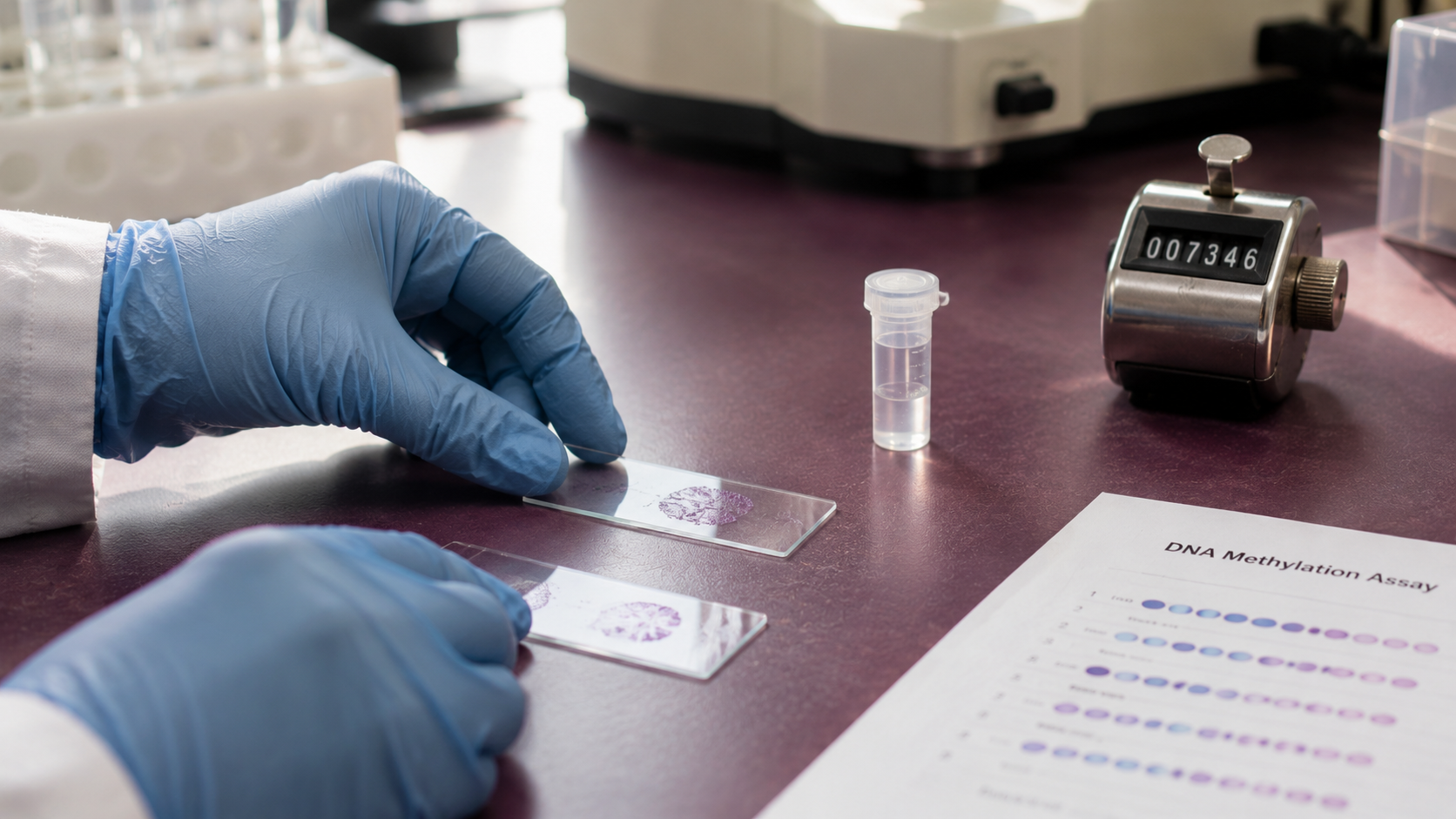
Your DNA sequence does not change as you age. The pattern of chemical tags attached to it does, chiefly methyl groups, which switch genes on and off and drift predictably over a lifetime. Feed that pattern into a model and it returns an estimated age. That is an epigenetic clock.
The useful ones are not trying to guess your birthday. GrimAge was built from methylation-based estimates of plasma proteins and smoking history, and it predicts time to death, time to coronary heart disease and time to cancer with a statistical strength that is rare in ageing research [1]. These are real instruments measuring something real, and the argument that follows is about what they count rather than whether they work.
What the senolytic study found
In a Phase I pilot, 19 participants took dasatinib and quercetin for six months, with DNA methylation measured at baseline, three months and six months. First-generation clocks and mitotic clocks showed significant increases in epigenetic age acceleration at both time points, and telomere length decreased. The second and third-generation clocks, the ones built against mortality data, showed no significant change [2].
Read quickly, that says a senolytic made people biologically older. A 2026 review of interventions affecting the newer clocks lists senolytics among the things that showed no detectable effect on them [3].
There is a second arm to that study worth sitting with. After a year, 19 participants received dasatinib and quercetin together with fisetin for six months, and the increases in epigenetic age acceleration became non-significant. The authors read it as fisetin mitigating what the other two were doing, and they also found differences in immune cell proportions between the two treatment groups [2].
What a mitotic clock is built to count
This is where the interpretation turns. A mitotic clock is not a general ageing measure. The MiAge calculator, one of the models in this family, was designed to estimate the total number of lifetime cell divisions in a tissue, inferred from the stochastic copying errors that accumulate in the epigenetic inheritance process each time a cell divides [4]. Telomeres shorten with each division as well, which is why they move in the same direction.
A tissue that has recently cleared a population of cells and divided to replace them will register as having divided more. Not because it is older, but because it has divided more. The instrument is working correctly and reporting exactly what it was built to report.
Senolysis is demolition by design
Senolytics work by transiently disabling the anti-apoptotic defences that let senescent cells survive their own inflammatory secretions, so those cells die. Because senescent cells take weeks to reaccumulate, the drugs are given in short intermittent pulses rather than continuously, an approach the researchers who developed it call hit-and-run [5]. Dasatinib itself is a tyrosine kinase inhibitor used to treat leukaemia.
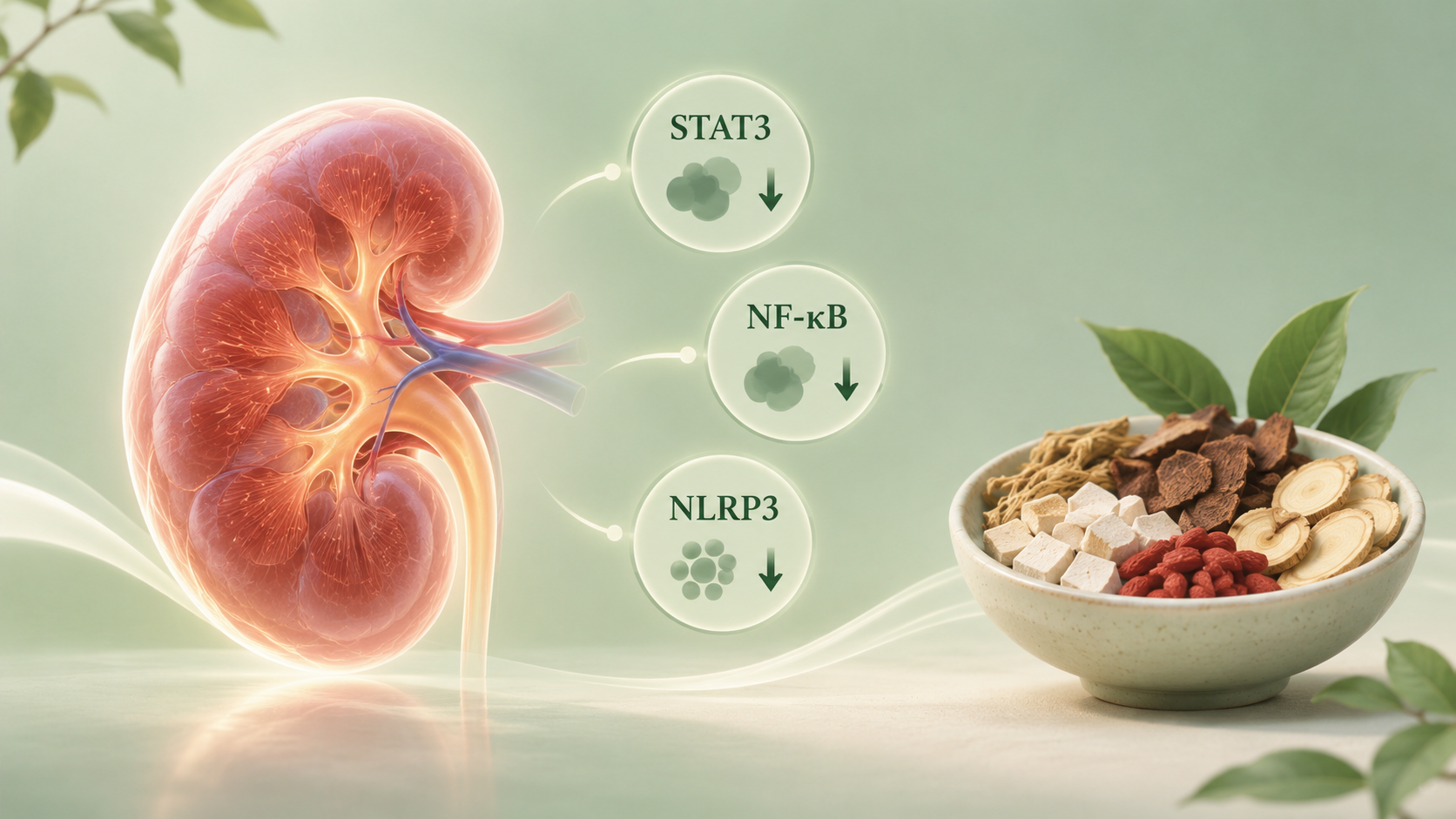
Clearing cells is the intended effect, and what follows clearance is replacement. That sequence is documented rather than assumed: in injured mouse kidney, senescent cells suppressed the proliferative capacity of tubular cells and drove fibrosis, and removing them promoted repair [6]. The point of the drug is to let tissue rebuild.
Which means the one human study measuring epigenetic age during senolytic therapy measured it during the demolition phase, at three and six months of active dosing, and never looked at what the reading does once rebuilding settles.
What the senolytic trials do show
The human evidence for senolytics is early, and it is worth being exact about its size rather than overselling it. The first-in-human study in idiopathic pulmonary fibrosis was open-label in 14 participants, with retention and completion rates as its primary endpoints [7]. A follow-up randomised placebo-controlled pilot in the same disease enrolled 12, with adverse events as the primary objective [8]. A phase 1 trial in mild Alzheimer’s disease followed 5 participants for 12 weeks to assess whether the drugs reach the central nervous system [9]. These are feasibility and safety studies.
One of them carries a finding that matters here. In an open-label pilot in people with diabetic kidney disease, three days of dasatinib and quercetin decreased senescent cell burden, measured directly in tissue [10]. That is the first demonstration in humans that these drugs do the thing they are designed to do.
| What was measured | What it tells you | Study |
|---|---|---|
| Senescent cell burden | Direct measure of the intended mechanism | Open-label pilot, diabetic kidney disease |
| Physical function, safety | Whether it is tolerable and feasible | 14 and 12 participants, pulmonary fibrosis |
| Mitotic clock, telomeres | Cell division history, confounded by turnover | 19 participants, 6 months |
Sample size is not what separates these. They are all small. What separates them is that one set measures the mechanism directly and the other measures a proxy that cannot distinguish an older tissue from a recently rebuilt one.
Two readings, and the experiment that settles it
Two explanations survive the data. Either six months of a cytotoxic drug aged the tissue, or it cleared cells and the tissue divided to rebuild while the instrument counted the divisions. Both fit. The study’s own finding of altered immune cell proportions between arms is consistent with the second, since a blood methylation reading reflects which cells happen to be in the sample.
The second reading makes a prediction the first does not: the signal should settle once rebuilding finishes. Testing that needs a trial that measures after a washout rather than during dosing, with follow-up long enough to cover the repair. Nobody has run one. Until someone does, a six-month mitotic-clock increase is a weak basis for concluding anything about whether senolytics help or harm.
The fisetin arm is at least consistent with a gentler agent producing less turnover, which bears on our reading of fisetin as a natural senotherapeutic and on the senolytic pathway research behind our own formulation work. We would not claim more than consistency from 19 people.
What does move the clocks
None of this makes the clocks useless, and the wider picture is worth knowing because it sets a scale. The same 2026 review collected 41 human studies of interventions affecting next-generation clocks, and the things that lowered epigenetic age are mostly unglamorous: exercise, a plant-rich diet, caloric restriction, omega-3 and a multivitamin-multimineral [3].
The best single trial in that set is DO-HEALTH, which gave 777 older adults vitamin D, omega-3, a home exercise programme or combinations, and followed them for three years across four clocks. Omega-3 at one gram a day slowed three of them, and all three treatments together had an additive effect [11].
The effect size is the number most coverage leaves out. Over three years, those treatments bought between 2.9 and 3.8 months of biological age. That is a genuine randomised result, and it is the right scale against which to judge any product promising to reverse your age by years.
A separate 2026 systematic review of natural-product antioxidants against methylation clocks found responses that were clock-specific, dependent on the dose and duration of exposure, and clearest in people who were biologically responsive to begin with, with the credible signals coming from longer randomised studies [12]. That pattern, where combinations and responders behave differently from single compounds and averages, is the one we have written about in the evidence on multi-target blends.
One clock is one instrument
The field does not treat methylation clocks as the sole readout. A 2025 expert consensus using the Delphi method, with 116 international panel members voting across three rounds, settled on 14 biomarkers of ageing for use in intervention studies, spanning physiological and molecular measures [13].
Different clocks also disagree with each other on the same samples, which is visible in the senolytic study itself: first-generation and mitotic clocks moved while second and third-generation clocks did not. An intervention’s apparent success can depend on which clock a study chose to report.
Limitations
The turnover explanation is an interpretation, not a demonstration. Dasatinib and quercetin causing net tissue damage remains possible, and nothing published separates that from regeneration. The study at the centre of this article is 19 uncontrolled participants, the fisetin arm is the same 19 with ten of them carried over, and no trial has yet measured epigenetic age after a senolytic washout. Epigenetic clocks remain investigational biomarkers rather than validated clinical endpoints, and whether moving one changes the outcome it predicts is still the experiment the field has not finished.
What to do with that
If you have taken a consumer epigenetic age test, the useful thing to know is when the number is readable. A result taken soon after anything that clears or kills cells, including a senolytic course, is measuring a tissue in the middle of rebuilding, and the instrument counts rebuilding as divisions. Wait, or judge the intervention on something else.
If you are choosing what to actually do, the interventions with the strongest clock evidence are the cheap ones. Exercise, a plant-rich diet, eating less and a gram of omega-3 a day account for most of the credible positive findings, and the omega-3 result came from a three-year randomised trial in 777 people. Hold on to the three-and-a-half months as your yardstick, and when a product claims to reverse biological age by years, three questions settle most of it: which clock, over how long, and in whom.
For our own work the conclusion is about endpoints rather than ingredients. Epigenetic age has not been shown to track what a senolytic does, and during the repair phase it may be reading the opposite. Senescent cell burden, inflammatory markers and functional outcomes match the mechanism, and they are where work built on clearing senescent cells should be judged.
Nothing here is medical advice. Epigenetic clocks are research tools, and a consumer test result should not be used to make treatment decisions. Dasatinib is a prescription chemotherapy drug and is discussed here only as it appears in published trials.
References
- Lu AT, Quach A, Wilson JG, et al. DNA methylation GrimAge strongly predicts lifespan and healthspan. Aging (Albany NY) 2019;11(2):303-327. PMID 30669119
- Lee E, Carreras-Gallo N, Lopez L, et al. Exploring the effects of Dasatinib, Quercetin, and Fisetin on DNA methylation clocks: a longitudinal study on senolytic interventions. Aging (Albany NY) 2024;16(4):3088-3106. PMID 38393697
- Johnson AA, Sinclair DA. Turning back time: a comprehensive list of interventions that decrease next-generation epigenetic aging clocks in humans. Front Genet 2026;17:1836446. PMID 42294499
- Youn A, Wang S. The MiAge Calculator: a DNA methylation-based mitotic age calculator of human tissue types. Epigenetics 2018;13(2):192-206. PMID 29160179
- Kirkland JL, Tchkonia T. Senolytic drugs: from discovery to translation. J Intern Med 2020;288(5):518-536. PMID 32686219
- Mylonas KJ, O’Sullivan ED, Humphries D, et al. Cellular senescence inhibits renal regeneration after injury in mice, with senolytic treatment promoting repair. Sci Transl Med 2021;13(594). PMID 34011625
- Justice JN, Nambiar AM, Tchkonia T, et al. Senolytics in idiopathic pulmonary fibrosis: Results from a first-in-human, open-label, pilot study. EBioMedicine 2019;40:554-563. PMID 30616998
- Nambiar A, Kellogg D, Justice J, et al. Senolytics dasatinib and quercetin in idiopathic pulmonary fibrosis: results of a phase I, single-blind, single-center, randomized, placebo-controlled pilot trial on feasibility and tolerability. EBioMedicine 2023;90:104481. PMID 36857968
- Gonzales MM, Garbarino VR, Kautz TF, et al. Senolytic therapy in mild Alzheimer’s disease: a phase 1 feasibility trial. Nat Med 2023;29(10):2481-2488. PMID 37679434
- Hickson LJ, Langhi Prata LGP, Bobart SA, et al. Senolytics decrease senescent cells in humans: Preliminary report from a clinical trial of Dasatinib plus Quercetin in individuals with diabetic kidney disease. EBioMedicine 2019;47:446-456. PMID 31542391
- Bischoff-Ferrari HA, Gängler S, Wieczorek M, et al. Individual and additive effects of vitamin D, omega-3 and exercise on DNA methylation clocks of biological aging in older adults from the DO-HEALTH trial. Nat Aging 2025;5(3):376-385. PMID 39900648
- Taktaz F, Hafez-Ghoran S. Natural-Product-Derived Antioxidants and DNA Methylation-Based Epigenetic Aging: A Systematic Review of Human Intervention Studies. Antioxidants (Basel) 2026;15(9). PMID 42792116
- Perri G, French C, Agostinis-Sobrinho C, et al. An Expert Consensus Statement on Biomarkers of Aging for Use in Intervention Studies. J Gerontol A Biol Sci Med Sci 2025;80(5). PMID 39708300
Categories:
MDS Research Articles