
Jul
29
Ku Shen: An Alkaloid With Human Trials and a Triterpene That Selects Its Targets
0 Comments
Most botanical compounds discussed in aging research have never been given to a person under controlled conditions. Oxymatrine, one of the two principal constituents of the traditional Chinese medicine root Ku Shen, has been through 52 randomized trials enrolling more than five thousand participants.
The short version
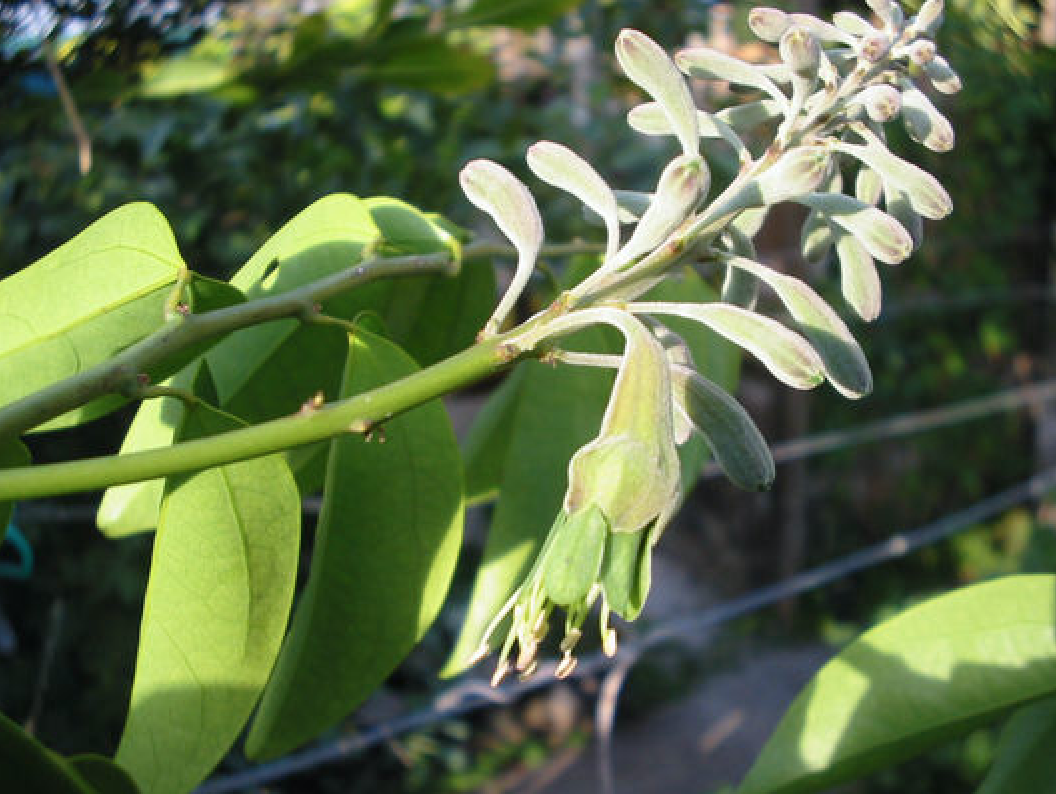
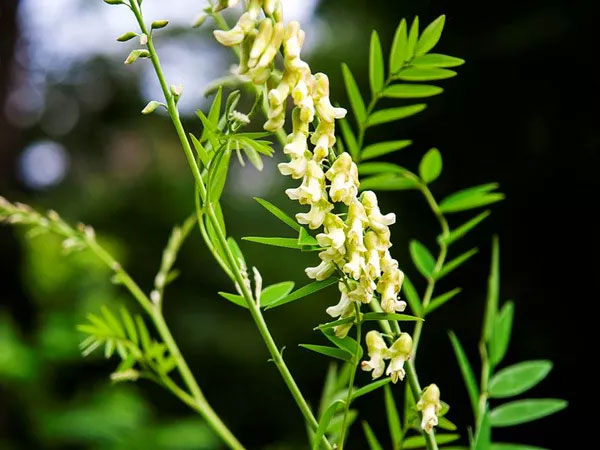
Ku Shen is the dried root of Sophora flavescens, used in Chinese medicine for roughly two thousand years. It contains two compounds that matter here, and they belong to entirely different chemical families.
Oxymatrine is an alkaloid, and it is the unusual one. A systematic review found 52 randomized controlled trials of oral oxymatrine preparations covering 5,227 people. Whatever one concludes about the trials themselves, that is a volume of human exposure almost no botanical constituent in the longevity field can claim. In the laboratory, oxymatrine works through SIRT1 and Nrf2, two of the better-known longevity pathways, and shuts down the NLRP3 inflammasome, the machinery responsible for much of the chronic low-grade inflammation that accumulates with age.
Lupeol is a triterpene, and its interest lies in selectivity. Across three decades of preclinical work, it has been reported to act on damaged and diseased cells while sparing healthy ones, and to do so through Bcl-2 and cFLIP, the survival proteins that keep worn-out cells alive when they should have cleared. That is the same vulnerability the senolytic field targets deliberately. Lupeol also works when swallowed, which many triterpenes do not.
What this adds up to: one root carrying an alkaloid with real human trial history and a triterpene that engages the survival machinery of senescent cells. The sections below set out what each one has actually been shown to do.
What makes this plant distinctive
Two pharmacologically unrelated compounds in meaningful quantity in the same root is uncommon. Oxymatrine is a quinolizidine alkaloid largely confined to the genus Sophora. Lupeol is a pentacyclic triterpene found across ordinary foods, including cabbage, green pepper, strawberry, olive, mango and grape, so it is a routine part of most diets rather than an exotic isolate.
Their evidence bases are also shaped differently. Oxymatrine has the human data. Lupeol has the mechanistic depth. Reading them as one undifferentiated “Ku Shen extract” loses both, which is why a preparation described only by the name of the plant tells you very little and a standardization figure tells you a great deal.
Why this belongs in aging research
Chronic inflammation and deregulated nutrient sensing both sit among the hallmarks of aging, the processes current biology holds responsible for tissue decline over time (López-Otín et al., 2023). Cellular senescence sits alongside them. Senescent cells stop dividing but refuse to die, and the proteins they secrete damage the tissue around them; clearing them in preclinical models delays, prevents or relieves multiple age-related conditions (Chaib, Tchkonia and Kirkland, 2022).
What keeps those cells alive is a set of anti-apoptotic survival proteins, the Bcl-2 family prominent among them. Senolytic compounds work by interfering with exactly that machinery. Both Ku Shen constituents touch this territory from different directions, which is the reason the plant is worth a file of its own.
Oxymatrine: the human data and the pathway
A systematic review searching PubMed, the Cochrane Library, Embase and four Chinese databases identified 52 randomized controlled trials of oral oxymatrine preparations enrolling 5,227 participants, 51 of which were pooled in meta-analysis, with risk of bias and quality of evidence assessed by Cochrane standards (Song et al., 2016). Those trials studied chronic hepatitis B rather than aging, so they say nothing directly about longevity. What they establish is that oral oxymatrine has been administered to thousands of people under trial conditions, which is the sort of grounding most compounds in this category lack entirely.
The mechanistic work points somewhere more interesting for our purposes. In human umbilical vein endothelial cells exposed to oxidized LDL, oxymatrine suppressed NLRP3 inflammasome-mediated pyroptosis and raised antioxidant enzyme activity, and it did so through activation of SIRT1/Nrf2 signalling (Jin et al., 2021).
Three things in that sentence are aging-relevant at once. SIRT1 is among the most studied longevity genes. Nrf2 governs the inducible antioxidant response, the arm of oxidative defense that weakens with age. And the NLRP3 inflammasome is a principal driver of inflammaging, the persistent low-grade inflammation that rises across the lifespan. The tissue is relevant too, since endothelium is where vascular aging begins.
Lupeol: selectivity and the senolytic connection
Three decades of preclinical work on lupeol were gathered in a review in Life Sci reporting anti-inflammatory, anti-microbial, anti-proliferative, anti-invasive, anti-angiogenic and cholesterol-lowering activity across in vitro and animal models. Two findings in it carry weight here. Lupeol was pharmacologically effective irrespective of route of administration, including oral, and it was reported to selectively target diseased and unhealthy human cells while sparing normal, healthy ones. Among the molecules it modulates are cFLIP, Bcl-2 and NF-κB (Siddique and Saleem, 2011).
Bcl-2 and cFLIP are both apoptosis brakes. A senescent cell survives because those brakes are engaged, and the senolytic strategy is to release them in the cells that should not still be there while leaving healthy cells untouched. A compound independently described as selective for unhealthy cells and as acting on Bcl-2 and cFLIP is operating in that same space, and it reached those effects by mouth.
Lupeol is also characterized as a multi-target anti-inflammatory triterpene with no reported toxicity to normal cells and tissues at the doses producing these effects in experimental models (Saleem, 2009). For a compound people already consume in ordinary food, that is a comfortable safety profile to be starting from.
Who this suits
Ku Shen suits people following senescence biology who would rather work with a compound whose selectivity has been described directly than infer it from pathway overlap. It suits people who weight human exposure heavily, since the oxymatrine trial record is unusual in this field. And it suits anyone who prefers a standardized extract, where both constituents are measured, over a root powder that could contain almost any ratio of the two.
Our Ku Shen
MDS Labs supplies Ku Shen as a 250 mg Sophora flavescens extract standardized to 40 percent oxymatrine and 20 percent lupeol, available as capsules. Identity and potency are confirmed by HPLC against authenticated reference standards on every lot, because with two constituents of different chemistry in one extract the ratio is the product. Our other research articles apply the same appraisal to other compounds.
One practical note
Outside the oxymatrine trials, the evidence above is preclinical, and a pathway engaged at a given concentration in a dish is not yet a clinical effect in a person. Separately, one in vitro study reported that lupeol interferes with progesterone-mediated activation of CatSper, a calcium channel involved in sperm motility, so anyone trying to conceive should leave this one alone (Mannowetz et al., 2017).
Citations
[1] Song WJ, Luo J, Wu T, Yao SK. Oral oxymatrine preparation for chronic hepatitis B: a systematic review of randomized controlled trials. Chin J Integr Med. 2016;22(2):141-9. PMID 26016455
[2] Jin X, Fu W, Zhou J, et al. Oxymatrine attenuates oxidized low-density lipoprotein-induced HUVEC injury by inhibiting NLRP3 inflammasome-mediated pyroptosis via the activation of the SIRT1/Nrf2 signaling pathway. Int J Mol Med. 2021;48(4):187. PMID 34368883
[3] Siddique HR, Saleem M. Beneficial health effects of lupeol triterpene: a review of preclinical studies. Life Sci. 2011;88(7-8):285-93. PMID 21118697
[4] Saleem M. Lupeol, a novel anti-inflammatory and anti-cancer dietary triterpene. Cancer Lett. 2009;285(2):109-15. PMID 19464787
[5] Chaib S, Tchkonia T, Kirkland JL. Cellular senescence and senolytics: the path to the clinic. Nat Med. 2022;28(8):1556-1568. PMID 35953721
[6] López-Otín C, Blasco MA, Partridge L, Serrano M, Kroemer G. Hallmarks of aging: an expanding universe. Cell. 2023;186(2):243-278. PMID 36599349
[7] Mannowetz N, Miller MR, Lishko PV. Regulation of the sperm calcium channel CatSper by endogenous steroids and plant triterpenoids. Proc Natl Acad Sci USA. 2017;114(22):5743-5748. PMID 28507119
These statements have not been evaluated by the Food and Drug Administration. This product is not intended to diagnose, treat, cure or prevent any disease. Consult a healthcare professional before use, particularly if you take prescription medication.
Categories:
Research Articles