

Nov
08
Panax notoginseng: A 3,072-Patient Randomized Trial, and Why It Is Not Ginseng
0 Comments
A botanical extract was tested against placebo in 3,072 stroke patients across 67 hospitals, and the result was published in JAMA Network Open. It is the largest piece of human evidence behind any compound covered on this site, and the plant it comes from is not the ginseng most people mean.
The short version
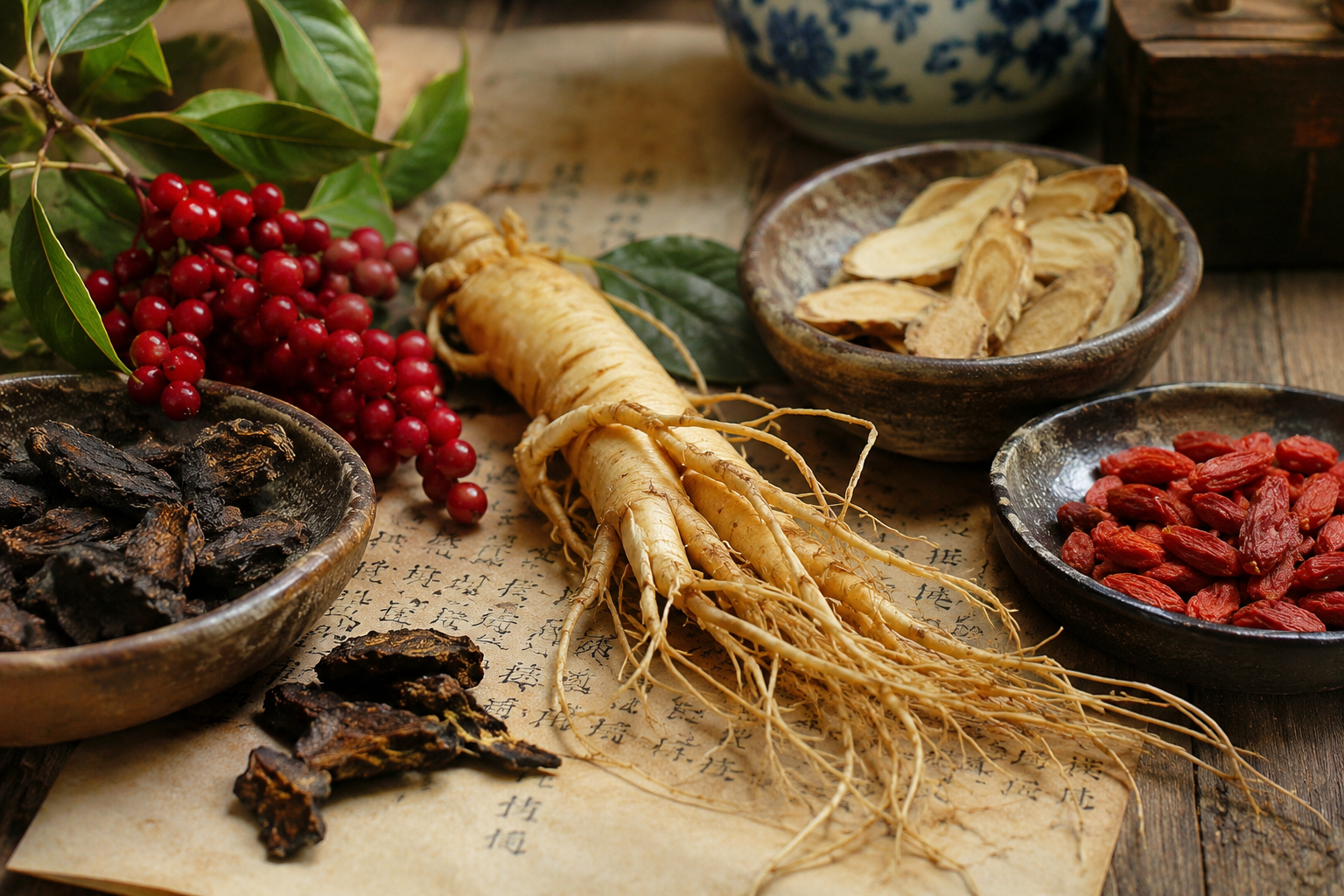
Panax notoginseng is a close relative of the ginseng everyone knows, grown mostly in Yunnan. In Chinese medicine the two are used for different things. Ginseng is given to restore energy. Notoginseng is given for blood and circulation.
That distinction turns out to hold up chemically. Ginseng contains more polysaccharides and amino acids. Notoginseng contains more saponins, volatile oils and polyacetylenes. Two plants, same genus, different composition, different traditional job.
The saponin fraction of notoginseng has been through a serious trial. In 67 Chinese hospitals, 3,072 ischemic stroke patients were randomly assigned to an oral notoginseng saponin preparation or a matched placebo for three months, with neither patients nor doctors knowing which. The measure was whether patients could function independently afterwards.
89.3 percent of the treated group reached functional independence, against 82.4 percent on placebo. Serious adverse events were the same in both arms, 1.0 percent against 1.1 percent.
A follow-up analysis found the benefit was not uniform. Patients without diabetes gained more than those with it, and the difference between those groups was statistically real.
What to do with that: the trial used a specific prescription-grade preparation at a defined dose in a hospital setting shortly after a stroke, so it says nothing about taking notoginseng as a daily supplement, and nobody should read it that way. What it does establish is that this plant’s saponins do something measurable in people, which almost no botanical can claim. If you are buying notoginseng, buying ginseng instead is not a substitute, and the number worth checking is total notoginsenoside content, because the saponins are the fraction the evidence rests on.
The trial
The PANDA trial was multicentre, double blind and placebo controlled, run at 67 tertiary health centres in China between July 2018 and June 2020. Patients aged 18 to 75 with ischemic stroke and a stroke severity score between 4 and 15 were randomized within 14 days of symptom onset to receive either Xuesaitong soft capsules, a Panax notoginseng saponin preparation, at 120 mg twice daily, or an identical placebo, for three months.
The primary outcome was functional independence at three months, defined as a modified Rankin Scale score of 0 to 2, which in plain terms means able to look after yourself without assistance.
Of 3,072 patients randomized, 2,966 were analysed. 1,328 patients (89.3 percent) in the treatment group reached functional independence against 1,218 (82.4 percent) on placebo, an odds ratio of 1.95 with a 95 percent confidence interval of 1.56 to 2.44 and a p value below .001. Serious adverse events occurred in 1.0 percent of the treatment group and 1.1 percent of controls, a difference of no consequence (Wu et al., 2023).
Several features deserve note. The comparator was placebo rather than nothing. Blinding was maintained. The sample is large enough that the confidence interval is narrow. The outcome is functional rather than a biomarker. And it appeared in a general medical journal rather than a specialty herbal one.
Who it did not help as much
A prespecified subgroup analysis asked whether diabetes changed the result, since diabetes independently worsens stroke outcomes.
It did. Among patients without diabetes or treated high blood sugar during admission, the odds ratio rose to 2.12, with a confidence interval of 1.64 to 2.76. The test for interaction between subgroups returned p = 0.027, meaning the difference between the groups is unlikely to be chance (Li et al., 2026).
Published subgroup analyses that narrow a treatment’s audience are worth more than those that widen it, since the incentive runs the other way.
Same genus, different plant
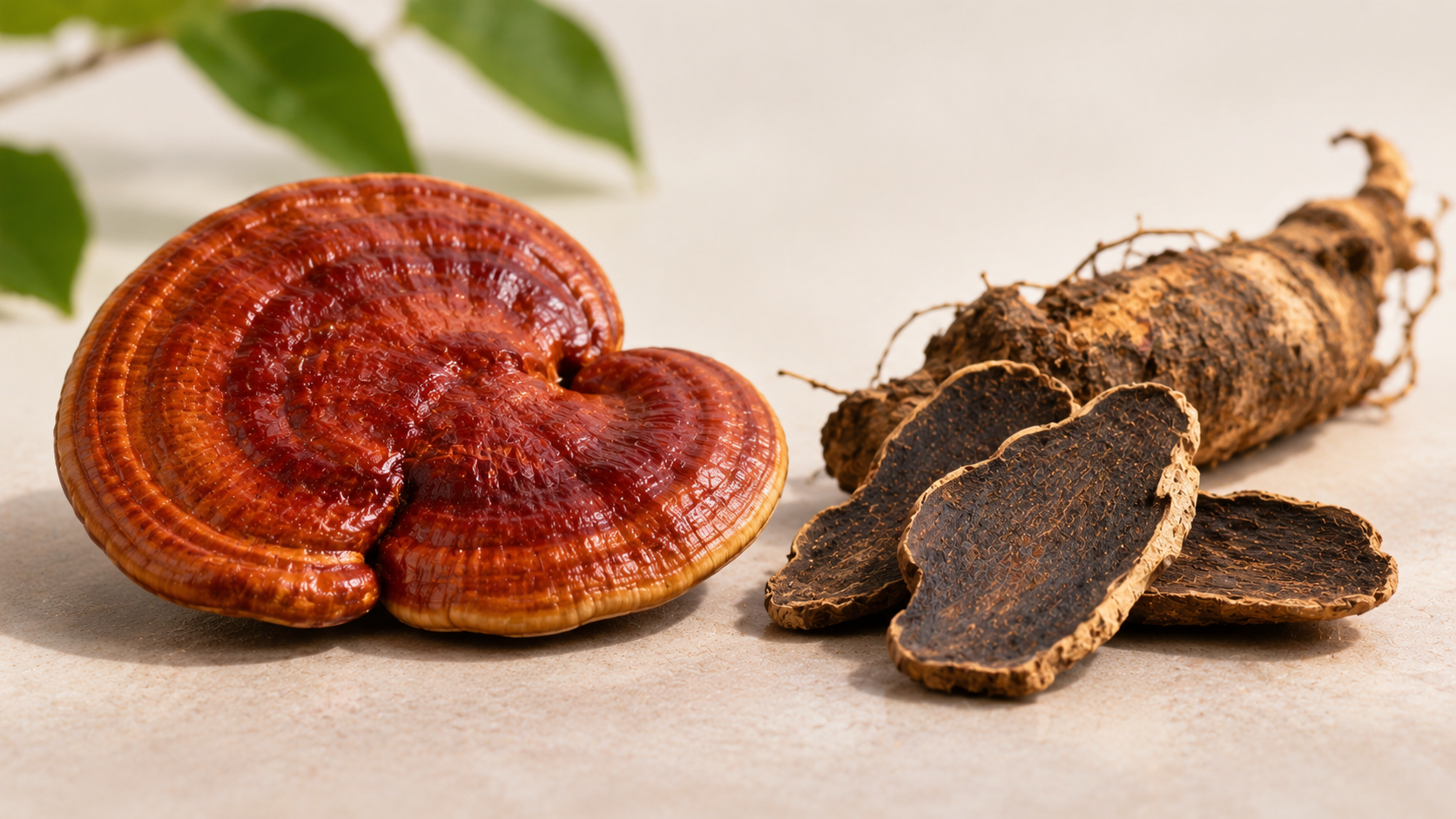
Both Panax ginseng and Panax notoginseng belong to the Araliaceae, both contain ginsenosides, and both act on nervous and immune systems. Under traditional theory their applications nevertheless differ clearly: ginseng reinforces vital energy, notoginseng promotes blood circulation.
A direct chemical comparison found composition consistent with that split, with ginseng richer in polysaccharides and amino acids and notoginseng richer in saponins, volatile oil and polyacetylenes (Liu et al., 2020).
This matters when buying. The word ginseng covers several species with different chemistry, and American, Korean and notoginseng are not interchangeable. A buyer after the circulation-associated plant needs the botanical name on the label.
The compound that is only in this plant
Notoginsenoside R1 is among the major bioactive compounds of notoginseng root and rhizome, and it is characteristic of this species. A systematic review of its pharmacology reports neuroprotective, anti-inflammatory, anti-apoptotic and anti-ischemia-reperfusion properties, with effects also reported on microcirculation and endothelial injury (Guo et al., 2019).
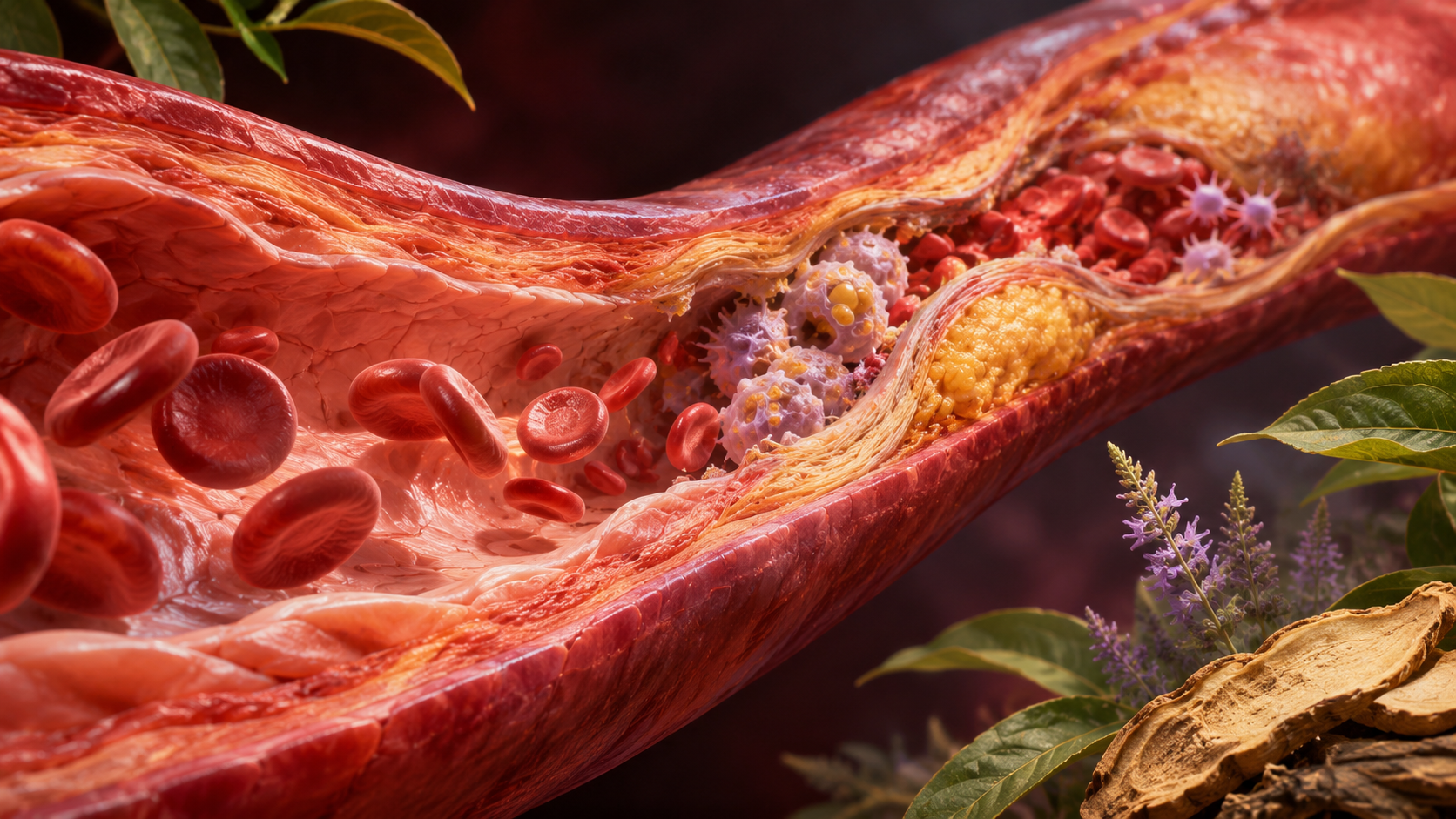
Anti-ischemia-reperfusion activity is the mechanistic counterpart of the trial result. Reperfusion injury is damage done when blood supply returns to tissue that has been starved of it, and it is a large part of what determines how much function a stroke patient recovers.
The aging literature
A review in Aging and Disease set out notoginseng from a geroscience perspective, covering lifespan extension, anti-vascular aging and anti-brain aging, and positioning the herb among agents aimed at extending health span (Zhao et al., 2017).
That framing should be read for what it is. The aging claims come from review literature summarising preclinical work, while the hard human evidence concerns stroke recovery. Those are different claims at very different evidence levels, and running them together would be exactly the move this site exists to avoid.
What connects them is the tissue. Vascular aging is defined by arterial stiffness and endothelial dysfunction, and our article on the vascular aging cascade walks through the steps. Notoginseng’s traditional indication, its saponin chemistry, its signature compound’s anti-reperfusion activity and its trial outcome all sit in the same vascular territory. Four independent lines pointing one way is the sort of convergence worth following.
Where this sits
Among everything covered in our multi-target series, this is the largest human trial. Bazi Bushen ran 530 subjects against placebo on frailty and function; this ran 3,072 against placebo on functional independence after stroke.
The caveat is that the trial does not test the thing most readers care about. It tested a hospital-grade preparation in acutely ill patients, not daily supplementation in healthy people. What it removes is the usual objection to botanical research, which is that nobody ever tests it properly in humans. Here somebody did.
Limitations
The trial was conducted entirely in China and tested a specific prescription preparation at a defined dose in stroke patients, so it does not transfer to general supplementation, the benefit was smaller in patients with diabetes, and the aging claims for this herb rest on review-level preclinical literature rather than on trials of any aging outcome.
Citations
[1] Wu et al. Efficacy and safety of Panax notoginseng saponins in the treatment of adults with ischemic stroke in China: a randomized clinical trial. JAMA Netw Open. 2023. PMID 37338907
[2] Li et al. Effect of diabetes on the efficacy and safety of Panax notoginseng saponins in ischemic stroke: a prespecified subgroup analysis of the PANDA trial. J Ginseng Res. 2026. PMID 42395003
[3] Liu et al. Chemical constituents of Panax ginseng and Panax notoginseng explain why they differ in therapeutic efficacy. Pharmacol Res. 2020. PMID 33127555
[4] Guo et al. Notoginsenoside R1: a systematic review of its pharmacological properties. Pharmazie. 2019. PMID 31739829
[5] Zhao et al. Therapeutic potential and cellular mechanisms of Panax notoginseng on prevention of aging and cell senescence-associated diseases. Aging Dis. 2017. PMID 29344413
[6] Roth et al. Pharmacological modulation of vascular ageing: a review from VascAgeNet. Ageing Res Rev. 2023. PMID 37956927
These statements have not been evaluated by the Food and Drug Administration. The trial described here used a prescription preparation in a hospital setting and is reported as published research, not as a recommendation. Nothing here is intended to diagnose, treat, cure or prevent any disease.
Categories:
MDS Research Articles