

Nov
08
Bazi Bushen: A Traditional Formula With a Randomized Human Trial on Aging
0 Comments
Almost nothing in the anti-aging botanical literature has been through a proper human trial. This one has: 530 people, twelve weeks, double blind, placebo controlled, with grip strength and walking speed among the outcomes.
The short version
Most supplements marketed for aging rest on cell culture and mouse studies. Bazi Bushen is a Chinese patent medicine that went further. In a randomized, double-blind, placebo-controlled trial across multiple centres, 530 people aged 30 to 78 took it or a matched placebo for twelve weeks.
Frailty scores improved. Quality of life improved by roughly four times the placebo change. In the older subgroup, grip strength, balance, walking speed, sit-to-stand time and muscle mass all improved. Those are measures of how well a person functions, which is the part of aging people actually notice.
A separate study in naturally aged mice found the formula moved an epigenetic clock. DNA methylation age was significantly reduced, and the methylation pattern shifted toward that of young animals, alongside better memory, better muscular endurance and lower frailty scores.
The complication is the recipe. Bazi Bushen contains sixteen components, two of them animal derived, and one is seahorse. Every seahorse species has been listed on CITES Appendix II since 2004. The formula as written cannot simply be reproduced and sold in the United States.
What to do with that: treat this as a target list instead of a shopping list. The formula’s own research names the mechanisms it moves, which are DNA methylation, SASP-driven inflammation and the KEAP1-NRF2 pathway, and it names the twelve botanical ingredients carrying most of the plant content. Those are reachable without the protected species.
Why this trial matters
The gap between the supplement industry and clinical evidence is usually the absence of human data. A compound shows an effect in a dish, perhaps in a mouse, and the bottle arrives in a shop with the mouse study as its justification.
The Bazi Bushen trial was parallel, multicentre, double blind, randomized and placebo controlled, with 530 subjects aged 30 to 78 randomized for twelve weeks. The primary outcomes were a kidney-deficiency aging evaluation scale and the Tilburg Frailty Indicator. Secondary outcomes included SF-36 quality of life, sex hormone levels, five times sit-to-stand, six-minute walk, grip strength, balance, walking speed, muscle mass, telomerase and telomere length (Mei et al., 2024).
Results after twelve weeks: the aging evaluation scale fell by 13.79 in the treatment group against 6.42 on placebo, and the frailty indicator by 1.50 against 0.58. SF-36 rose by 98.38 against 23.79. In the elderly subgroup, sit-to-stand time, grip strength, balance, walking speed and muscle mass all improved. Telomerase content rose by 150.04 ng/ml relative to placebo.
Three adverse events, 1.14 percent, were judged related to the capsule by the principal investigator. No serious adverse event led to discontinuation.
The authors also report a null. Telomere length did not significantly increase, and they say so directly in their conclusion while noting telomere length matters for healthy aging. A trial that publishes the outcome that did not move is more trustworthy on the outcomes that did.
The epigenetic clock study
Biological age can be estimated from DNA methylation patterns, and those estimates are among the better-validated markers in aging research. Researchers gave Bazi Bushen to naturally aged mice, rather than to a chemically accelerated model, and sequenced the liver methylome.
Aged liver showed the expected decline in mCpG levels. Treatment tended to restore that decline and prune the methylation pattern toward the young profile. Methylation age, computed with an upgraded DNA methylation clock, was significantly rejuvenated. The molecular result tracked with the animals: better memory, better muscular endurance, lower frailty scores and less liver pathology (Mao et al., 2023).
Pathway analysis pointed to oxidative stress, DNA repair, MAPK signalling and inflammation, with raised Sod2 expression and reduced DNA damage. In senescent human endothelial cells, the extract acted directly on methylation enzymes.
The rest of the file
Three further studies extend the mechanism in directions that matter for a longevity programme.
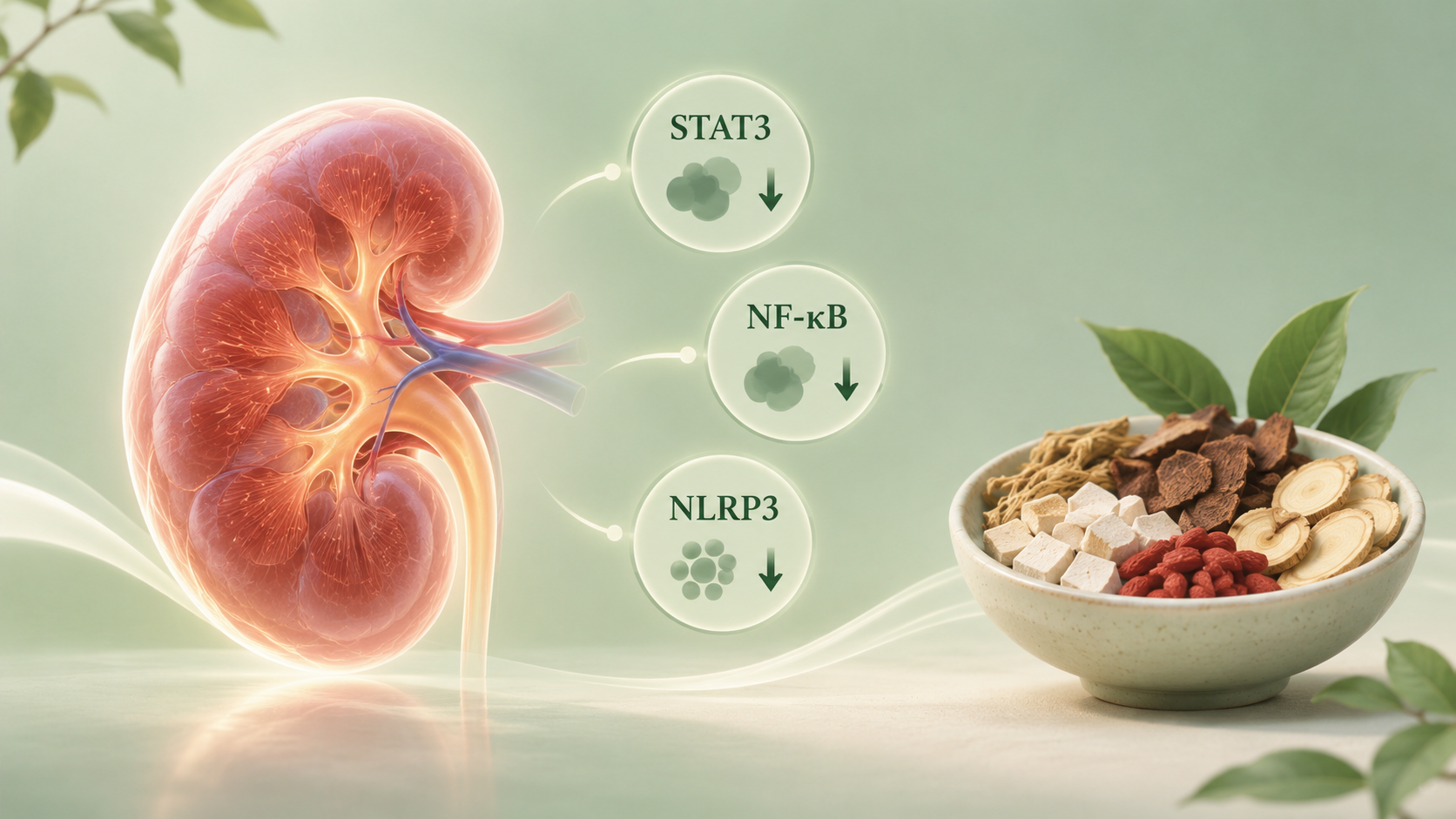
The formula was reported to improve age-related energy metabolism by acting on the IL-17 and TNF inflammatory pathway associated with SASP, the senescence-associated secretory phenotype through which senescent cells damage the tissue around them (Shen et al., 2024). SASP is the reason senescent cell burden matters at all, so a formula acting there sits close to senolytic territory.
A 2025 study reports it alleviates skin photoaging by targeting the KEAP1-NRF2 pathway (Jiang et al., 2025). NRF2 governs the inducible antioxidant response, the arm of oxidative defense that weakens with age, and skin is where that weakening shows first.
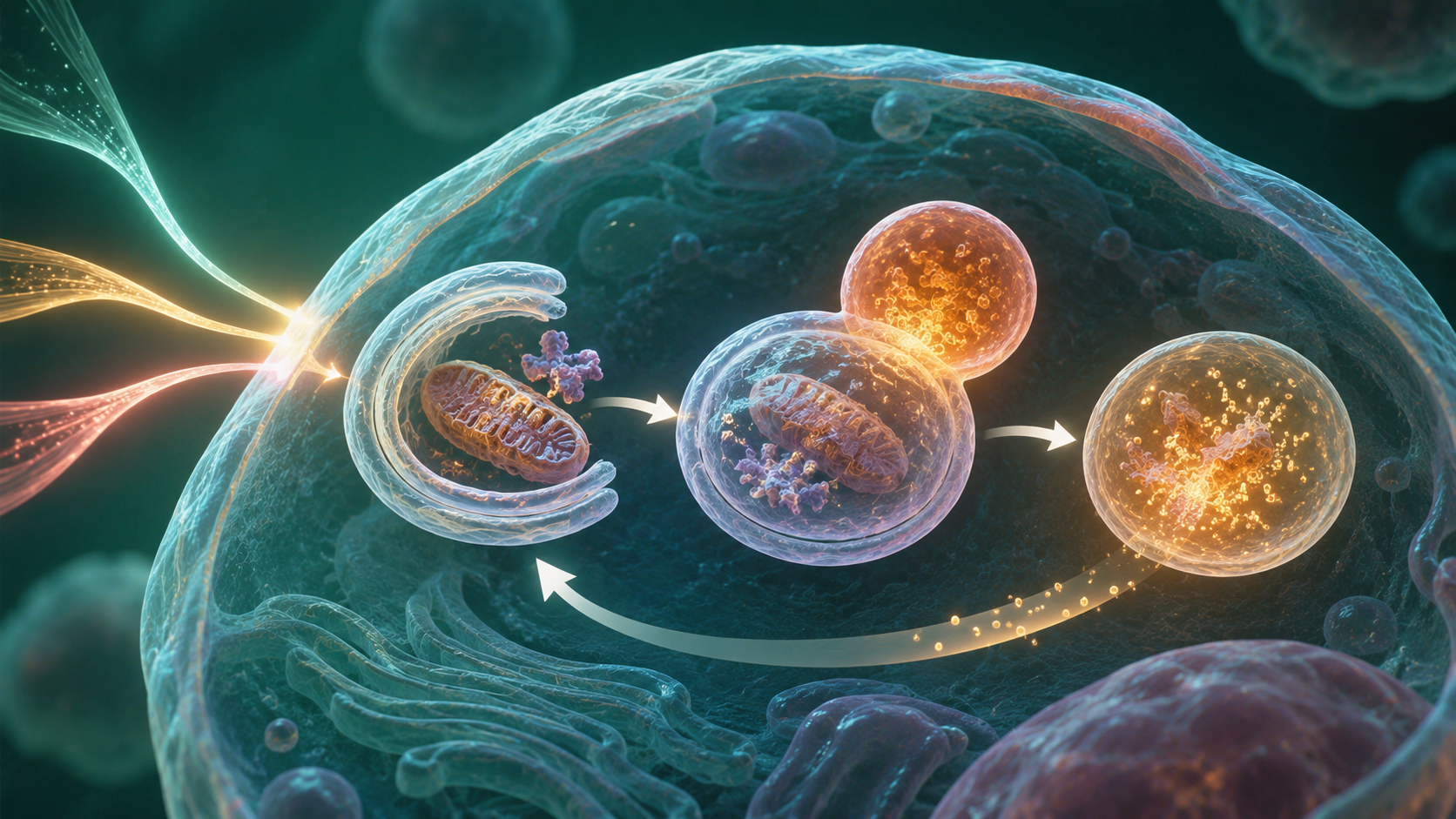
A further study reports restored fertility through mitochondrial health in aging endometrium. Taken together the file covers methylation, inflammation, antioxidant induction and mitochondrial function, which is four hallmarks from one preparation.
What is actually in it
Bazi Bushen contains sixteen components. The corrected composition table gives these relative ratios:
- Cuscutae semen, Cuscuta chinensis, 250
- Lycii cortex, Lycium barbarum, 138
- Epimedii folium, Epimedium brevicornu, 70
- Schisandrae chinensis fructus, Schisandra chinensis, 46
- Rehmanniae radix recens, 46
- Cnidii fructus, Cnidium monnieri, 35
- Rosae laevigatae fructus, Rosa laevigata, 35
- Rubi fructus, Rubus chingii, 35
- Allii tuberosi semen, Allium tuberosum, 35
- Morindae officinalis radix, 35
- Cistanches herba, Cistanche deserticola, 35
- Cyathulae radix, Cyathula officinalis, 35
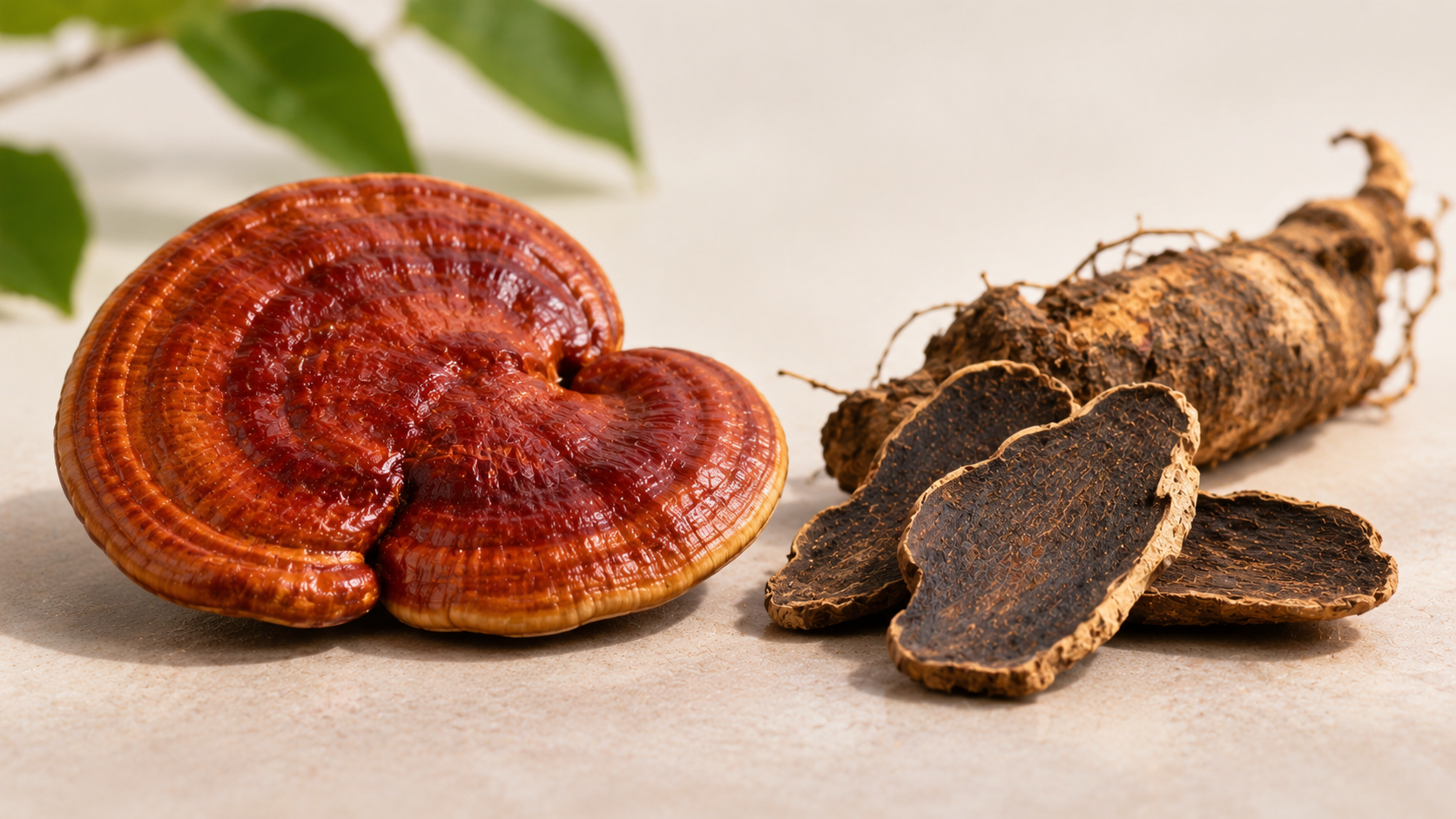
- Ginseng radix et rhizoma, Panax ginseng, 25
- Toosendan fructus, 23
- Hippocampus, seahorse, 21
- Cervi cornu pantotrichum, deer antler velvet, 16
Two points stand out. Cnidium monnieri appears here and in Bushen-Yizhi, the formula with the strongest add-on result in the Alzheimer’s trial literature. So does Panax ginseng, and Lycium barbarum.
The other point is the obstacle. All 44 seahorse species in the genus Hippocampus were placed on CITES Appendix II at CoP12 in 2002, with the listing in force from 2004, and international trade requires a non-detriment finding before an export permit is issued. Deer antler velvet carries its own sourcing and labelling questions. A formula resting on a protected marine species is not a formula anyone should plan to reproduce.
Where this leads
The interesting question is which of the sixteen carries the activity. Fourteen are botanical and several already have independent aging literature of their own: Cistanche, Epimedium, Cuscuta, Schisandra, Lycium and ginseng are all studied separately. The trial establishes that the combination does something measurable in people. It does not establish which parts are doing it.
That is the work worth doing, and it is the work this lab exists for. Our argument for multi-target formulations sets out why combinations of this kind keep outperforming single agents, and our other research articles examine individual compounds against the same standard.
Limitations
The trial ran twelve weeks, which is long enough to move frailty and function scores and far too short to say anything about lifespan, and every subject was recruited in China; the epigenetic clock result is in mice, and a methylation clock is a validated correlate of biological age rather than a direct measure of health.
Citations
[1] Mei J, Ju C, Wang B, et al. The efficacy and safety of Bazi Bushen Capsule in treating premature aging: a randomized, double blind, multicenter, placebo-controlled clinical trial. Phytomedicine. 2024;130:155742. PMID 38838635
[2] Mao X, Hou Y, Fang C, et al. Bazi Bushen mitigates epigenetic aging and extends healthspan in naturally aging mice. Biomed Pharmacother. 2023;160:114384. PMID 36764132
[3] Shen X, Li M, Li Y, et al. Bazi Bushen ameliorates age-related energy metabolism dysregulation by targeting the IL-17/TNF inflammatory pathway associated with SASP. Chin Med. 2024;19(1):61. PMID 38594761
[4] Jiang Y, Li M, Li H, et al. Bazi Bushen capsule alleviates skin photoaging by targeting the KEAP1-NRF2 pathway. Phytomedicine. 2025;148:157360. PMID 41101077
[5] Composition from the corrected Table 1 of the Bazi Bushen atherosclerosis study, Front Pharmacol. 2021;12:774792. Corrigendum
[6] Project Seahorse / IUCN SSC Seahorse Specialist Group. Seahorses on CITES. Genus Hippocampus listed on Appendix II at CoP12, 2002, in force 2004.
These statements have not been evaluated by the Food and Drug Administration. Bazi Bushen is not a product sold by MDS Labs and nothing here is a recommendation to use it. Nothing here is intended to diagnose, treat, cure or prevent any disease.
Categories:
MDS Research Articles