
Jul
29
Lupeol and Oxymatrine: What the Research Shows for Sophora flavescens
0 Comments
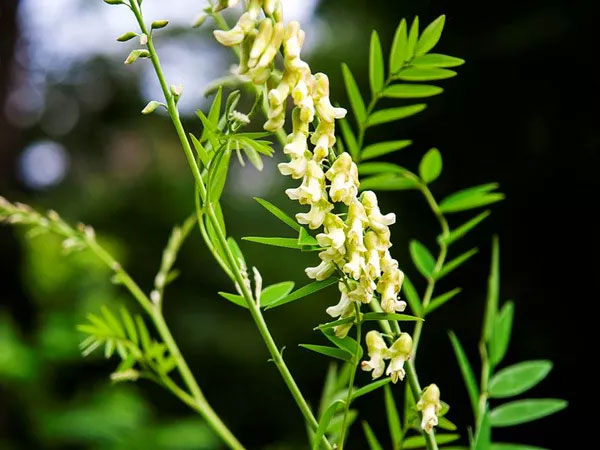
Sophora flavescens, known as Ku Shen, contains two pharmacologically distinct compounds that are frequently discussed together and should not be. Lupeol is a triterpene found across many edible plants. Oxymatrine is a quinolizidine alkaloid largely confined to the genus Sophora. Their evidence bases differ substantially.
Lupeol
Lupeol is a pentacyclic triterpene present in white cabbage, green pepper, strawberry, olive, mango and grape, among other foods. Dietary triterpene intake in Western populations averages roughly 250 mg per day from vegetable oils, cereals, fruits and vegetables, so lupeol is a routine constituent of ordinary diets rather than an exotic isolate.
Preclinical work has characterized lupeol as a multi-target anti-inflammatory agent acting on NF-κB, cFLIP, Fas, Kras, PI3K/Akt and Wnt/β-catenin signalling across several cell types. The review literature reports no toxicity to normal cells and tissues at doses producing these effects in experimental models (Saleem, 2009). Separate work reports inhibition of CDK-family kinases.
These findings are drawn from cell culture and animal models. No controlled human trial has evaluated lupeol for any clinical outcome, and the compound’s oral bioavailability in people has not been well characterized. The appropriate reading is that lupeol is an interesting and well-tolerated dietary triterpene with a substantial preclinical literature and no clinical literature.
The CatSper finding
Lupeol appears in one widely cited paper concerning sperm physiology. Investigators examining how steroids and plant triterpenoids regulate CatSper, the calcium channel required for sperm hyperactivated motility, reported that lupeol and pristimerin interfere with progesterone-mediated CatSper activation in isolated human sperm (Mannowetz et al., 2017).
Three points constrain how that result should be read. The experiments were performed on sperm in vitro, not in people. The paper attracted published correspondence in PNAS and Journal of Urology, indicating that its interpretation was contested within the field. And no study has examined whether oral lupeol reaches concentrations in the reproductive tract capable of producing this effect. Nothing in this literature establishes lupeol as a contraceptive, and it should not be used or relied upon as one.
Oxymatrine
Oxymatrine is a quinolizidine alkaloid, structurally unrelated to lupeol, found in Sophora flavescens and in other species of the same genus. It is the better-studied of the two compounds in humans: oral oxymatrine preparations have been evaluated in randomized trials for chronic hepatitis B and summarized in systematic reviews, which represents a larger clinical evidence base than most botanical constituents possess, with the usual caveats about trial quality in that literature.
Preclinical work has examined oxymatrine across inflammatory, metabolic and antiviral endpoints, and in models of oxidative stress it has been reported to act through SIRT1/Nrf2 signalling. As with lupeol, the breadth of reported activity reflects the volume of exploratory research rather than established clinical effect.
Why the distinction matters for extraction
A triterpene and an alkaloid differ in polarity, which means they partition differently between solvents. An extract optimized for one will not necessarily carry the other, and a preparation described only as a Sophora flavescens extract conveys no information about which constituent predominates or at what concentration. Any meaningful discussion of this plant requires knowing which compound is being measured and what the standardization figure refers to.
Limitations
With the exception of the oxymatrine hepatitis trials, the evidence discussed here is preclinical. Cell-culture and rodent findings establish that a compound can act on a given pathway at the concentration tested; they do not establish that the concentration is reachable in humans after oral dosing, nor that pathway activity produces clinical benefit. Both compounds warrant the same caution that applies to any constituent whose human pharmacokinetics are poorly described.
Sources
- Saleem M. Lupeol, a novel anti-inflammatory and anti-cancer dietary triterpene. Cancer Letters 2009;285(2):109–115.
- Mannowetz N, Miller MR, Lishko PV. Regulation of the sperm calcium channel CatSper by endogenous steroids and plant triterpenoids. PNAS 2017;114(22):5743–5748.
- Stork G, Uyeo S, Wakamatsu T, et al. Total synthesis of lupeol. Journal of the American Chemical Society 1971;93(19):4945.
These statements have not been evaluated by the Food and Drug Administration. Nothing here is intended to diagnose, treat, cure or prevent any disease, and nothing here is medical advice.
Categories:
Research Articles