

30
Sep
Ginkgo and Ginseng Together: A Combination Tested as a Combination
Categories: Research Articles 0 CommentsGinkgo and ginseng are each among the most studied botanicals in the world. The pairing is more interesting than either alone, because the combination has been tested as a combination, in healthy middle-aged people, and it improved their memory.
What makes this combination unusual
Most botanical blends are assembled from the evidence for their individual parts and never tested together. Ginkgo and ginseng are an exception. The pairing of standardized extracts has its own randomized, placebo-controlled trial record in healthy adults, which is a rare thing for a two-botanical formula to be able to point at.
Both are also unusually well characterized chemically. Ginkgo leaf extract has a pharmacopoeial specification that the clinical literature is built on, and ginseng is defined by its ginsenoside content. That means a combination product can be specified by numbers rather than by weight alone, and the numbers can be verified.
Who it suits
This is a formula for healthy adults in middle age and beyond who want to support memory and mental clarity, which is precisely the population the main trial recruited. It suits people who would rather approach cognition through circulation and cellular support than through stimulants.
Ginkgo has mild antiplatelet activity, so anyone taking anticoagulant or antiplatelet medication, or scheduled for surgery, should speak to their doctor before starting, and ginseng may affect blood glucose in people managing diabetes. Beyond those two points the safety record is strong: a meta-analysis of nine randomized trials covering 2,561 patients found no important safety concerns (Tan et al., 2015).
What it is known to do
The central study is a 14-week, double blind, placebo-controlled, multi-centre trial in 256 healthy middle-aged volunteers who completed the protocol. Taking standardized ginkgo and ginseng extracts together significantly improved an Index of Memory Quality, by an average of 7.5 percent, with gains across both working and long-term memory. The improvement held throughout the twelve-week dosing period and was still measurable after a two-week washout. The authors described it as the first substantial demonstration of memory improvement in healthy middle-aged volunteers produced by a phytopharmaceutical (Wesnes et al., 2000).
A persisting effect two weeks after the last dose is the detail worth pausing on. An improvement that survives washout is not simply an acute stimulant effect wearing off on a schedule.
A later crossover study in healthy young adults found that single doses of the same combination produced a dose-dependent improvement in memory quality, concentrated in secondary memory rather than working memory, confirming that the effect can be detected acutely as well as over months (Kennedy et al., 2001).
For ginkgo on its own, the pooled evidence is substantial. Nine randomized trials in 2,561 patients favoured standardized ginkgo extract over placebo for cognition, for activities of daily living, and on clinicians’ global impression of change, with benefits concentrated at 240 mg per day (Tan et al., 2015).
How it does it
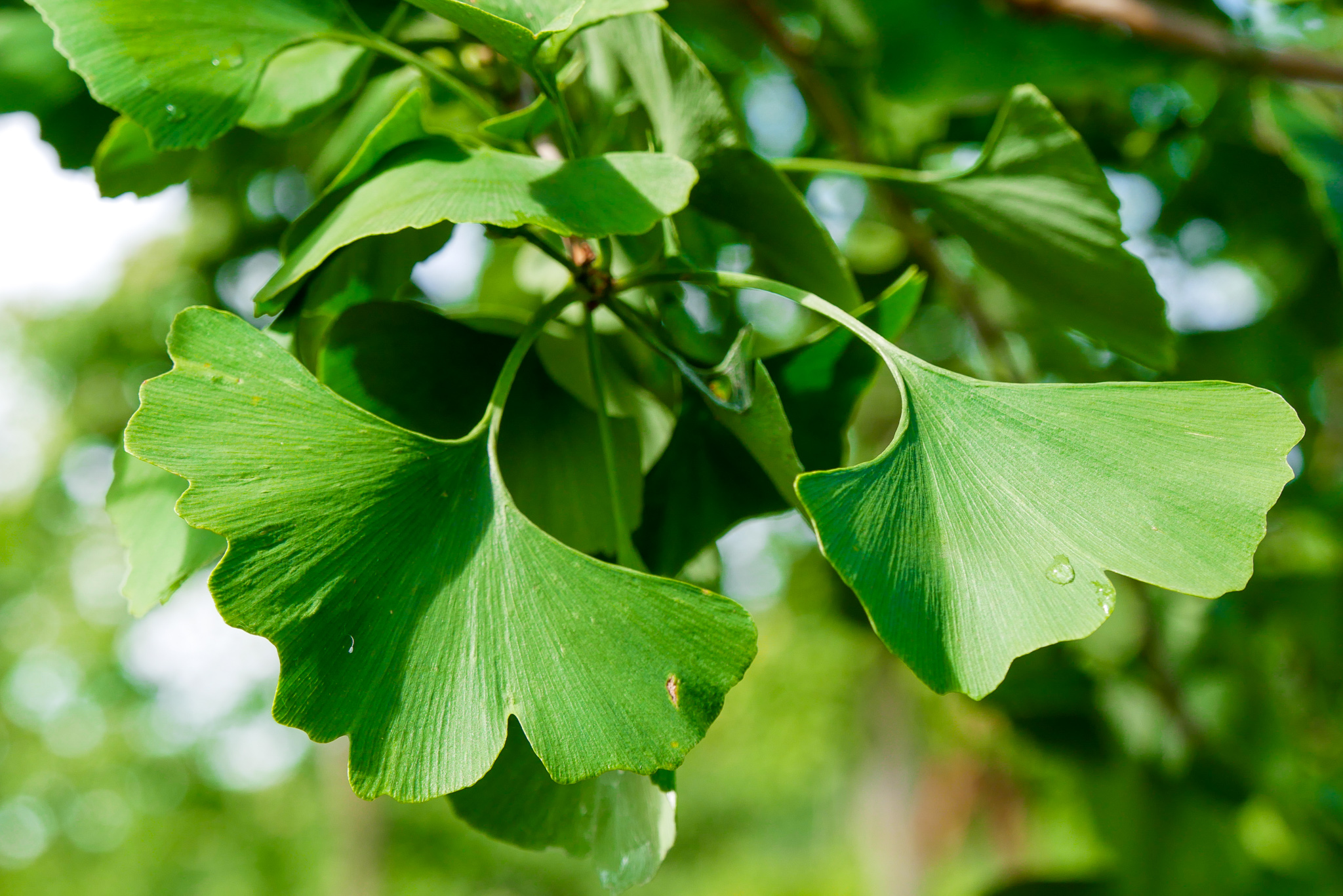
Ginkgo leaf extract is defined by two constituent groups. The flavonol glycosides, commonly labelled flavone glycosides, are antioxidant polyphenols. The terpene lactones, principally the ginkgolides and bilobalide, are unique to ginkgo and occur nowhere else in the plant kingdom, which is why they serve as the authenticity marker for the species. Standardized commercial extracts are specified at not less than 24 percent flavonol glycosides and not less than 6 percent terpene lactones (Avula et al., 2015).
Ginseng contributes the ginsenosides, a family of triterpene saponins that are the measured active fraction of Panax ginseng and the basis of its standardization. The two botanicals bring chemically unrelated constituent families to the same formula, which is the straightforward reading of why the combination was worth testing as a combination.
Why the standardization numbers matter
This is the part of the ginkgo market that deserves more attention than it gets. Because ginkgo is a high-value commodity, it attracts economically motivated adulteration, and the usual method is to add cheap flavonol aglycones to inflate the apparent flavonoid content.
In one analysis of eight ginkgo retail products bought in Australia and Denmark, three showed compelling evidence of adulteration with flavonol aglycones, and the same three contained genistein, an isoflavone that does not occur in ginkgo leaf at all. The finding that matters most is methodological: the United States Pharmacopeia and the British and European Pharmacopoeias specify a required range for flavonol glycosides, but the assays they prescribe quantify flavonol aglycones. The official compendial methods are therefore unable to detect this particular adulteration, and the authors proposed assaying before and after hydrolysis to close the gap (Wohlmuth et al., 2014).
A stated percentage on a label is worth exactly as much as the method used to confirm it. We verify marker content on incoming material by lot rather than accepting a supplier certificate of analysis, and the terpene lactone fraction is the useful authenticity check for ginkgo because those compounds exist in no other plant.
Our Ginksentol
Ginksentol supplies 1,400 mg of combined ginkgo and ginseng extract, standardized to a minimum of 24 percent flavone glycosides and a minimum of 7 percent ginsenosides, in 60-capsule bottles, available on our shop. The combination trials described above used lower daily amounts of standardized extract than this product provides. Readers interested in how we appraise evidence may find our other research articles useful.
These statements have not been evaluated by the Food and Drug Administration. This product is not intended to diagnose, treat, cure or prevent any disease. Consult a healthcare professional before use, particularly if you take prescription medication.