

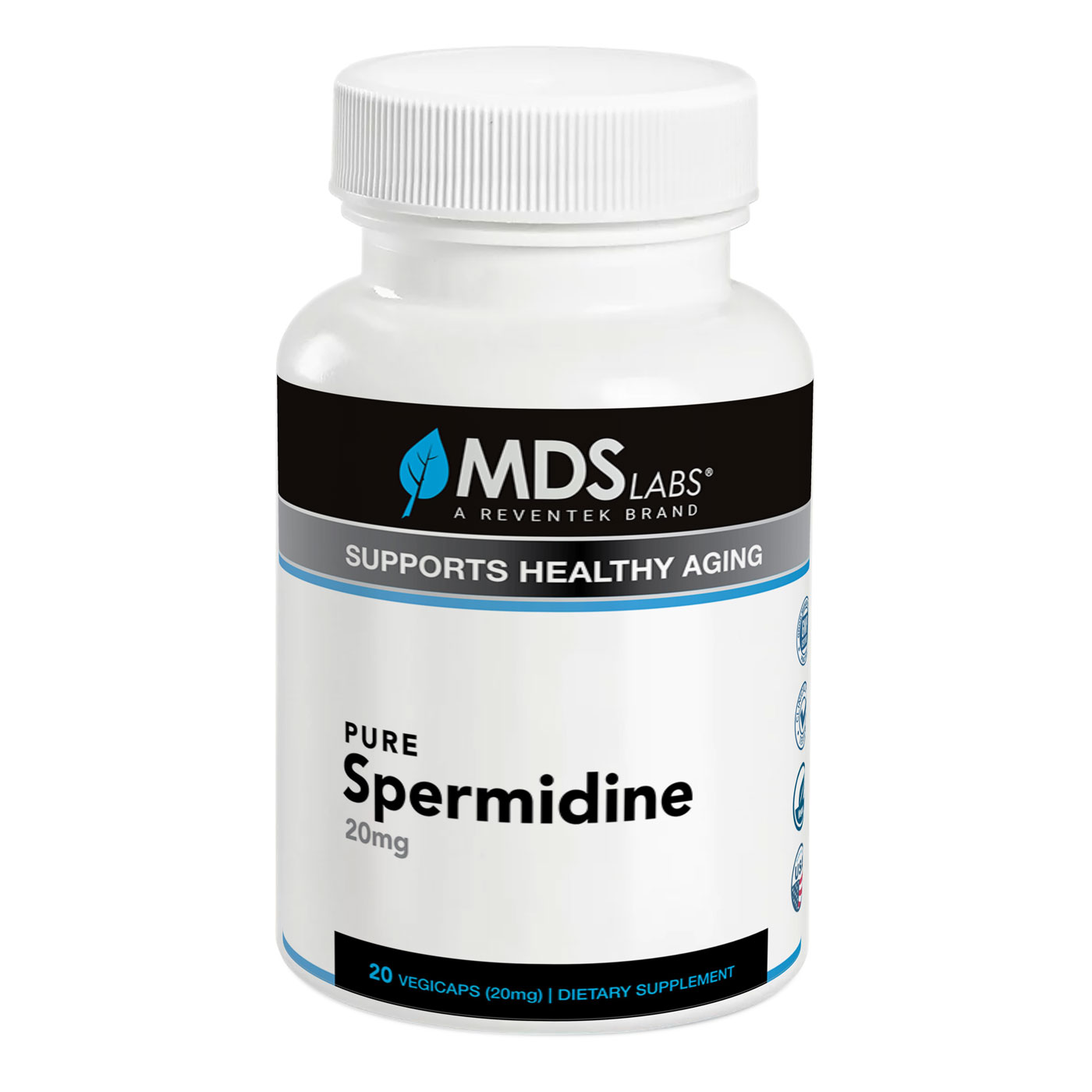
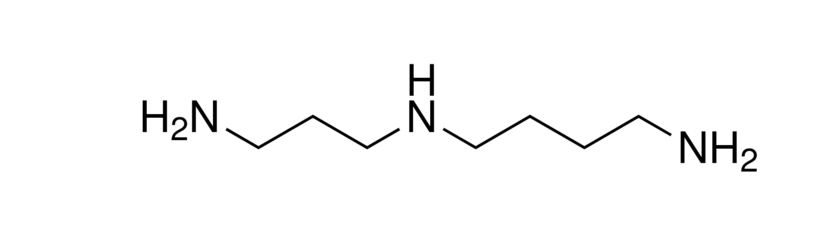


Pure Spermidine
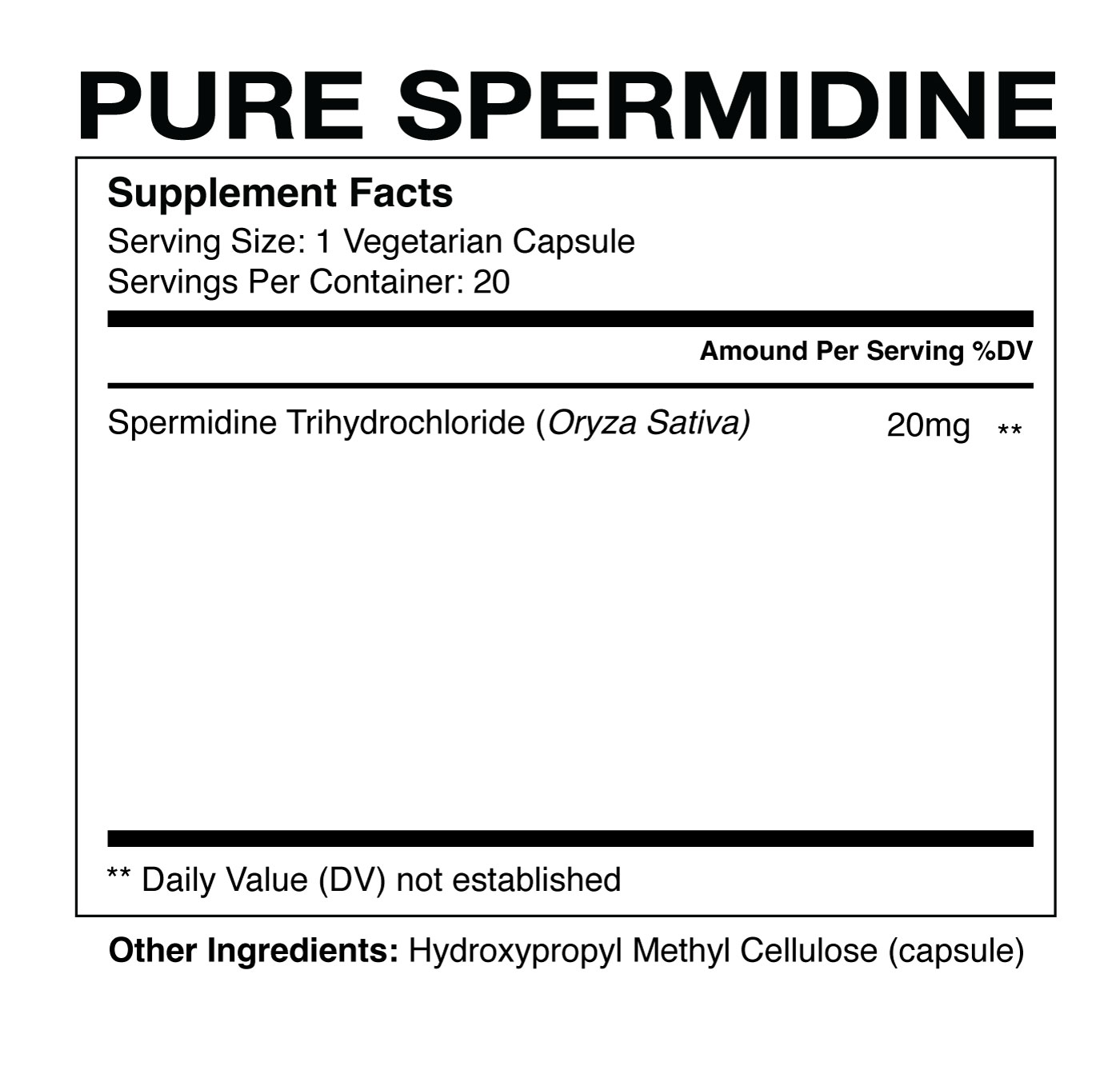
Micronized Spermidine Trihydrochloride
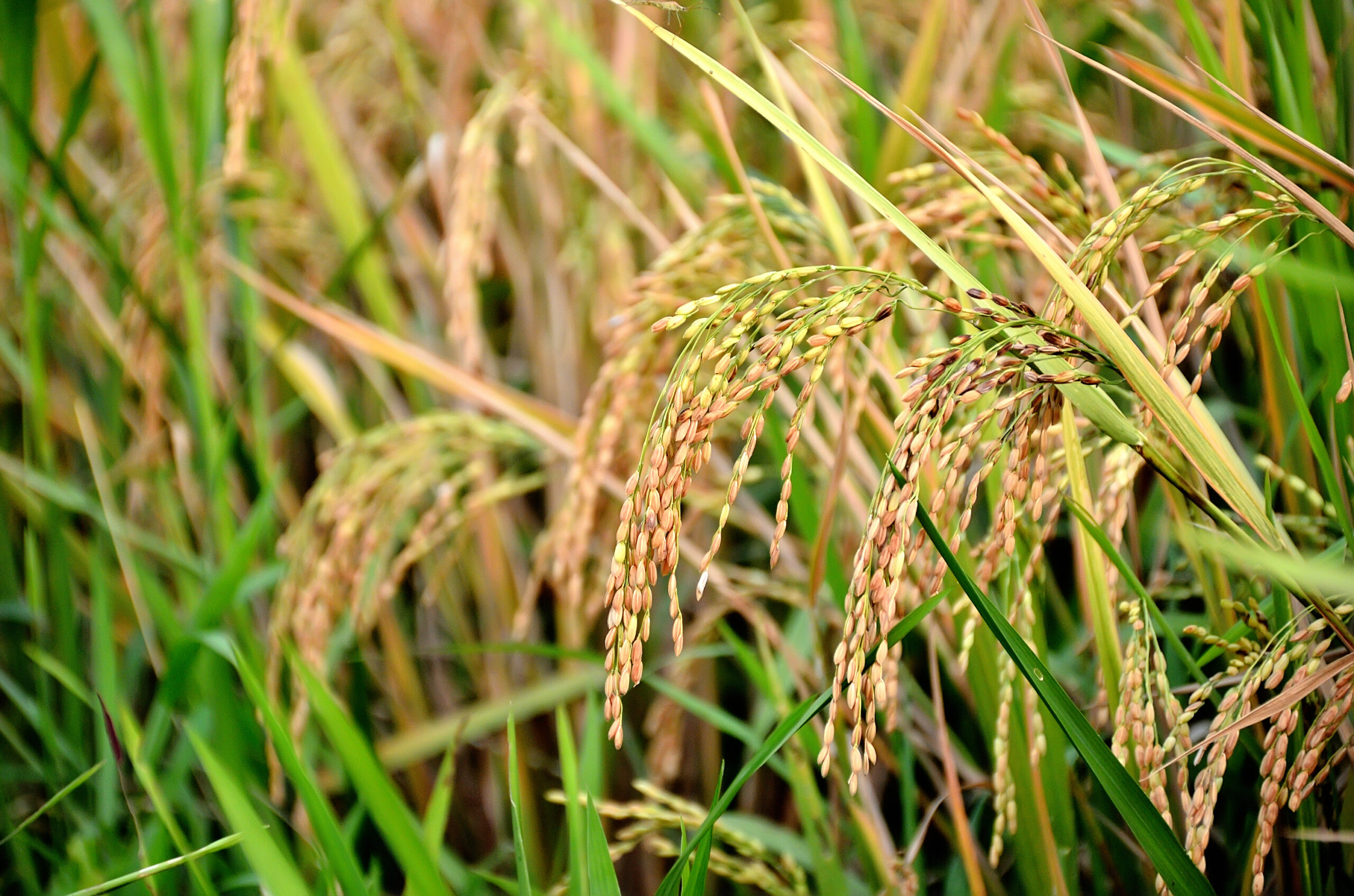
Isolated from Oryza sativa Extract
- Spermidine supports autophagy and cellular renewal*
- Levels decline naturally with age and can be supported through supplementation*
- Supports cognitive and cardiovascular health*
Spermidine: A Well-Studied Longevity Compound*
Spermidine is a naturally occurring polyamine found in foods such as aged cheese, mushrooms, soy products, and whole grains. It has become a compound of real interest in longevity research, particularly for its role in autophagy.* In one study, spermidine extended the lifespan of mice. [1]
It's worth being clear-eyed about animal data: fewer than 5% of treatments effective in mouse studies translate successfully to humans. Animal studies provide valuable signals, but they can mislead casual readers, and human clinical trials are what ultimately tell us about a compound's real-world potential. Spermidine is one of the better-studied longevity compounds, with a growing body of human research that helps paint a clearer picture.
A Brief History of Spermidine
In 1676, Antonie van Leeuwenhoek, the father of microscopy, was the first person to observe bacteria. A year later, he observed his own sperm under the microscope, and the following year noticed crystals forming in semen. [3] Centuries later, this compound was identified as spermine, a precursor to spermidine. Spermidine has since been recognized for its role in regulating cell growth and promoting autophagy, a key process studied in connection with longevity.*
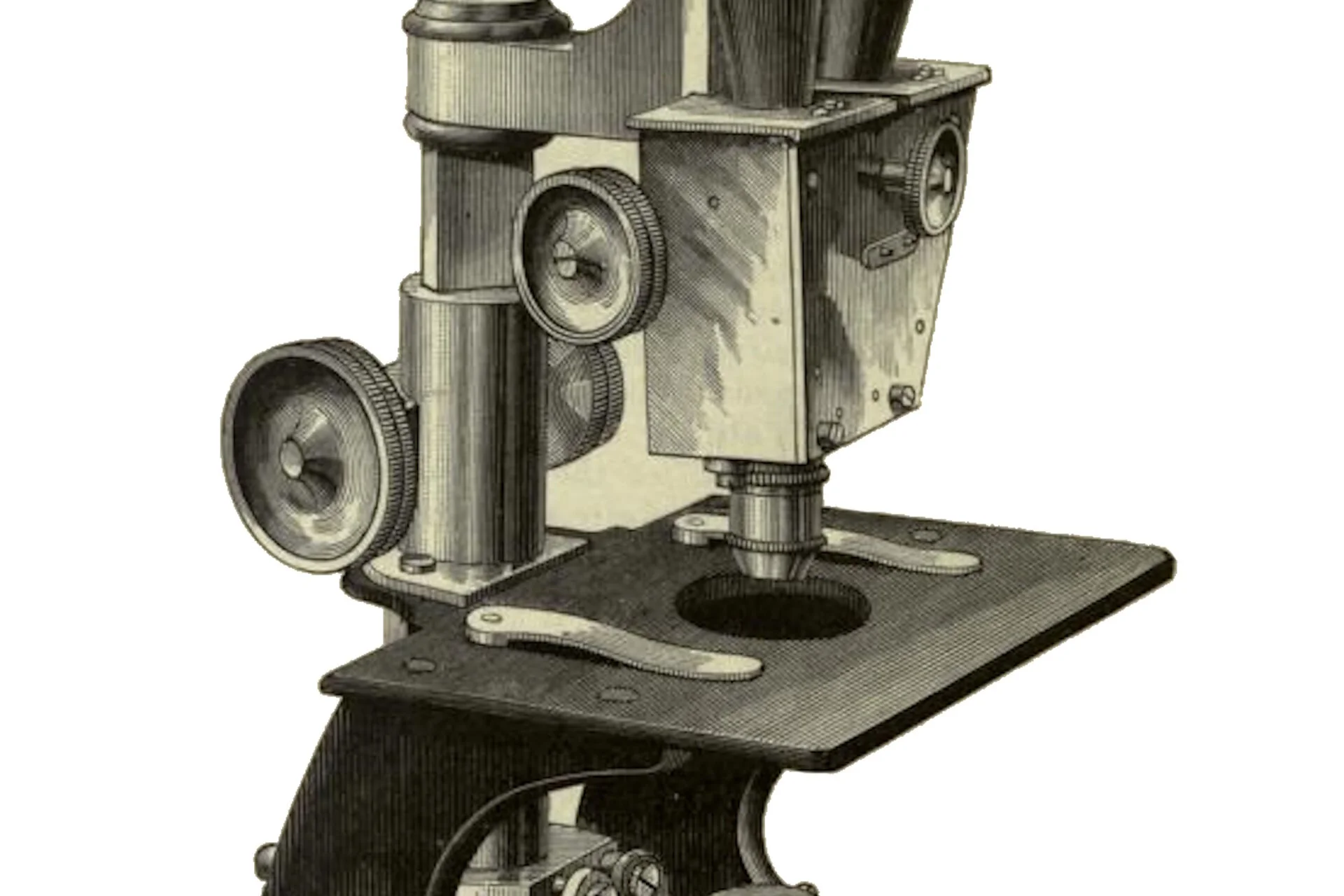
The Role of Spermidine in Autophagy and Aging
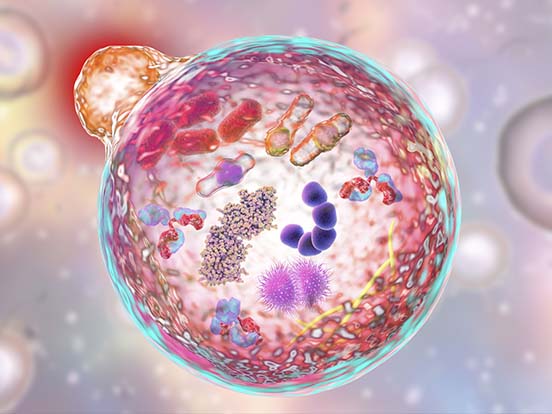
Autophagy is the process by which cells break down and recycle their internal components. This process declines with age, leading to a buildup of cellular waste. Spermidine has been studied for its ability to enhance autophagy, with research exploring its connection to cellular function and longevity.* [4] Research also indicates that spermidine levels decline with age — by our 50s, levels have decreased by about half. [5] Interestingly, certain long-lived mammals, such as naked mole rats, maintain high spermidine levels throughout their lives, a pattern also observed in human centenarians. [6]
Human Studies and Dietary Supplementation
Research has found that spermidine levels continue to decline with age, while people living into their 90s and beyond tend to maintain more youthful levels. Declining levels can be supported through a spermidine-rich diet or supplementation.* One practical challenge: most spermidine supplements contain only wheat germ or wheat germ extract, and reaching meaningful amounts that way would require roughly ten grams of extract — about twenty 500mg capsules.
Research on pure spermidine (Spermidine Trihydrochloride) suggests it is absorbed more efficiently, with intake studied in the 15–20mg range.* One study also found that spermidine's autophagy activity may be enhanced when combined with certain polyphenols, particularly stilbenes like resveratrol and pterostilbene (found in blueberries).* [7] Pterostilbene has been studied for its higher bioavailability, better membrane solubility, and stronger anti-inflammatory properties relative to other stilbenes. [8]
In short: wheat germ extract is an impractical way to supplement spermidine, pure spermidine is more efficient, and research suggests pairing it with stilbenes like pterostilbene may offer additional benefit.*
Spermidine and Cognitive & Cardiovascular Health Research*
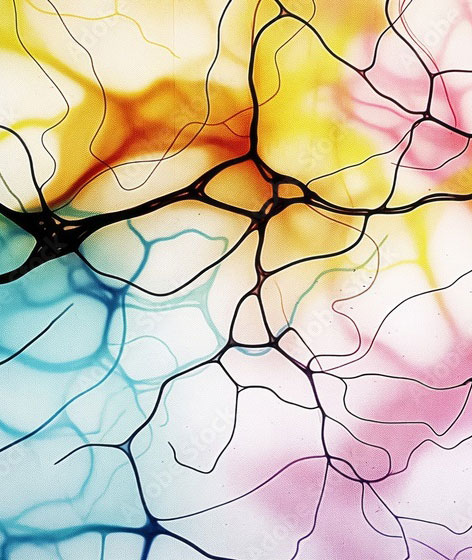
Spermidine has been studied for cognitive health.* In a small 3-month trial, older adults who ate wheat-germ-enriched rolls (higher in spermidine) showed measurable cognitive test changes compared with a control group.* [9] It's worth noting that findings in this area are mixed — a larger 12-month randomized trial did not find significant cognitive improvement — so the research is still developing.
Spermidine has also been studied for cardiovascular health.* Some research has linked higher dietary spermidine intake with healthy blood pressure and cardiovascular markers, possibly related to its role in supporting healthy blood vessel function.* [10]
NEUROmergence®: A Senolytic Support Supplement*
NEUROmergence® by MDS Labs® is a phytochemical formula made to support longevity.* It brings together natural compounds researched on some of the same cellular pathways studied in connection with the D+Q senolytic combination (dasatinib and quercetin).*
NEUROmergence® combines pure Spermidine Trihydrochloride and Pterostilbene with six additional compounds studied for longevity-related properties.* Spermidine was included for its researched activity on the SRC family kinases (SRC, FYN, and LYN) and BCL-2 — pathways also reported in dasatinib research.*
ATTENTION:
If pregnant, nursing, or trying to conceive, do not use this product. If you take medications, have preexisting conditions, or suffer from allergies of any kind, please consult your physician before taking this, or any other dietary supplements. The information contained on this site has not been evaluated by the Food and Drug Administration.
* These statements have not been evaluated by the Food and Drug Administration.
These products are not intended to diagnose, treat, cure, or prevent any disease.
Please be aware that findings from animal studies and research on human cell lines may not necessarily reflect outcomes observed in humans. We encourage you to do your own research, and consult your physician before taking this or any other dietary supplements.
ABOUT MDS LABS

CITATIONS:
[1] Yue F, Li W, Zou J, Jiang X, Xu G, Huang H, Liu L. Spermidine Prolongs Lifespan and Prevents Liver Fibrosis and Hepatocellular Carcinoma by Activating MAP1S-Mediated Autophagy. Cancer Res. 2017 Jun 1;77(11):2938-2951. doi: 10.1158/0008-5472.CAN-16-3462. Epub 2017 Apr 6. PMID: 28386016; PMCID: PMC5489339.
https://pmc.ncbi.nlm.nih.gov/articles/PMC5489339/
[2] Bachrach U. The early history of polyamine research. Plant Physiol Biochem. 2010 Jul;48(7):490-5. doi: 10.1016/j.plaphy.2010.02.003. Epub 2010 Feb 17. PMID: 20219382.
https://pubmed.ncbi.nlm.nih.gov/20219382/
[3] Eisenberg T, Knauer H, Schauer A, Büttner S, Ruckenstuhl C, Carmona-Gutierrez D, Ring J, Schroeder S, Magnes C, Antonacci L, Fussi H, Deszcz L, Hartl R, Schraml E, Criollo A, Megalou E, Weiskopf D, Laun P, Heeren G, Breitenbach M, Grubeck-Loebenstein B, Herker E, Fahrenkrog B, Fröhlich KU, Sinner F, Tavernarakis N, Minois N, Kroemer G, Madeo F. Induction of autophagy by spermidine promotes longevity. Nat Cell Biol. 2009 Nov;11(11):1305-14. doi: 10.1038/ncb1975. Epub 2009 Oct 4. PMID: 19801973.
https://pubmed.ncbi.nlm.nih.gov/19801973/
[4] Madeo F, Eisenberg T, Pietrocola F, Kroemer G. Spermidine in health and disease. Science. 2018 Jan 26;359(6374):eaan2788. doi: 10.1126/science.aan2788. PMID: 29371440.
https://pubmed.ncbi.nlm.nih.gov/29371440/
[5] Rudman D, Kutner MH, Chawla RK, Goldsmith MA, Blackston RD, Bain R. Serum and urine polyamines in normal and in short children. J Clin Invest. 1979 Dec;64(6):1661-8. doi: 10.1172/JCI109628. PMID: 500832; PMCID: PMC371320.
https://pubmed.ncbi.nlm.nih.gov/500832/
[6] Viltard M, Durand S, Pérez-Lanzón M, Aprahamian F, Lefevre D, Leroy C, Madeo F, Kroemer G, Friedlander G. The metabolomic signature of extreme longevity: naked mole rats versus mice. Aging (Albany NY). 2019 Jul 24;11(14):4783-4800. doi: 10.18632/aging.102116. PMID: 31346149; PMCID: PMC6682510.
https://pubmed.ncbi.nlm.nih.gov/31346149/
[7] Morselli E, Mariño G, Bennetzen MV, Eisenberg T, Megalou E, Schroeder S, Cabrera S, Bénit P, Rustin P, Criollo A, Kepp O, Galluzzi L, Shen S, Malik SA, Maiuri MC, Horio Y, López-Otín C, Andersen JS, Tavernarakis N, Madeo F, Kroemer G. Spermidine and resveratrol induce autophagy by distinct pathways converging on the acetylproteome. J Cell Biol. 2011 Feb 21;192(4):615-29. doi: 10.1083/jcb.201008167. PMID: 21339330; PMCID: PMC3044119.
https://pubmed.ncbi.nlm.nih.gov/21339330/
[8] Liu Y, You Y, Lu J, Chen X, Yang Z. Recent Advances in Synthesis, Bioactivity, and Pharmacokinetics of Pterostilbene, an Important Analog of Resveratrol. Molecules. 2020 Nov 6;25(21):5166. doi: 10.3390/molecules25215166. PMID: 33171952; PMCID: PMC7664215.
https://pubmed.ncbi.nlm.nih.gov/33171952/
[9] Pekar T, Bruckner K, Pauschenwein-Frantsich S, Gschaider A, Oppliger M, Willesberger J, Ungersbäck P, Wendzel A, Kremer A, Flak W, Wantke F, Jarisch R. The positive effect of spermidine in older adults suffering from dementia: First results of a 3-month trial. Wien Klin Wochenschr. 2021 May;133(9-10):484-491. doi: 10.1007/s00508-020-01758-y. Epub 2020 Nov 19. PMID: 33211152; PMCID: PMC8116233.
https://pubmed.ncbi.nlm.nih.gov/33211152/
[10] de Cabo R, Navas P. Spermidine to the rescue for an aging heart. Nat Med. 2016 Dec 6;22(12):1389-1390. doi: 10.1038/nm.4243. PMID: 27923032; PMCID: PMC5853099.
https://pubmed.ncbi.nlm.nih.gov/27923032/
Pure Spermidine
Micronized Spermidine Trihydrochloride
Isolated from Oryza sativa Extract
- Spermidine supports autophagy and cellular renewal*
- Levels decline naturally with age and can be supported through supplementation*
- Supports cognitive and cardiovascular health*
Spermidine: A Well-Studied Longevity Compound*
Spermidine is a naturally occurring polyamine found in foods such as aged cheese, mushrooms, soy products, and whole grains. It has become a compound of real interest in longevity research, particularly for its role in autophagy.* In one study, spermidine extended the lifespan of mice. [1]
It’s worth being clear-eyed about animal data: fewer than 5% of treatments effective in mouse studies translate successfully to humans. Animal studies provide valuable signals, but they can mislead casual readers, and human clinical trials are what ultimately tell us about a compound’s real-world potential. Spermidine is one of the better-studied longevity compounds, with a growing body of human research that helps paint a clearer picture.
A Brief History of Spermidine
In 1676, Antonie van Leeuwenhoek, the father of microscopy, was the first person to observe bacteria. A year later, he observed his own sperm under the microscope, and the following year noticed crystals forming in semen. [3] Centuries later, this compound was identified as spermine, a precursor to spermidine. Spermidine has since been recognized for its role in regulating cell growth and promoting autophagy, a key process studied in connection with longevity.*
The Role of Spermidine in Autophagy and Aging
Autophagy is the process by which cells break down and recycle their internal components. This process declines with age, leading to a buildup of cellular waste. Spermidine has been studied for its ability to enhance autophagy, with research exploring its connection to cellular function and longevity.* [4] Research also indicates that spermidine levels decline with age — by our 50s, levels have decreased by about half. [5] Interestingly, certain long-lived mammals, such as naked mole rats, maintain high spermidine levels throughout their lives, a pattern also observed in human centenarians. [6]
Human Studies and Dietary Supplementation
Research has found that spermidine levels continue to decline with age, while people living into their 90s and beyond tend to maintain more youthful levels. Declining levels can be supported through a spermidine-rich diet or supplementation.* One practical challenge: most spermidine supplements contain only wheat germ or wheat germ extract, and reaching meaningful amounts that way would require roughly ten grams of extract — about twenty 500mg capsules.
Research on pure spermidine (Spermidine Trihydrochloride) suggests it is absorbed more efficiently, with intake studied in the 15–20mg range.* One study also found that spermidine’s autophagy activity may be enhanced when combined with certain polyphenols, particularly stilbenes like resveratrol and pterostilbene (found in blueberries).* [7] Pterostilbene has been studied for its higher bioavailability, better membrane solubility, and stronger anti-inflammatory properties relative to other stilbenes. [8]
In short: wheat germ extract is an impractical way to supplement spermidine, pure spermidine is more efficient, and research suggests pairing it with stilbenes like pterostilbene may offer additional benefit.*
Spermidine and Cognitive & Cardiovascular Health Research*
Spermidine has been studied for cognitive health.* In a small 3-month trial, older adults who ate wheat-germ-enriched rolls (higher in spermidine) showed measurable cognitive test changes compared with a control group.* [9] It’s worth noting that findings in this area are mixed — a larger 12-month randomized trial did not find significant cognitive improvement — so the research is still developing.
Spermidine has also been studied for cardiovascular health.* Some research has linked higher dietary spermidine intake with healthy blood pressure and cardiovascular markers, possibly related to its role in supporting healthy blood vessel function.* [10]
NEUROmergence®: A Senolytic Support Supplement*
NEUROmergence® by MDS Labs® is a phytochemical formula made to support longevity.* It brings together natural compounds researched on some of the same cellular pathways studied in connection with the D+Q senolytic combination (dasatinib and quercetin).*
NEUROmergence® combines pure Spermidine Trihydrochloride and Pterostilbene with six additional compounds studied for longevity-related properties.* Spermidine was included for its researched activity on the SRC family kinases (SRC, FYN, and LYN) and BCL-2 — pathways also reported in dasatinib research.*
ATTENTION:
If pregnant, nursing, or trying to conceive, do not use this product. If you take medications, have preexisting conditions, or suffer from allergies of any kind, please consult your physician before taking this, or any other dietary supplements. The information contained on this site has not been evaluated by the Food and Drug Administration.
* These statements have not been evaluated by the Food and Drug Administration.
These products are not intended to diagnose, treat, cure, or prevent any disease.
Please be aware that findings from animal studies and research on human cell lines may not necessarily reflect outcomes observed in humans. We encourage you to do your own research, and consult your physician before taking this or any other dietary supplements.
ABOUT MDS LABS
CITATIONS:
[1] Yue F, Li W, Zou J, Jiang X, Xu G, Huang H, Liu L. Spermidine Prolongs Lifespan and Prevents Liver Fibrosis and Hepatocellular Carcinoma by Activating MAP1S-Mediated Autophagy. Cancer Res. 2017 Jun 1;77(11):2938-2951. doi: 10.1158/0008-5472.CAN-16-3462. Epub 2017 Apr 6. PMID: 28386016; PMCID: PMC5489339.
https://pmc.ncbi.nlm.nih.gov/articles/PMC5489339/
[2] Bachrach U. The early history of polyamine research. Plant Physiol Biochem. 2010 Jul;48(7):490-5. doi: 10.1016/j.plaphy.2010.02.003. Epub 2010 Feb 17. PMID: 20219382.
https://pubmed.ncbi.nlm.nih.gov/20219382/
[3] Eisenberg T, Knauer H, Schauer A, Büttner S, Ruckenstuhl C, Carmona-Gutierrez D, Ring J, Schroeder S, Magnes C, Antonacci L, Fussi H, Deszcz L, Hartl R, Schraml E, Criollo A, Megalou E, Weiskopf D, Laun P, Heeren G, Breitenbach M, Grubeck-Loebenstein B, Herker E, Fahrenkrog B, Fröhlich KU, Sinner F, Tavernarakis N, Minois N, Kroemer G, Madeo F. Induction of autophagy by spermidine promotes longevity. Nat Cell Biol. 2009 Nov;11(11):1305-14. doi: 10.1038/ncb1975. Epub 2009 Oct 4. PMID: 19801973.
https://pubmed.ncbi.nlm.nih.gov/19801973/
[4] Madeo F, Eisenberg T, Pietrocola F, Kroemer G. Spermidine in health and disease. Science. 2018 Jan 26;359(6374):eaan2788. doi: 10.1126/science.aan2788. PMID: 29371440.
https://pubmed.ncbi.nlm.nih.gov/29371440/
[5] Rudman D, Kutner MH, Chawla RK, Goldsmith MA, Blackston RD, Bain R. Serum and urine polyamines in normal and in short children. J Clin Invest. 1979 Dec;64(6):1661-8. doi: 10.1172/JCI109628. PMID: 500832; PMCID: PMC371320.
https://pubmed.ncbi.nlm.nih.gov/500832/
[6] Viltard M, Durand S, Pérez-Lanzón M, Aprahamian F, Lefevre D, Leroy C, Madeo F, Kroemer G, Friedlander G. The metabolomic signature of extreme longevity: naked mole rats versus mice. Aging (Albany NY). 2019 Jul 24;11(14):4783-4800. doi: 10.18632/aging.102116. PMID: 31346149; PMCID: PMC6682510.
https://pubmed.ncbi.nlm.nih.gov/31346149/
[7] Morselli E, Mariño G, Bennetzen MV, Eisenberg T, Megalou E, Schroeder S, Cabrera S, Bénit P, Rustin P, Criollo A, Kepp O, Galluzzi L, Shen S, Malik SA, Maiuri MC, Horio Y, López-Otín C, Andersen JS, Tavernarakis N, Madeo F, Kroemer G. Spermidine and resveratrol induce autophagy by distinct pathways converging on the acetylproteome. J Cell Biol. 2011 Feb 21;192(4):615-29. doi: 10.1083/jcb.201008167. PMID: 21339330; PMCID: PMC3044119.
https://pubmed.ncbi.nlm.nih.gov/21339330/
[8] Liu Y, You Y, Lu J, Chen X, Yang Z. Recent Advances in Synthesis, Bioactivity, and Pharmacokinetics of Pterostilbene, an Important Analog of Resveratrol. Molecules. 2020 Nov 6;25(21):5166. doi: 10.3390/molecules25215166. PMID: 33171952; PMCID: PMC7664215.
https://pubmed.ncbi.nlm.nih.gov/33171952/
[9] Pekar T, Bruckner K, Pauschenwein-Frantsich S, Gschaider A, Oppliger M, Willesberger J, Ungersbäck P, Wendzel A, Kremer A, Flak W, Wantke F, Jarisch R. The positive effect of spermidine in older adults suffering from dementia: First results of a 3-month trial. Wien Klin Wochenschr. 2021 May;133(9-10):484-491. doi: 10.1007/s00508-020-01758-y. Epub 2020 Nov 19. PMID: 33211152; PMCID: PMC8116233.
https://pubmed.ncbi.nlm.nih.gov/33211152/
[10] de Cabo R, Navas P. Spermidine to the rescue for an aging heart. Nat Med. 2016 Dec 6;22(12):1389-1390. doi: 10.1038/nm.4243. PMID: 27923032; PMCID: PMC5853099.
https://pubmed.ncbi.nlm.nih.gov/27923032/
Reviews
There are no reviews yet.