

About MDS Labs
Research first approach.
MDS Labs doesn't just supply products, we formulate solutions, which is where the work happens: reading everything published on a compound, working out what is really doing the work, and solving the problem that stands between a promising paper and something worth swallowing. When that comes together, we make it. When it does not, we publish what we found and move on.

What we do
Most of the work happens before anything is made
We pick a compound and read what has been published on it, the methods and the data rather than just the abstract, including studies that failed to reproduce an earlier result. We’re looking at how much was given, by what route, whether it was measured in cells, animals or people, and whether anyone else got the same answer.
If the result holds up, the next question is whether it works outside a lab. Plenty of compounds are active in cell culture at concentrations an oral dose cannot reach. So we look at how much is absorbed, what dose that would require, and whether a capsule can deliver it. Most compounds stop here. The ones that don’t are the ones we formulate.
Why we exist
We started as researchers tired of an industry built on marketing instead of evidence. So we built it the other way around.
01
We read all of it
Not the abstract. The methods, the figures, the work it was built on, and the attempts to repeat it that failed.
02
We publish our findings
Everything we read, extend or run ourselves goes into our research database.
03
We test the material
Identity and potency measured in our own lab against authenticated reference standards, on every lot, before anything is made.
How we read research
One study is a data point. The picture comes from reading all of them.
A supplement label will often cite a single study in a single sentence. That sentence is usually accurate and rarely useful, because one study on its own cannot tell you whether an effect is real, how large it is, who it applies to, or whether the amount in the bottle resembles the amount that was tested.
We read each paper in full, methods and figures included, and then we read the papers around it: the work it was built on, the attempts to repeat it, and the trials that found nothing. What we publish is what emerges when those studies are set side by side. It states what the evidence supports, how much confidence it deserves, and what would have to change the answer.
Where our research goes further
When the published work stops short, we carry it on.
Reading the literature closely is where a question starts, and it rarely finishes there. We extend published studies when their design leaves the useful question unanswered, and we run our own when nothing in the literature addresses it at all. That work is published alongside the products it informs.
A good deal of our effort goes into trying to prove ourselves wrong. The conclusion we like is the one we test hardest, because the alternative is building a formula on a result that does not hold. Most candidates do not survive that stage, and the ones that do have earned it.
Once a compound is genuinely promising, the question changes from evidence to material. We source the finest grade available, confirm identity and potency against authenticated reference standards, and hold every lot to a specification we set rather than one a supplier offers. The target is a product that sits well ahead of its class.
How we build
Four ways a product starts
Every MDS formula comes from one of four routes. Each one starts in published literature and ends in a specification we can measure.
01
Map a drug, then cover it with botanicals
Take a prescription compound whose targets are well characterized, map what it actually engages, then find botanical compounds that reach the same nodes. NEUROmergence was built this way from dasatinib's signalling map.
02
Decode a traditional formula
Work out what in a traditional medicine is doing the work, then rebuild it with the active compound measured rather than assumed. Cao Dou Kou and Ku Shen came from this route.
03
Find the better form of a known compound
Popular supplements often have a better absorbed or better characterized form the market has not caught up with. Pterostilbene in place of resveratrol is the clearest example: roughly four times the oral bioavailability from the same molecular skeleton.
04
Fix the delivery
Pair a compound with what it needs to survive the trip: an absorption enhancer, a protective coating, a co-factor that extends how long it lasts. A compound that works only on paper is usually a formulation problem rather than a dead end.
In the lab
We test what goes in the bottle
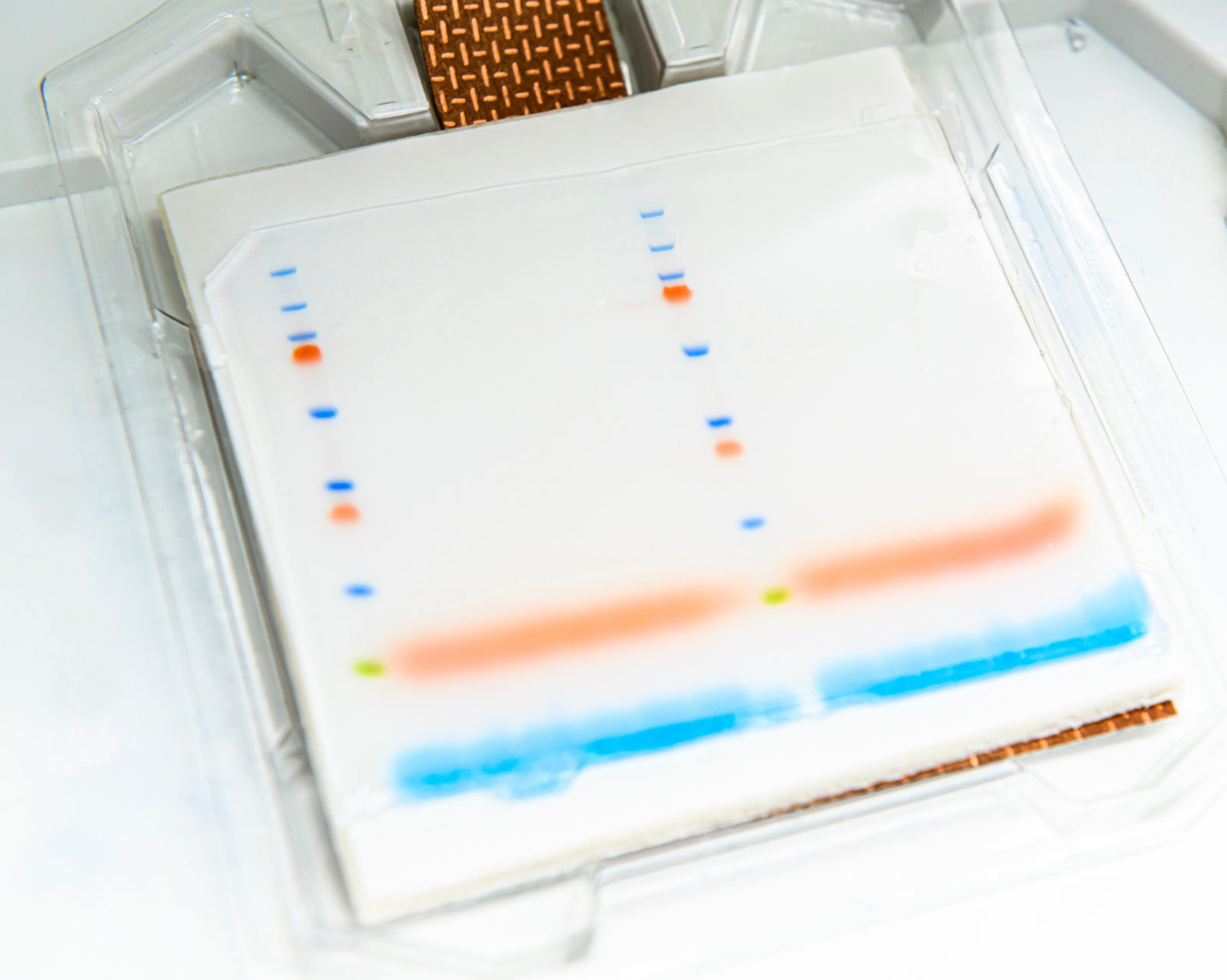
Our lab verifies raw materials before they become products. Identity confirmed against authenticated reference standards, potency measured by HPLC, heavy metals by ICP-MS. Suppliers send paperwork. We check the material against it.
That matters because much of this industry runs on trust in documents. A raw material can be misidentified, adulterated or simply weaker than its certificate says, and nobody finds out unless somebody measures it.
Read our researchWhat we stand for
Full disclosure
Every ingredient and amount is on the label and on the product page.
Direct to you
We develop and sell our own formulas directly, without retail markups.
Plain claims
We say what the research suggests, not what sells, and we cite our sources.
Start with the research
Every compound we sell has a research article behind it, and the database is open whether or not you buy anything. Questions about a formula go to support@mdslabs.shop, where a person who knows the research will answer.